Division of Gastroenterology, Hepatology and Nutrition, The Hospital for Sick Children, Toronto, ON, Canada.
Mount Sinai Hospital, The Familial Gastrointestinal Cancer Registry at the Zane Cohen Centre for Digestive Disease, Toronto, ON, Canada.
J Clin Oncol. 2021 Sep 1;39(25):2779-2790. doi: 10.1200/JCO.20.02636. Epub 2021 May 4.
Constitutional mismatch repair deficiency syndrome (CMMRD) is a lethal cancer predisposition syndrome characterized by early-onset synchronous and metachronous multiorgan tumors. We designed a surveillance protocol for early tumor detection in these individuals.
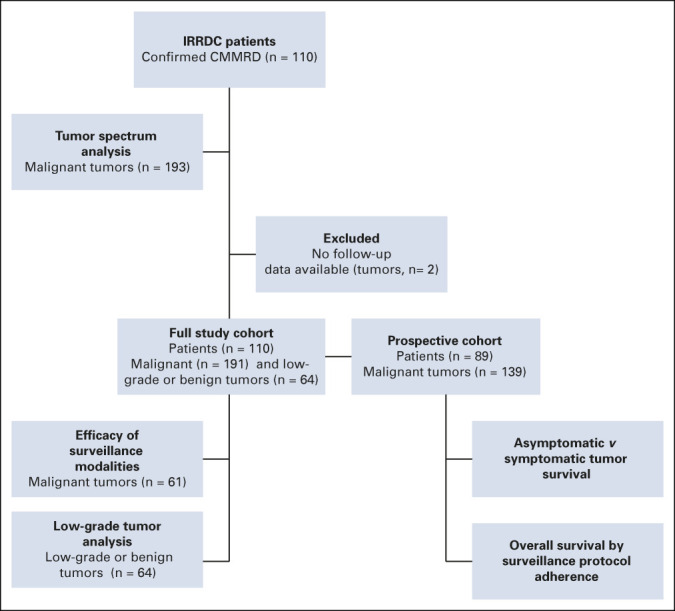
Data were collected from patients with confirmed CMMRD who were registered in the International Replication Repair Deficiency Consortium. Tumor spectrum, efficacy of the surveillance protocol, and malignant transformation of low-grade lesions were examined for the entire cohort. Survival outcomes were analyzed for patients followed prospectively from the time of surveillance implementation.
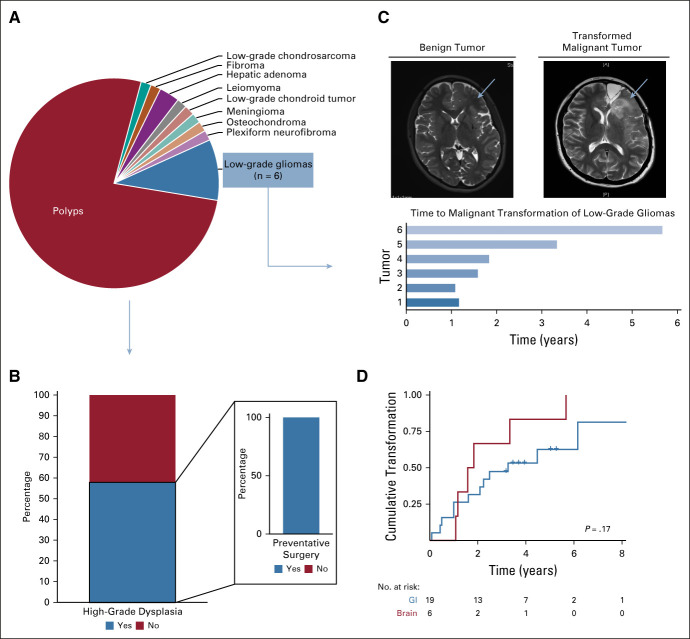
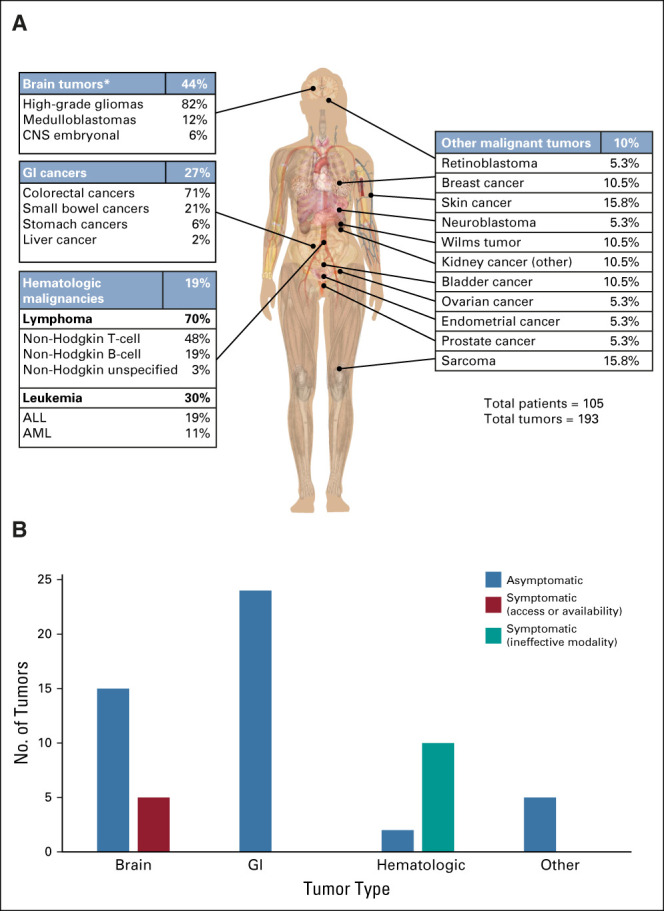
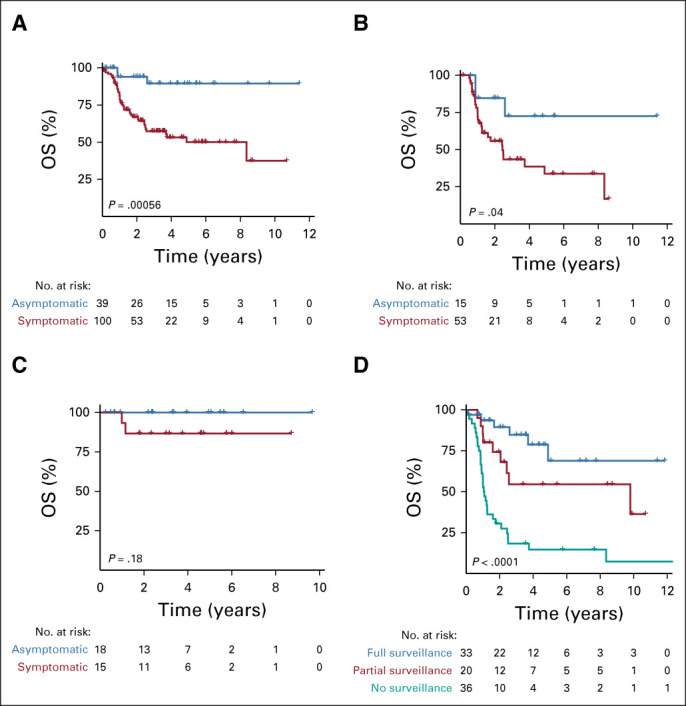
A total of 193 malignant tumors in 110 patients were identified. Median age of first cancer diagnosis was 9.2 years (range: 1.7-39.5 years). For patients undergoing surveillance, all GI and other solid tumors, and 75% of brain cancers were detected asymptomatically. By contrast, only 16% of hematologic malignancies were detected asymptomatically ( < .001). Eighty-nine patients were followed prospectively and used for survival analysis. Five-year overall survival (OS) was 90% (95% CI, 78.6 to 100) and 50% (95% CI, 39.2 to 63.7) when cancer was detected asymptomatically and symptomatically, respectively ( = .001). Patient outcome measured by adherence to the surveillance protocol revealed 4-year OS of 79% (95% CI, 54.8 to 90.9) for patients undergoing full surveillance, 55% (95% CI, 28.5 to 74.5) for partial surveillance, and 15% (95% CI, 5.2 to 28.8) for those not under surveillance ( < .0001). Of the 64 low-grade tumors detected, the cumulative likelihood of transformation from low-to high-grade was 81% for GI cancers within 8 years and 100% for gliomas in 6 years.
Surveillance and early cancer detection are associated with improved OS for individuals with CMMRD.
错配修复缺陷综合征(CMMRD)是一种致命的癌症易感性综合征,其特征为早发性同步和异时性多器官肿瘤。我们设计了一项监测方案,用于早期发现这些个体中的肿瘤。
从国际复制修复缺陷联盟注册的确诊为 CMMRD 的患者中收集数据。检查了整个队列的肿瘤谱、监测方案的疗效以及低级别病变的恶性转化。对前瞻性随访从监测实施开始的患者进行生存结果分析。
共在 110 名患者中发现 193 例恶性肿瘤。首次癌症诊断的中位年龄为 9.2 岁(范围:1.7-39.5 岁)。对于接受监测的患者,所有胃肠道和其他实体瘤以及 75%的脑癌均无症状发现。相比之下,只有 16%的血液系统恶性肿瘤无症状发现(<0.001)。89 名患者前瞻性随访并用于生存分析。5 年总生存率(OS)分别为 90%(95%CI,78.6 至 100)和 50%(95%CI,39.2 至 63.7),当癌症无症状和有症状时分别为(=0.001)。通过对监测方案的依从性来衡量患者的预后,发现进行全面监测的患者 4 年 OS 为 79%(95%CI,54.8 至 90.9),部分监测为 55%(95%CI,28.5 至 74.5),未监测为 15%(95%CI,5.2 至 28.8)(<0.0001)。在检测到的 64 例低级别肿瘤中,8 年内胃肠道癌症从低级别转化为高级别的累积可能性为 81%,6 年内神经胶质瘤为 100%。
监测和早期癌症检测与 CMMRD 患者的 OS 改善相关。