Department of Gastroenterology, Osaka City University Graduate School of Medicine, Osaka, Japan.
Department of Gastroenterology, Osaka City Juso Hospital, Osaka, Japan.
PLoS One. 2021 May 4;16(5):e0250862. doi: 10.1371/journal.pone.0250862. eCollection 2021.
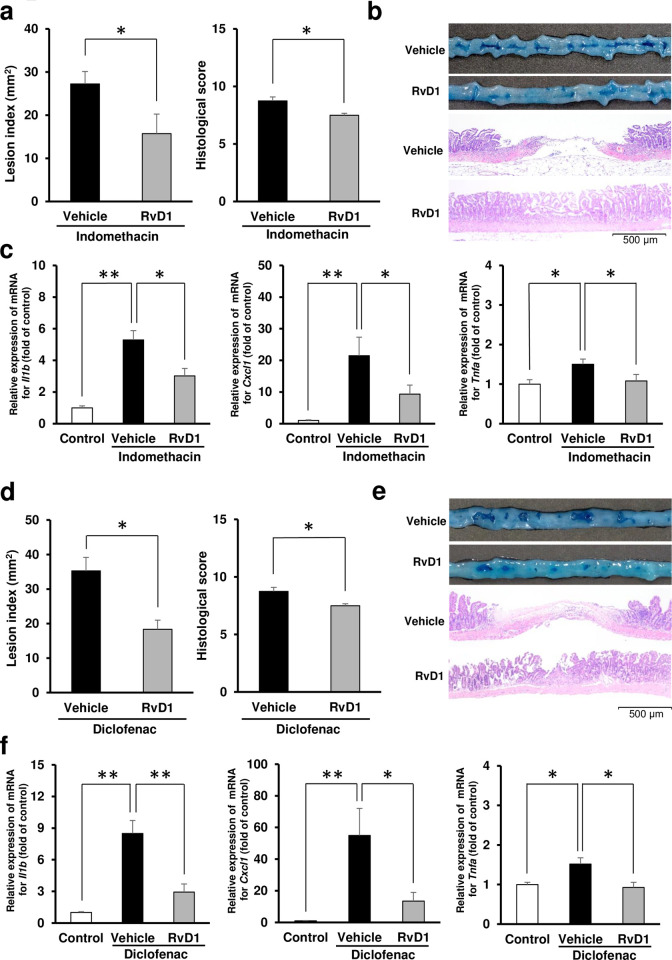
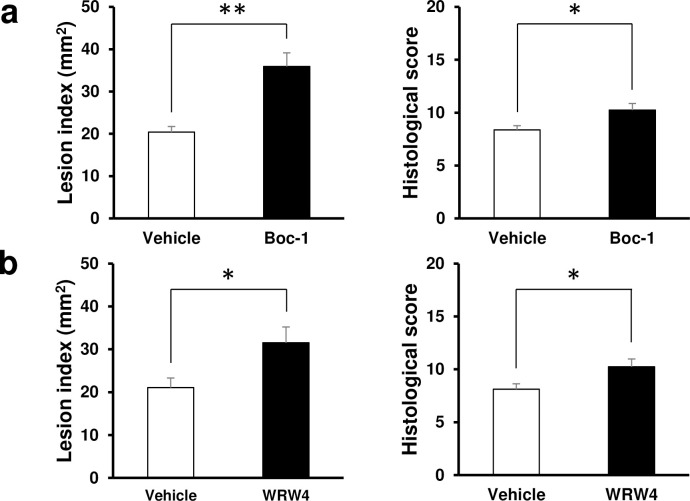
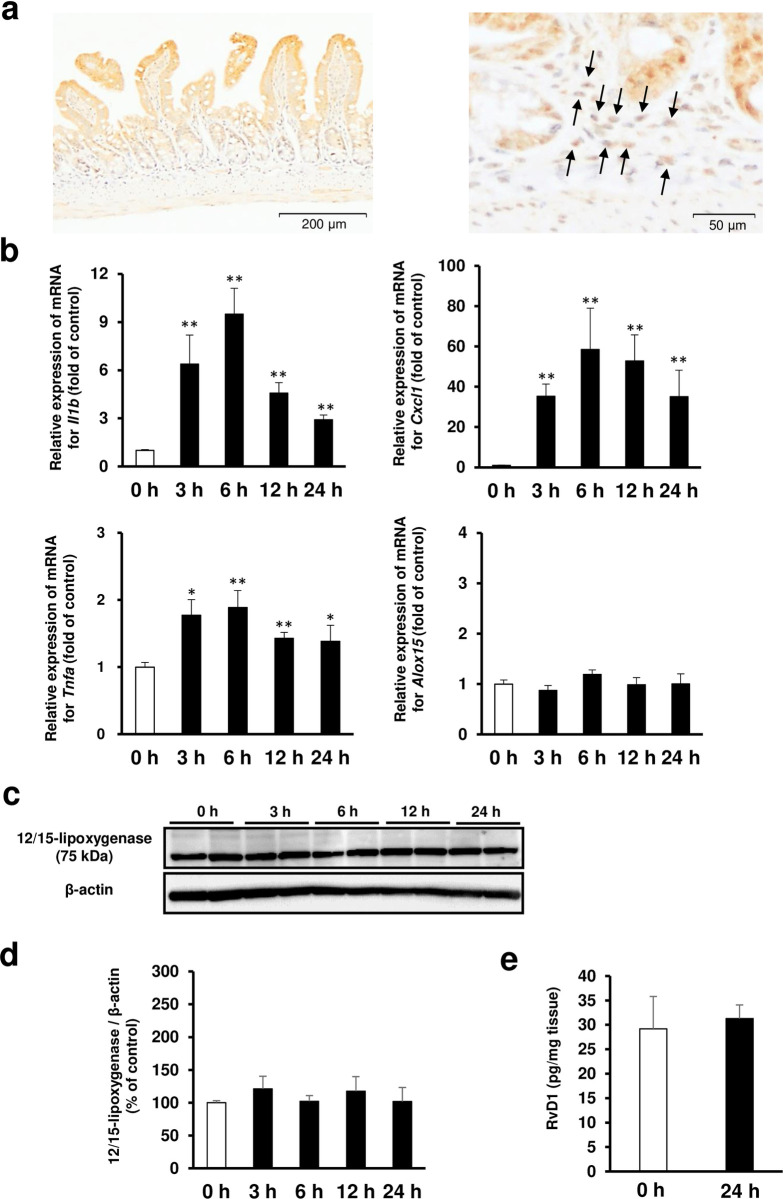
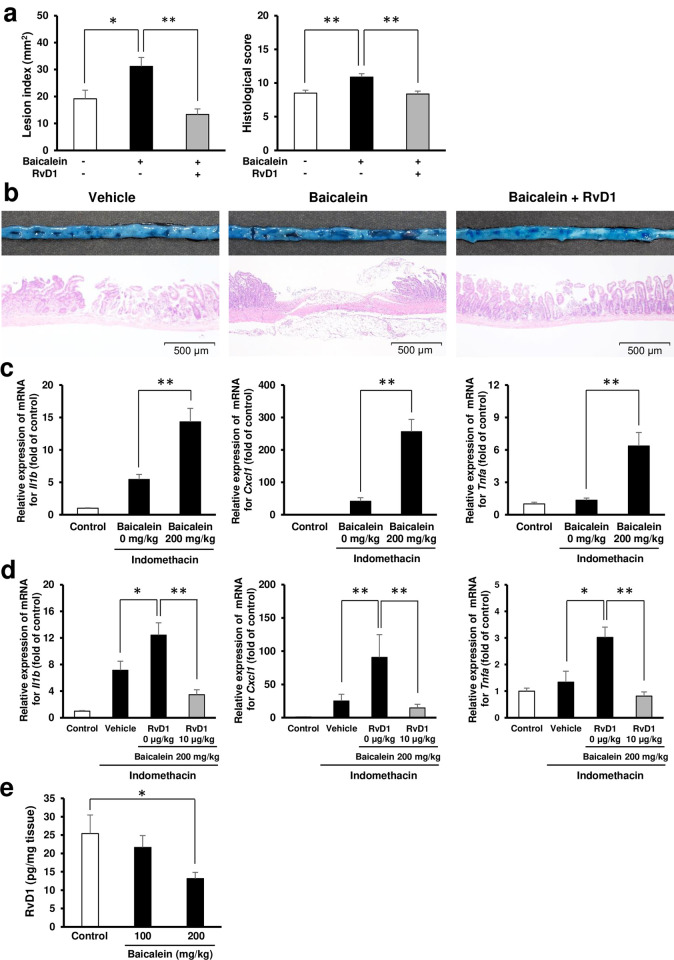
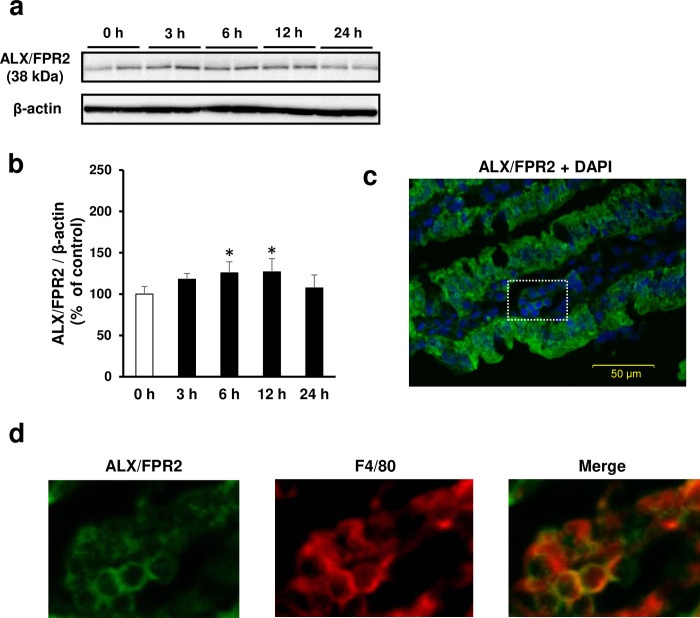
Resolvin D1, a specialized pro-resolving lipid mediator produced from docosahexaenoic acid by 15- and 5-lipoxygenase, exerts anti-inflammatory effects driving to the resolution of inflammation. The present study aimed to elucidate its role in small intestinal damage induced by nonsteroidal anti-inflammatory drug (NSAID). Indomethacin was administered orally to C57BL/6J male mice, which were sacrificed 24 h later to collect small intestine specimens. Before administration of indomethacin, mice were subjected to intraperitoneal treatment with resolvin D1 or oral administration of baicalein, a 15-lipoxygenase inhibitor. Small intestinal damage induced by indomethacin was attenuated by pretreatment with resolvin D1. Furthermore, resolvin D1 reduced the gene expression levels of interleukin-1β, tumor necrosis factor-α, and CXCL1/keratinocyte chemoattractant. Conversely, the inhibition of 15-lipoxygenase activity by baicalein increased the expression of genes coding for these inflammatory cytokines and chemokine, leading to exacerbated small intestinal damage, and reduced the concentration of resolvin D1 in the small intestinal tissue. Exogenous treatment with resolvin D1 negated the deleterious effect of baicalein. 15-lipoxygenase was mainly expressed in the epithelium and inflammatory cells of the small intestine, and its gene and protein expression was not affected by the administration of indomethacin. Inhibition of the resolvin D1 receptor, lipoxin A4 receptor /formyl peptide receptor 2, by its specific inhibitors Boc-1 and WRW4 aggravated indomethacin-induced small intestinal damage. Collectively, these results indicate that resolvin D1 produced by 15-lipoxygenase contributes to mucoprotection against NSAID-induced small intestinal damage through its anti-inflammatory effect.
解析素 D1 是一种由 15-脂氧合酶和 5-脂氧合酶从二十二碳六烯酸产生的特异性促解决脂质介质,具有抗炎作用,可促进炎症消退。本研究旨在阐明其在非甾体抗炎药(NSAID)诱导的小肠损伤中的作用。将吲哚美辛口服给予 C57BL/6J 雄性小鼠,24 小时后处死收集小肠标本。在给予吲哚美辛之前,通过腹腔内给予解析素 D1 或口服给予 15-脂氧合酶抑制剂黄芩素对小鼠进行预处理。解析素 D1 的预处理减轻了吲哚美辛诱导的小肠损伤。此外,解析素 D1 降低了白细胞介素-1β、肿瘤坏死因子-α 和 CXCL1/角质形成细胞趋化因子的基因表达水平。相反,黄芩素抑制 15-脂氧合酶活性会增加编码这些炎症细胞因子和趋化因子的基因表达,导致小肠损伤加剧,并降低小肠组织中解析素 D1 的浓度。外源性给予解析素 D1 可消除黄芩素的有害作用。15-脂氧合酶主要在小肠的上皮细胞和炎症细胞中表达,其基因和蛋白表达不受吲哚美辛给药的影响。15-脂氧合酶受体(解析素 D1 受体)、脂氧素 A4 受体/甲酰肽受体 2 的特异性抑制剂 Boc-1 和 WRW4 抑制加重了吲哚美辛诱导的小肠损伤。总之,这些结果表明,15-脂氧合酶产生的解析素 D1 通过其抗炎作用有助于保护 NSAID 诱导的小肠损伤。