Hanas Jay S, Hocker James R S, Vannarath Christian A, Lerner Megan R, Blair Scott G, Lightfoot Stan A, Hanas Rushie J, Couch James R, Hershey Linda A
Department of Biochemistry, University of Oklahoma Health Sciences Center, Oklahoma City, OK 73104, USA.
Department of Surgery, University of Oklahoma Health Sciences Center, Oklahoma City, OK 73104, USA.
Brain Sci. 2021 Apr 30;11(5):583. doi: 10.3390/brainsci11050583.
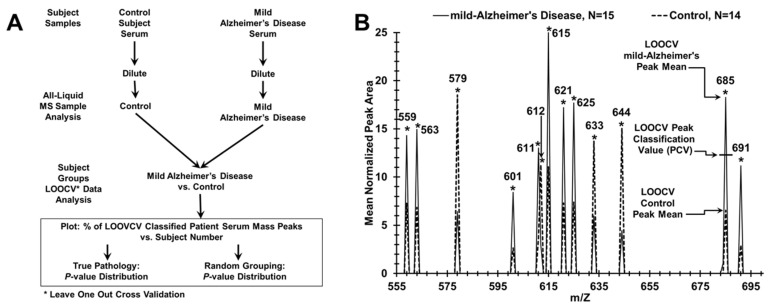
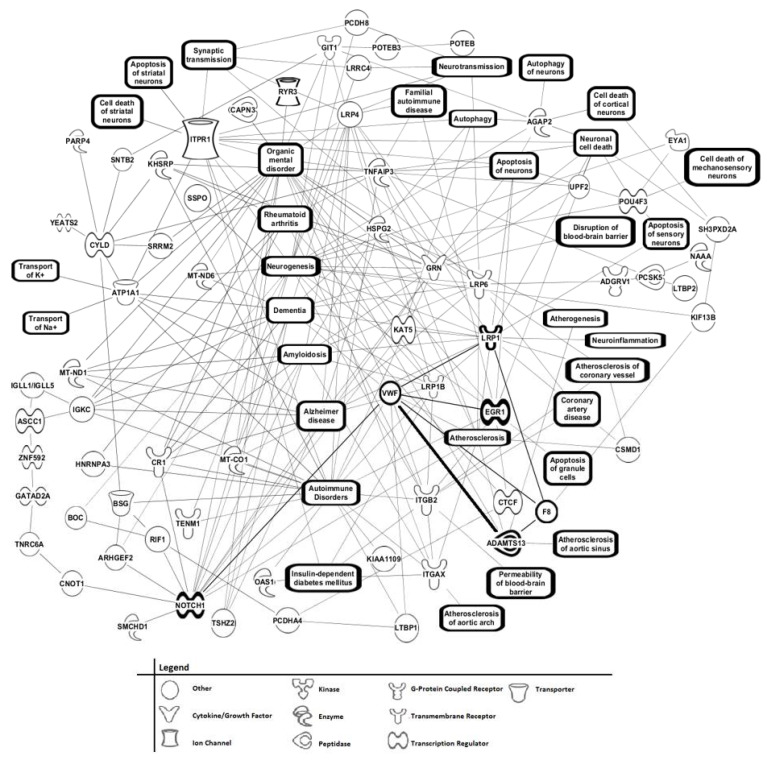
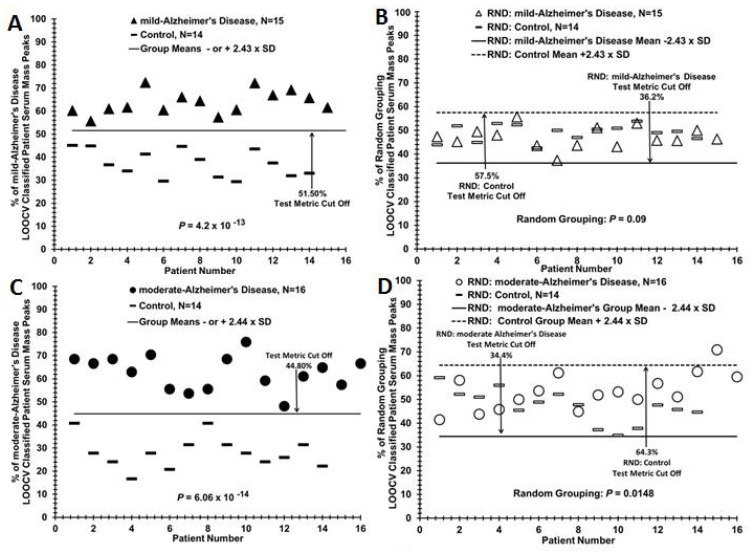
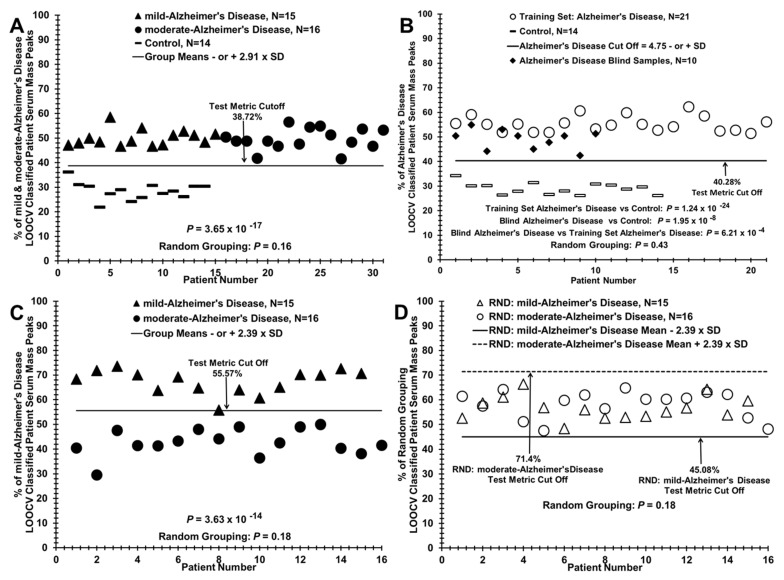
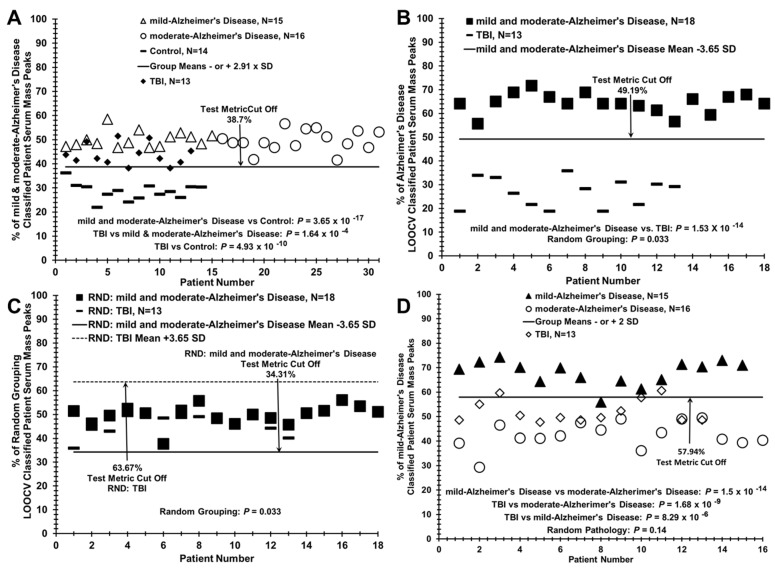
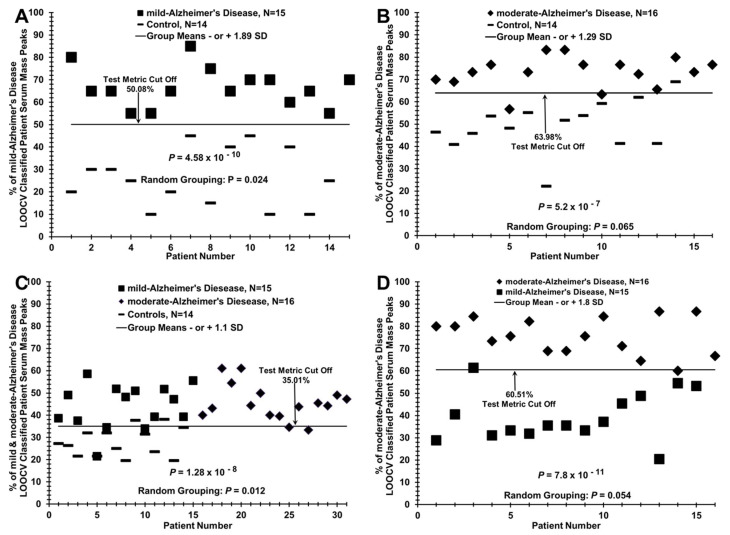
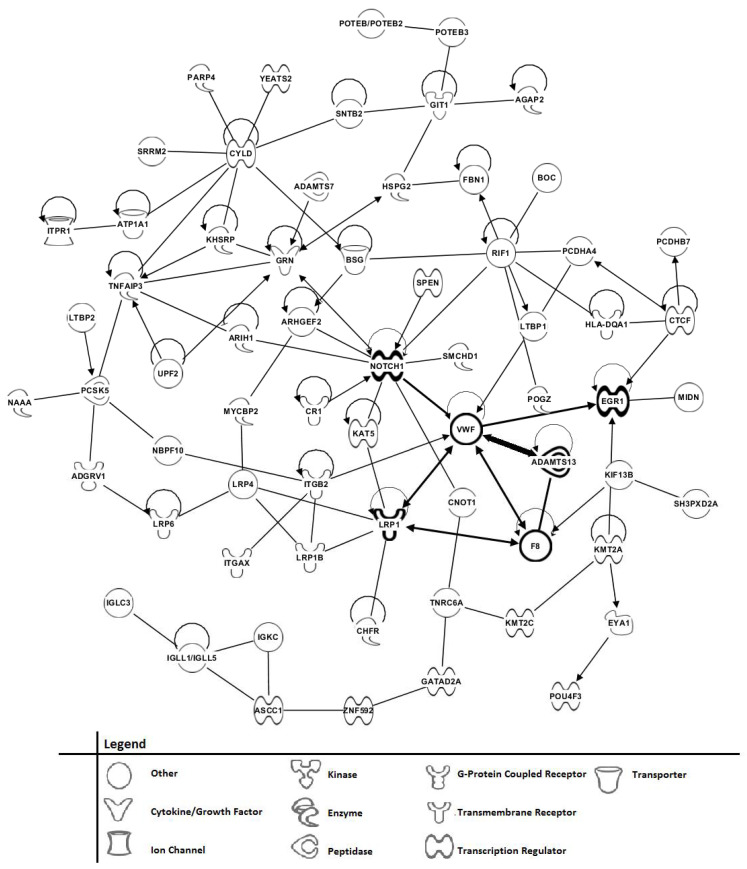
It is important to develop minimally invasive biomarker platforms to help in the identification and monitoring of patients with Alzheimer's disease (AD). Assisting in the understanding of biochemical mechanisms as well as identifying potential novel biomarkers and therapeutic targets would be an added benefit of such platforms. This study utilizes a simplified and novel serum profiling platform, using mass spectrometry (MS), to help distinguish AD patient groups (mild and moderate) and controls, as well as to aid in understanding of biochemical phenotypes and possible disease development. A comparison of discriminating sera mass peaks between AD patients and control individuals was performed using leave one [serum sample] out cross validation (LOOCV) combined with a novel peak classification valuation (PCV) procedure. LOOCV/PCV was able to distinguish significant sera mass peak differences between a group of mild AD patients and control individuals with a value of 10. This value became non-significant ( = 0.09) when the same sera samples were randomly allocated between the two groups and reanalyzed by LOOCV/PCV. This is indicative of physiological group differences in the original true-pathology binary group comparison. Similarities and differences between AD patients and traumatic brain injury (TBI) patients were also discernable using this novel LOOCV/PCV platform. MS/MS peptide analysis was performed on serum mass peaks comparing mild AD patients with control individuals. Bioinformatics analysis suggested that cell pathways/biochemical phenotypes affected in AD include those involving neuronal cell death, vasculature, neurogenesis, and AD/dementia/amyloidosis. Inflammation, autoimmunity, autophagy, and blood-brain barrier pathways also appear to be relevant to AD. An impaired VWF/ADAMTS13 vasculature axis with connections to F8 (factor VIII) and LRP1 and NOTCH1 was indicated and is proposed to be important in AD development.
开发微创生物标志物平台对于帮助识别和监测阿尔茨海默病(AD)患者至关重要。此类平台的额外好处是有助于理解生化机制以及识别潜在的新型生物标志物和治疗靶点。本研究利用一种简化的新型血清分析平台,采用质谱法(MS),以帮助区分AD患者组(轻度和中度)与对照组,并有助于理解生化表型和可能的疾病发展。使用留一法[血清样本]交叉验证(LOOCV)结合一种新型峰分类评估(PCV)程序,对AD患者和对照个体之间的血清鉴别质量峰进行了比较。LOOCV/PCV能够区分一组轻度AD患者和对照个体之间显著的血清质量峰差异,其P值为0.01。当将相同的血清样本随机分配到两组之间并通过LOOCV/PCV重新分析时,该P值变得不显著(P = 0.09)。这表明在原始的真实病理二元组比较中存在生理组差异。使用这种新型的LOOCV/PCV平台,还可以辨别AD患者和创伤性脑损伤(TBI)患者之间的异同。对比较轻度AD患者与对照个体的血清质量峰进行了串联质谱肽分析。生物信息学分析表明,AD中受影响的细胞途径/生化表型包括那些涉及神经元细胞死亡、脉管系统、神经发生以及AD/痴呆/淀粉样变性的途径。炎症、自身免疫、自噬和血脑屏障途径似乎也与AD相关。研究表明VWF/ADAMTS13脉管系统轴受损,并与F8(凝血因子VIII)、低密度脂蛋白受体相关蛋白1(LRP1)和Notch1相关,且推测其在AD发展中很重要。