Department of Biomedical Engineering, Stony Brook University, Stony Brook, NY 11794-5281, USA.
Department of Chemistry, Stony Brook University, Stony Brook, NY 11790-3400, USA.
Biomolecules. 2021 Apr 30;11(5):674. doi: 10.3390/biom11050674.
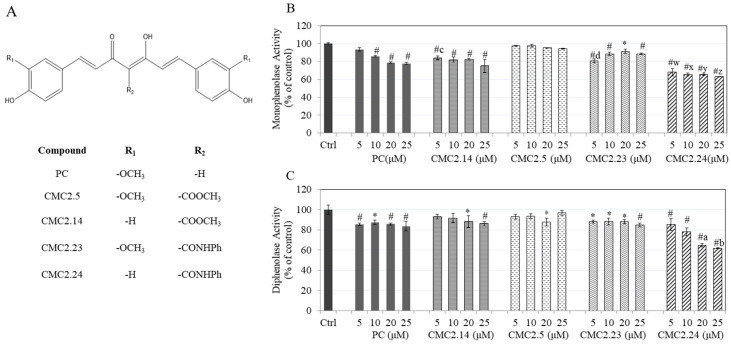
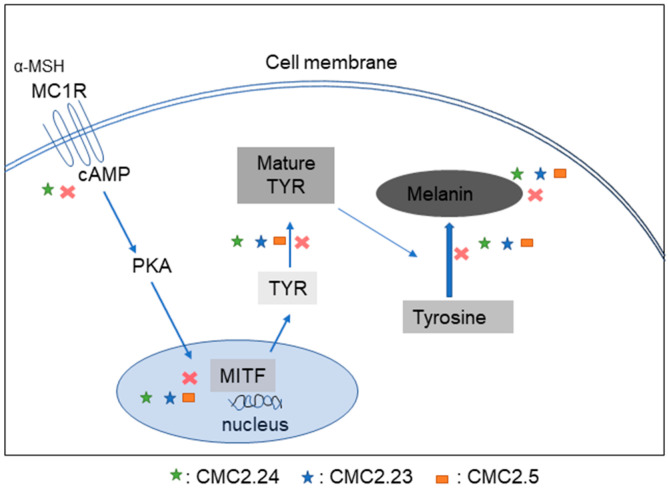
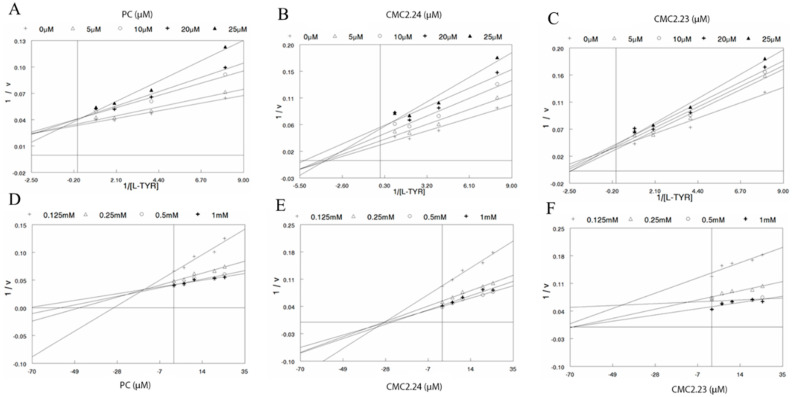
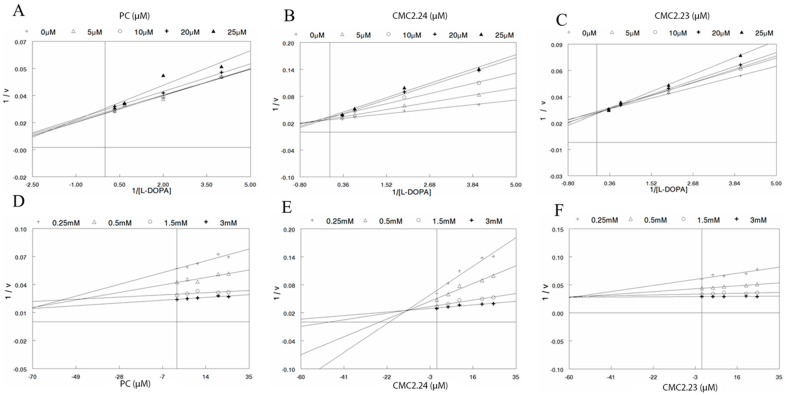
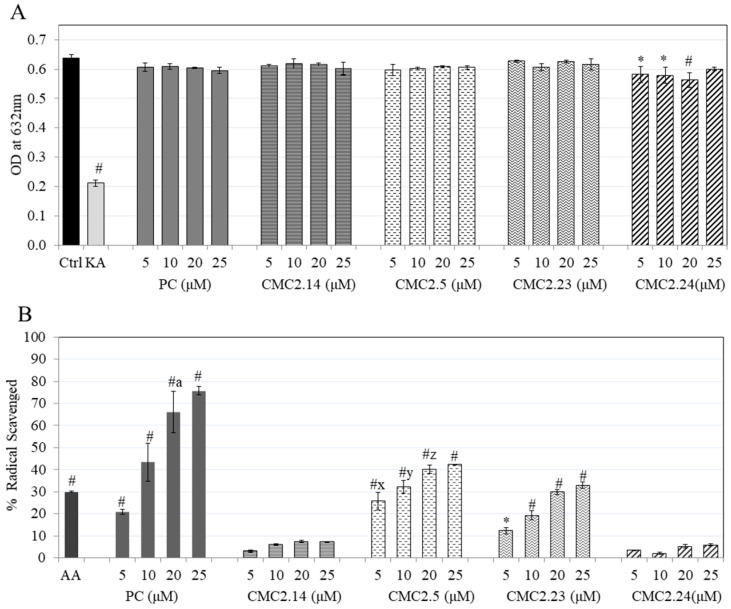
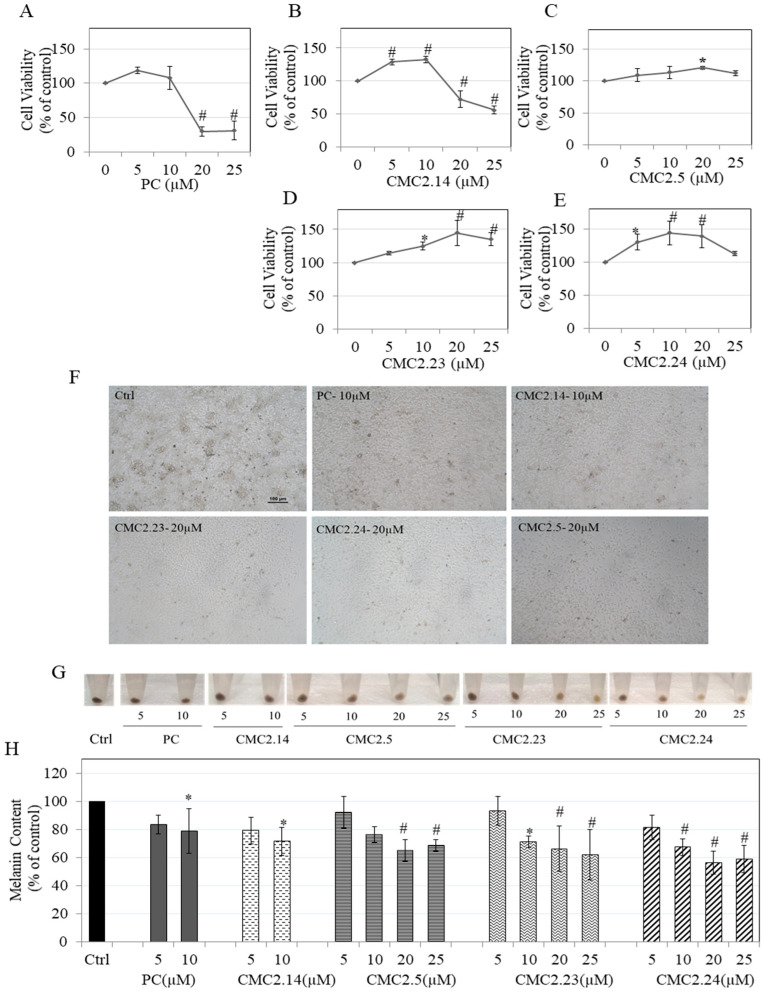
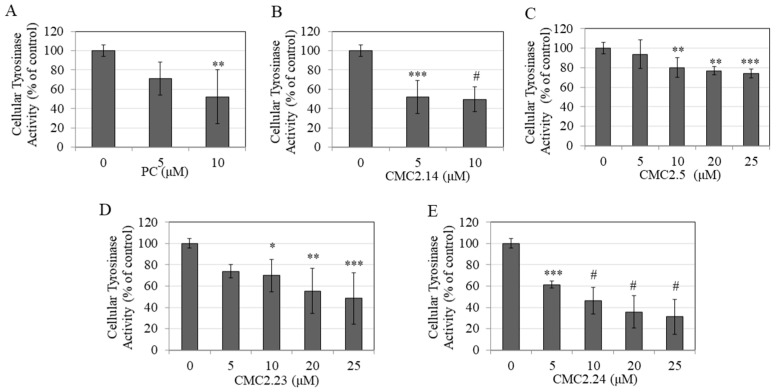
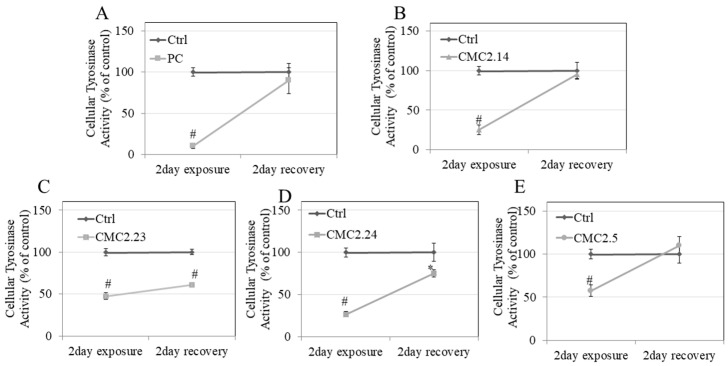
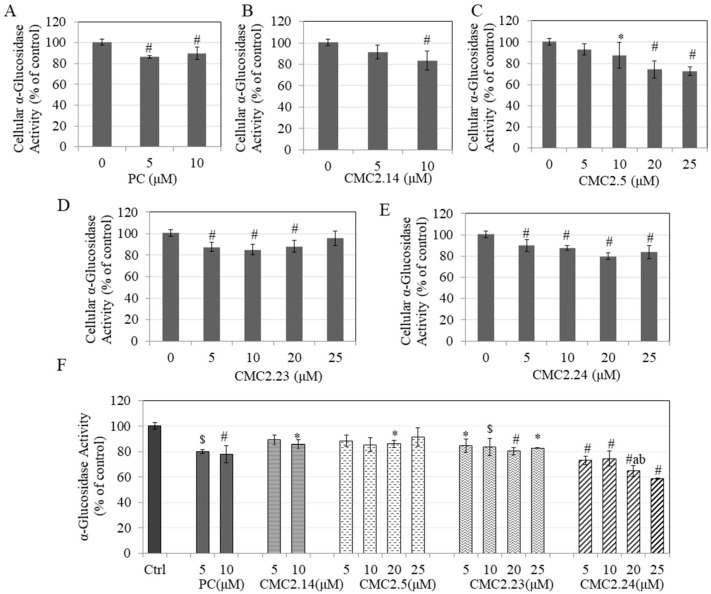
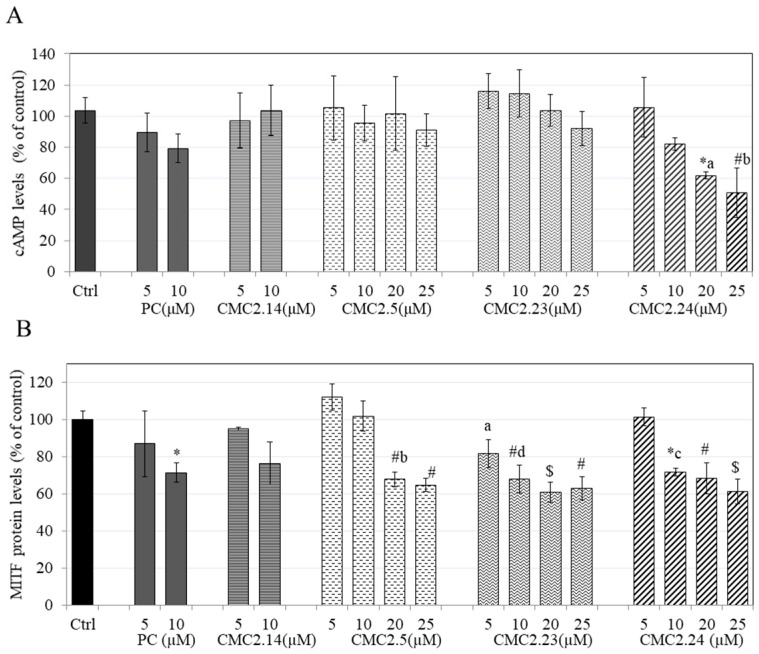
Skin hyperpigmentation disorders arise due to excessive production of the macromolecular pigment melanin catalyzed by the enzyme tyrosinase. Recently, the therapeutic use of curcumin for inhibiting tyrosinase activity and production of melanin have been recognized, but poor stability and solubility have limited its use, which has inspired synthesis of curcumin analogs. Here, we investigated four novel chemically modified curcumin (CMC) derivatives (CMC2.14, CMC2.5, CMC2.23 and CMC2.24) and compared them to the parent compound curcumin (PC) for inhibition of in vitro tyrosinase activity using two substrates for monophenolase and diphenolase activities of the enzyme and for diminution of cellular melanogenesis. Enzyme kinetics were analyzed using Lineweaver-Burk and Dixon plots and nonlinear curve-fitting to determine the mechanism for tyrosinase inhibition. Copper chelating activity, using pyrocatechol violet dye indicator assay, and antioxidant activity, using a DPPH radical scavenging assay, were also conducted. Next, the capacity of these derivatives to inhibit tyrosinase-catalyzed melanogenesis was studied in B16F10 mouse melanoma cells and the mechanisms of inhibition were elucidated. Inhibition mechanisms were studied by measuring intracellular tyrosinase activity, cell-free and intracellular α-glucosidase enzyme activity, and effects on MITF protein level and cAMP maturation factor. Our results showed that CMC2.24 showed the greatest efficacy as a tyrosinase inhibitor of all the CMCs and was better than PC as well as a popular tyrosinase inhibitor-kojic acid. Both CMC2.24 and CMC2.23 inhibited tyrosinase enzyme activity by a mixed mode of inhibition with a predominant competitive mode. In addition, CMC2.24 as well as CMC2.23 showed a comparable robust efficacy in inhibiting melanogenesis in cultured melanocytes. Furthermore, after removal of CMC2.24 or CMC2.23 from the medium, we could demonstrate a partial recovery of the suppressed intracellular tyrosinase activity in the melanocytes. Our results provide a proof-of-principle for the novel use of the CMCs that shows them to be far superior to the parent compound, curcumin, for skin depigmentation.
皮肤色素沉着障碍是由于酶酪氨酸酶催化的大分子色素黑色素的过度产生而引起的。最近,人们已经认识到姜黄素在抑制酪氨酸酶活性和黑色素生成方面的治疗用途,但由于其稳定性和溶解度差,限制了其使用,这激发了姜黄素类似物的合成。在这里,我们研究了四种新型化学修饰的姜黄素(CMC2.14、CMC2.5、CMC2.23 和 CMC2.24),并将它们与母体化合物姜黄素(PC)进行了比较,以抑制体外酪氨酸酶活性,使用两种酶的单酚酶和二酚酶活性的底物,并减少细胞黑色素生成。使用 Lineweaver-Burk 和 Dixon 图以及非线性曲线拟合来分析酶动力学,以确定酪氨酸酶抑制的机制。还进行了铜螯合活性(使用邻苯二酚紫染料指示剂测定法)和抗氧化活性(使用 DPPH 自由基清除测定法)。接下来,研究了这些衍生物在 B16F10 小鼠黑色素瘤细胞中抑制酪氨酸酶催化的黑色素生成的能力,并阐明了抑制机制。通过测量细胞内酪氨酸酶活性、无细胞和细胞内α-葡萄糖苷酶活性以及对 MITF 蛋白水平和 cAMP 成熟因子的影响,研究了抑制机制。我们的结果表明,CMC2.24 是所有 CMC 中抑制酪氨酸酶最有效的化合物,其效果优于 PC 和流行的酪氨酸酶抑制剂-曲酸。CMC2.24 和 CMC2.23 均通过主要为竞争性模式的混合模式抑制酪氨酸酶酶活性。此外,CMC2.24 和 CMC2.23 在抑制培养的黑素细胞中的黑色素生成方面具有相当强的功效。此外,在从培养基中去除 CMC2.24 或 CMC2.23 后,我们可以证明黑素细胞中抑制的细胞内酪氨酸酶活性部分恢复。我们的结果为 CMC 的新用途提供了原理证明,表明它们在皮肤脱色方面远比母体化合物姜黄素优越。