Zhou Ying, Lu Weifeng, Tang Weibing
Department of Pediatric Surgery, Children's Hospital of Nanjing Medical University, 72 Guangzhou Road, Jiangsu Province, 210008, Nanjing, China.
BMC Pediatr. 2021 May 4;21(1):219. doi: 10.1186/s12887-021-02673-5.
To review the value of the gastrointestinal failure (GIF) score in children with different degrees of traumatic brain injury (TBI) by analyzing the correlation between outcome and gastrointestinal function.
A total of 165 children with TBI who were diagnosed and treated in the surgical intensive care unit (SICU) for longer than 72 h between August 2017 and September 2019 were analyzed. Admission parameters included sex, age, Glasgow Coma Scale (GCS) score, body mass index (BMI), leukocyte count, C-reactive protein (CRP), hemoglobin (Hb), hematocrit (Hct), blood glucose, lactic acid, procalcitonin (PCT), albumin, plasma osmotic pressure, prothrombin time (PT) and activated partial thromboplastin time (APTT). To predict outcomes, the Pediatric Sequential Organ Failure Assessment (SOFA) score, Pediatric Clinical Illness Score (PCIS), and mean GIF score for the first three days were combined.
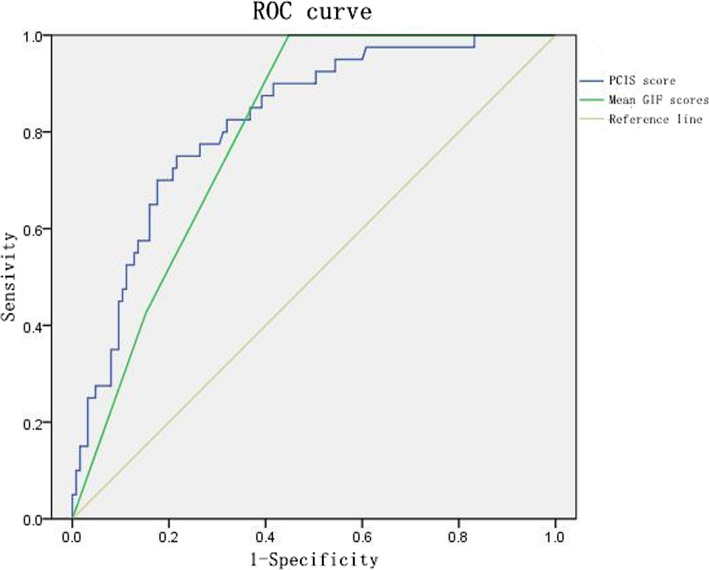
The percentage of patients with gastrointestinal dysfunction on the first day was 78.8 %. Food intolerance (FI) and intra-abdominal hypertension (IAH) developed in 36.4 and 21.8 % of the patients, respectively. The GIF score and mean GIF score for the first three days were significantly different between children with different degrees of TBI (P < 0.05); these scores were also significantly different between patients who died and those who survived (P < 0.05). The mean GIF score for the first three days was identified as an independent risk factor for mortality (odds ratio > 1, 95 % confidence interval = 1.457 to 16.016, P < 0.01), as was the PCIS. Receiver operating characteristic (ROC) curve analysis suggested that the mean GIF score for the first three days had the same calibrating power as the PCIS in discriminating the risk of death of children.
The incidence of gastrointestinal dysfunction in children with TBI is high. The GIF score has the ability to reflect the status of the gastrointestinal system. The mean GIF score for the first three days has high prognostic value for ICU mortality in the SICU.
通过分析结局与胃肠功能之间的相关性,评估胃肠功能衰竭(GIF)评分在不同程度创伤性脑损伤(TBI)患儿中的价值。
分析2017年8月至2019年9月期间在外科重症监护病房(SICU)诊断并治疗超过72小时的165例TBI患儿。入院参数包括性别、年龄、格拉斯哥昏迷量表(GCS)评分、体重指数(BMI)、白细胞计数、C反应蛋白(CRP)、血红蛋白(Hb)、血细胞比容(Hct)、血糖、乳酸、降钙素原(PCT)、白蛋白、血浆渗透压、凝血酶原时间(PT)和活化部分凝血活酶时间(APTT)。为预测结局,将小儿序贯器官衰竭评估(SOFA)评分、小儿临床疾病评分(PCIS)和前三天的平均GIF评分相结合。
第一天出现胃肠功能障碍的患者比例为78.8%。分别有36.4%和21.8%的患者出现食物不耐受(FI)和腹腔内高压(IAH)。不同程度TBI患儿的GIF评分和前三天的平均GIF评分有显著差异(P<0.05);死亡患者和存活患者之间的这些评分也有显著差异(P<0.05)。前三天的平均GIF评分被确定为死亡的独立危险因素(比值比>1,95%置信区间=1.457至16.016,P<0.01),PCIS也是如此。受试者工作特征(ROC)曲线分析表明,前三天的平均GIF评分在区分儿童死亡风险方面与PCIS具有相同的校准能力。
TBI患儿胃肠功能障碍的发生率较高。GIF评分能够反映胃肠系统的状态。前三天的平均GIF评分对SICU中ICU死亡率具有较高的预后价值。