Clinic of Obstetrics, Gynecology, and Andrology of Large and Small Animals with Ambulatory Service, Justus Liebig University Giessen, Frankfurter Strasse 106, 35392, Giessen, Germany.
AG Biomathematics and Data Processing, Justus Liebig University Giessen, Frankfurter Strasse 95, 35392, Giessen, Germany.
BMC Vet Res. 2021 May 4;17(1):183. doi: 10.1186/s12917-021-02845-6.
The present study investigated whether the administration of the progestin altrenogest provides noninvasive, temporary, and reversible suppression of gonadal function in the goat as a potential alternative to chirurgical castration, which is related with irreversibility, risks of complications till death of the animal and welfare issues. Eight sexually mature Peacock goats were randomly divided into two groups. The experimental group was administered altrenogest (0.088 mg/kg) orally once daily for 7 weeks. The remaining four goats received an oral glucose solution and served as the control group. After completing the administration period, the reversibility of the medication was evaluated for another 7 weeks (observation phase). The treatment effects were assessed by clinical examination; ultrasound examination of the testes, including one-dimensional grayscale analysis, blood testosterone levels, analysis of semen parameters and libido. At the end of the observation period, the animals were castrated and the testicles were examined histologically.
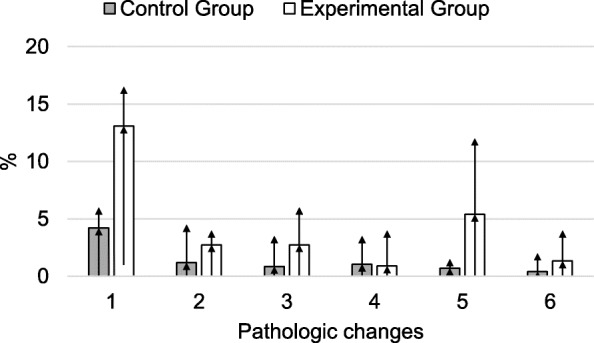
Altrenogest treatment had no significant effect on the physical development of the goats, the sonographic appearance of the testes, the gray values measured in the ultrasound images, or the blood testosterone levels. The effects of treatment on the testicular and semen parameters varied widely in the experimental animals; the testicle volume was significantly lower and the number of pathologically altered sperm in the ejaculate was significantly higher in treated animals.
These findings indicate that daily altrenogest administration at a dose of 0.088 mg/kg does not reliably suppress gonadal function in the goat.
本研究旨在探讨孕激素烯丙孕素是否可以在山羊中提供非侵入性、暂时和可逆的性腺功能抑制,作为手术去势的替代方法,手术去势具有不可逆性、动物死亡相关并发症风险以及福利问题。将 8 只性成熟的孔雀山羊随机分为两组。实验组每天口服烯丙孕素(0.088mg/kg)一次,共 7 周。其余 4 只山羊口服葡萄糖溶液作为对照组。完成给药期后,再进行 7 周的药物逆转评估(观察期)。通过临床检查、睾丸超声检查(包括一维灰度分析)、血液睾酮水平、精液参数和性欲分析来评估治疗效果。在观察期末,对动物进行去势,并对睾丸进行组织学检查。
烯丙孕素治疗对山羊的身体发育、睾丸的超声表现、超声图像中的灰度值或血液睾酮水平没有显著影响。治疗对睾丸和精液参数的影响在实验动物中差异很大;与对照组相比,处理组的睾丸体积明显较小,精液中病理性改变的精子数量明显较多。
这些发现表明,每天以 0.088mg/kg 的剂量给予烯丙孕素不能可靠地抑制山羊的性腺功能。