Division of Newborn Medicine, Boston Children's Hospital, 300 Longwood Avenue, Boston, MA, 02115, USA.
Department of Pediatrics, Harvard Medical School, Boston, MA, 02115, USA.
Genome Biol. 2021 May 4;22(1):134. doi: 10.1186/s13059-021-02360-9.
The evolution of multicellularity is a critical event that remains incompletely understood. We use the social amoeba, Dictyostelium discoideum, one of the rare organisms that readily transits back and forth between both unicellular and multicellular stages, to examine the role of epigenetics in regulating multicellularity.
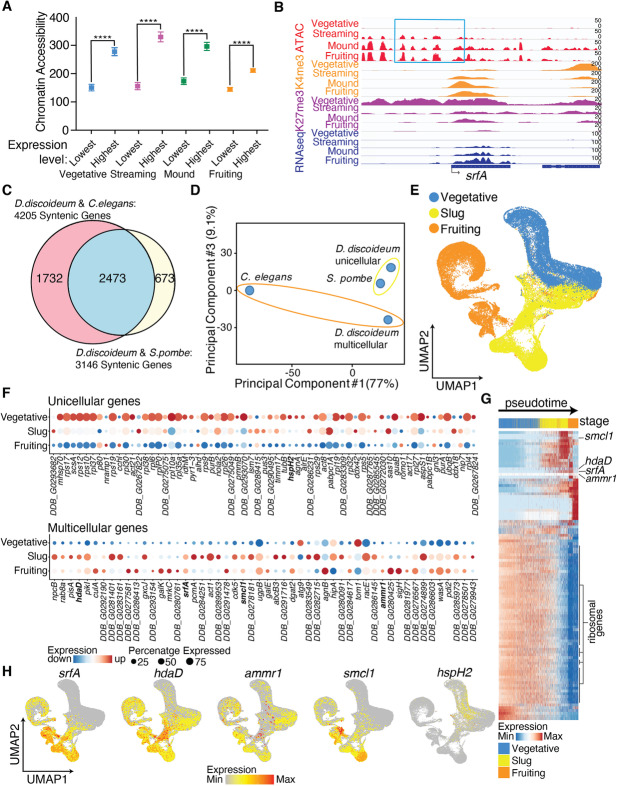
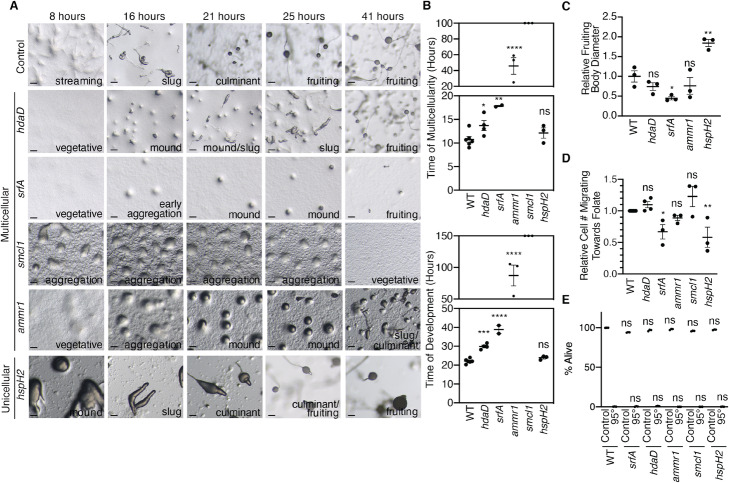
While transitioning to multicellular states, patterns of H3K4 methylation and H3K27 acetylation significantly change. By combining transcriptomics, epigenomics, chromatin accessibility, and orthologous gene analyses with other unicellular and multicellular organisms, we identify 52 conserved genes, which are specifically accessible and expressed during multicellular states. We validated that four of these genes, including the H3K27 deacetylase hdaD, are necessary and that an SMC-like gene, smcl1, is sufficient for multicellularity in Dictyostelium.
These results highlight the importance of epigenetics in reorganizing chromatin architecture to facilitate multicellularity in Dictyostelium discoideum and raise exciting possibilities about the role of epigenetics in the evolution of multicellularity more broadly.
多细胞生物的进化是一个仍未完全理解的关键事件。我们使用了社会阿米巴虫(Dictyostelium discoideum),这是一种罕见的生物,能够轻松地在单细胞和多细胞阶段之间来回转化,以此来研究表观遗传学在调节多细胞性方面的作用。
在向多细胞状态转变的过程中,H3K4 甲基化和 H3K27 乙酰化的模式发生了显著变化。通过将转录组学、表观基因组学、染色质可及性以及与其他单细胞和多细胞生物的同源基因分析相结合,我们鉴定出了 52 个保守基因,这些基因在多细胞状态下具有特异性的可及性和表达。我们验证了这四个基因中的四个,包括 H3K27 去乙酰化酶 hdaD,是必需的,而 SMC 样基因 smcl1 在 Dictyostelium 中足以促进多细胞性。
这些结果强调了表观遗传学在重新组织染色质结构以促进多细胞性方面的重要性,并为表观遗传学在更广泛的多细胞生物进化中的作用提出了令人兴奋的可能性。