Department of Microbiology and Immunology, University of Illinois at Chicago, Chicago, Illinois, USA.
Department of Pharmaceutical Sciences, University of Illinois at Chicago, Chicago, Illinois, USA.
mBio. 2021 May 4;12(3):e03400-20. doi: 10.1128/mBio.03400-20.
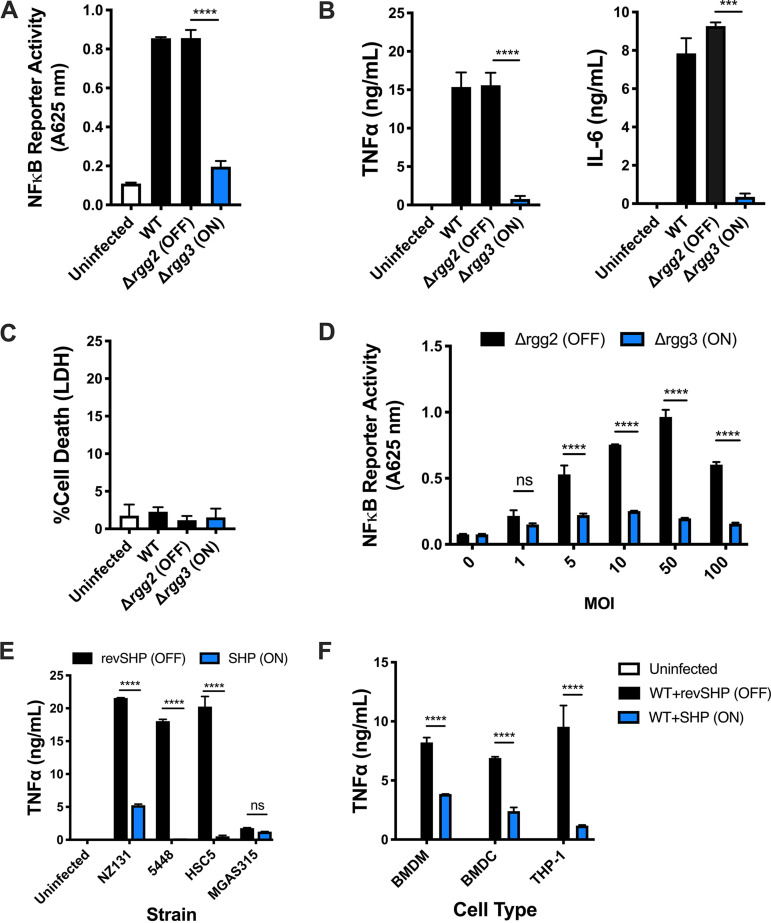
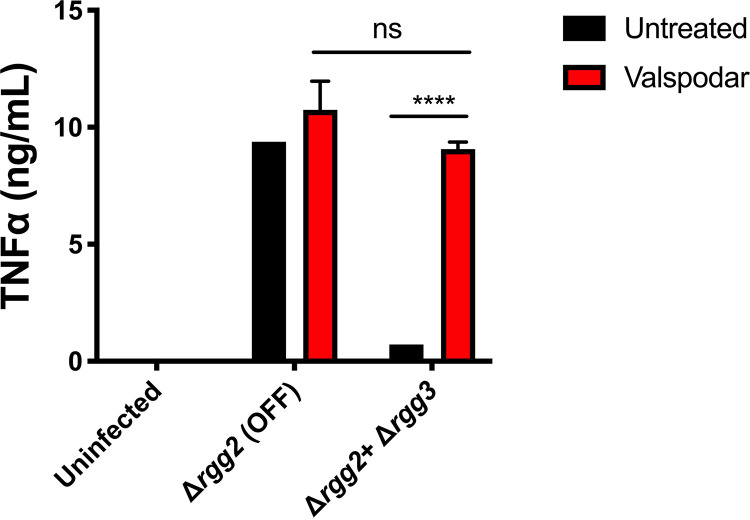
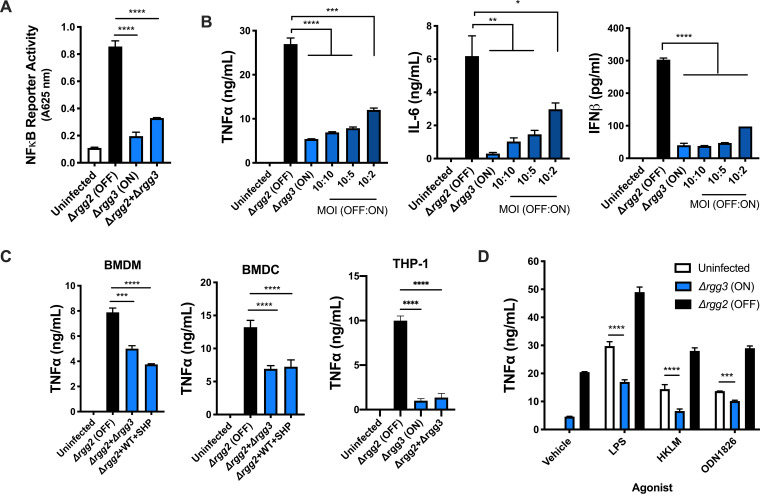
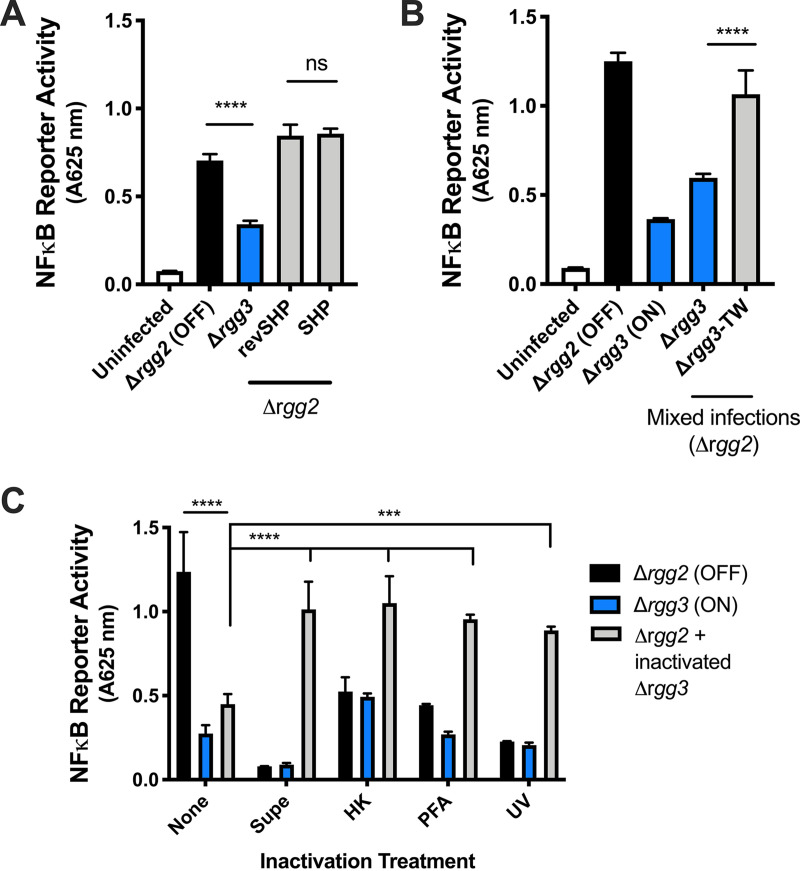
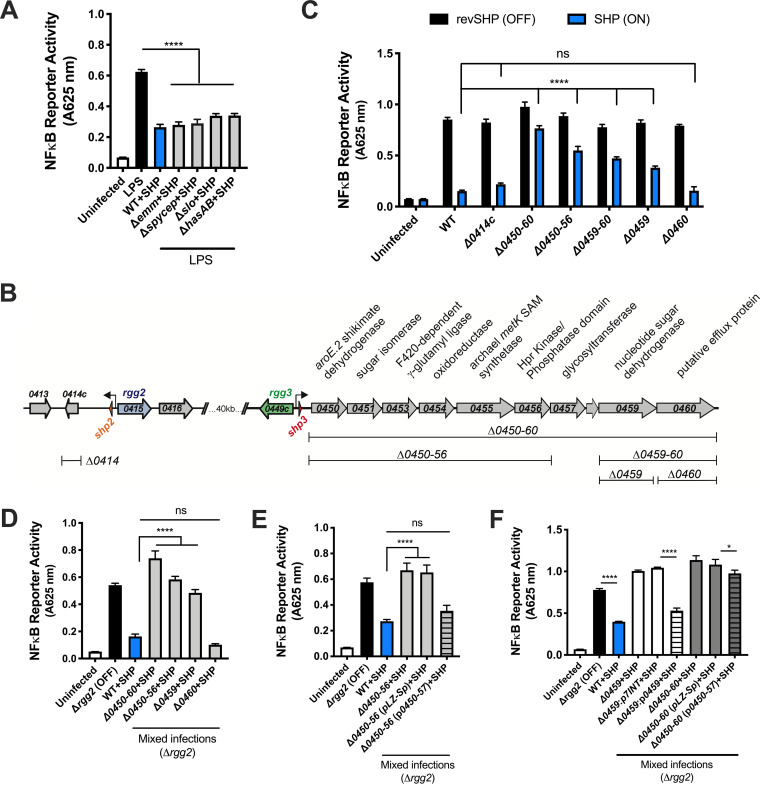
Some bacterial pathogens utilize cell-cell communication systems, such as quorum sensing (QS), to coordinate genetic programs during host colonization and infection. The human-restricted pathosymbiont (group A streptococcus [GAS]) uses the Rgg2/Rgg3 QS system to modify the bacterial surface, enabling biofilm formation and lysozyme resistance. Here, we demonstrate that innate immune cell responses to GAS are substantially altered by the QS status of the bacteria. We found that macrophage activation, stimulated by multiple agonists and assessed by cytokine production and NF-κB activity, was substantially suppressed upon interaction with QS-active GAS but not QS-inactive bacteria. Neither macrophage viability nor bacterial adherence, internalization, or survival were altered by the QS activation status, yet tumor necrosis factor alpha (TNF-α), interleukin 6 (IL-6), and interferon beta (IFN-β) levels and NF-κB reporter activity were drastically lower following infection with QS-active GAS. Suppression required contact between viable bacteria and macrophages. A QS-regulated biosynthetic gene cluster (BGC) in the GAS genome, encoding several putative enzymes, was also required for macrophage modulation. Our findings suggest a model wherein upon contact with macrophages, QS-active GAS produce a BGC-derived factor capable of suppressing inflammatory responses. The suppressive capability of QS-active GAS is abolished after treatment with a specific QS inhibitor. These observations suggest that interfering with the ability of bacteria to collaborate via QS can serve as a strategy to counteract microbial efforts to manipulate host defenses. is restricted to human hosts and commonly causes superficial diseases such as pharyngitis; it can also cause severe and deadly manifestations including necrotizing skin disease or severe postinfectious sequelae like rheumatic heart disease. Understanding the complex mechanisms used by this pathogen to manipulate host defenses could aid in developing new therapeutics to treat infections. Here, we examine the impact of a bacterial cell-cell communication system, which is highly conserved across , on host innate immune responses. We find that uses this system to suppress macrophage proinflammatory cytokine responses Interference with this communication system could serve as a strategy to disarm bacteria and maintain an effective immune response.
一些细菌病原体利用细胞间通讯系统,如群体感应 (QS),在宿主定植和感染期间协调遗传程序。人类限制性共生体(A 组链球菌 [GAS])使用 Rgg2/Rgg3 QS 系统来修饰细菌表面,从而促进生物膜形成和溶菌酶抗性。在这里,我们证明了先天免疫细胞对 GAS 的反应在很大程度上受到细菌 QS 状态的改变。我们发现,巨噬细胞的激活,由多种激动剂刺激,并通过细胞因子产生和 NF-κB 活性来评估,在与 QS 活性 GAS 相互作用时会受到显著抑制,但与 QS 非活性细菌则不会。QS 激活状态既不会改变巨噬细胞的活力,也不会改变细菌的粘附、内化或存活,但 TNF-α、IL-6 和 IFN-β 水平和 NF-κB 报告基因活性在感染 QS 活性 GAS 后会明显降低。抑制作用需要活细菌与巨噬细胞接触。GAS 基因组中的一个 QS 调节生物合成基因簇 (BGC),编码几种假定的酶,也需要对巨噬细胞进行调节。我们的研究结果表明了一种模型,即在与巨噬细胞接触时,QS 活性 GAS 产生一种 BGC 衍生的因子,能够抑制炎症反应。QS 活性 GAS 的抑制能力在经过特定的 QS 抑制剂处理后被消除。这些观察结果表明,干扰细菌通过 QS 进行协作的能力可以作为一种策略来对抗微生物操纵宿主防御的努力。 是一种仅限于人类宿主的病原体,通常引起上呼吸道疾病,如咽炎;它也可引起严重和致命的表现,包括坏死性皮肤疾病或严重的感染后后遗症,如风湿性心脏病。了解这种病原体用来操纵宿主防御的复杂机制可以帮助开发新的治疗感染的方法。在这里,我们研究了一种高度保守的细菌细胞间通讯系统对宿主先天免疫反应的影响。我们发现 GAS 使用该系统来抑制巨噬细胞的促炎细胞因子反应。干扰这种通讯系统可能是一种策略,可以削弱细菌并维持有效的免疫反应。