Project Director, The Centre for Sexual Health and HIV/AIDS Research, Harare, Zimbabwe (CeSHHAR Zimbabwe); Senior Lecturer, Liverpool School of Tropical Medicine, Liverpool, UK.
Consultant, World Health Organization, Geneva, Switzerland.
Sex Reprod Health Matters. 2021 Dec;29(1):1913787. doi: 10.1080/26410397.2021.1913787.
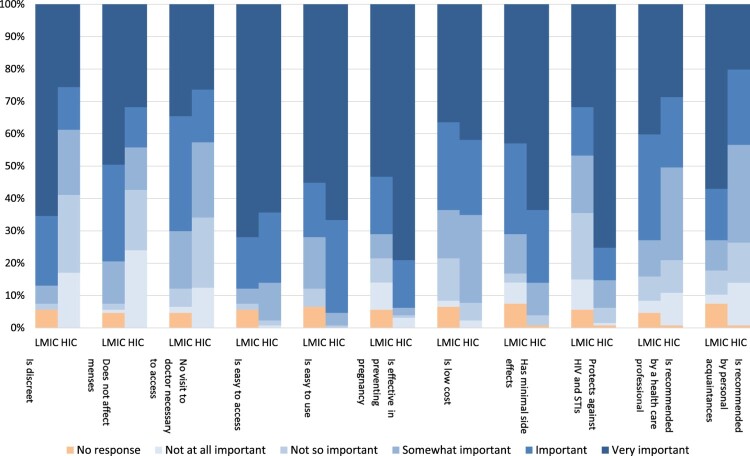
There is limited information on contraceptive values and preferences of sex workers. We conducted a mixed-method study to explore contraceptive values and preferences among sex workers. We conducted an online survey with individuals from 38 countries ( = 239), 6 focus group discussions (FGD, = 68) in Zimbabwe, and 12 in-depth phone interviews (IDI) across 4 world regions, in June and July of 2019. Participants were asked about awareness of contraceptives, methods they had used in the past, and the determinants of their choices. Differences between respondents from high-, low- and middle- income countries were examined. Qualitative data were analysed thematically. Survey participants reported an awareness of modern contraceptive methods. FGDs found that younger women had lower awareness. Reports of condomless sex were common and modern contraceptive use was inconsistent. Determinants of contraceptive choices differed by setting according to results of the survey, FGD, and IDI. Regardless of country income level, determinants of contraceptive choices included ease of use, ease of access to a contraceptive method, and fewer side effects. Healthcare provider attitudes, availability of methods, and clinic schedules were important considerations. Most sex workers are aware of contraceptives, but barriers include male partners/clients, side effects, and health system factors such as access and clinic attitudes towards sex workers.
关于性工作者的避孕价值观和偏好的信息有限。我们进行了一项混合方法研究,以探索性工作者的避孕价值观和偏好。我们于 2019 年 6 月至 7 月期间在 38 个国家( = 239 人)进行了在线调查,在津巴布韦进行了 6 次焦点小组讨论( = 68 人),并在 4 个世界区域进行了 12 次深入的电话访谈(IDI)。参与者被问及对避孕药具的认识、过去使用过的方法以及选择的决定因素。检查了来自高、中、低收入国家的受访者之间的差异。对定性数据进行了主题分析。调查参与者报告了对现代避孕药具方法的认识。焦点小组讨论发现,年轻女性的认识水平较低。经常有报道称发生了无保护的性行为,而现代避孕药具的使用并不一致。根据调查、焦点小组讨论和电话访谈的结果,避孕选择的决定因素因环境而异。无论国家收入水平如何,避孕选择的决定因素包括使用方便、获取避孕方法的方便程度以及副作用较少。医疗保健提供者的态度、方法的可用性和诊所的日程安排都是重要的考虑因素。大多数性工作者都知道避孕药具,但障碍包括男性伴侣/客户、副作用以及获取和诊所对性工作者的态度等卫生系统因素。