• 文献检索
  • 文档翻译
  • 深度研究
  • 学术资讯
  • Suppr Zotero 插件Zotero 插件
  • 邀请有礼
  • 套餐&价格
  • 历史记录
应用&插件
Suppr Zotero 插件Zotero 插件浏览器插件Mac 客户端Windows 客户端微信小程序
定价
高级版会员购买积分包购买API积分包
服务
文献检索文档翻译深度研究API 文档MCP 服务
关于我们
关于 Suppr公司介绍联系我们用户协议隐私条款
关注我们

Suppr 超能文献

核心技术专利:CN118964589B侵权必究
粤ICP备2023148730 号-1Suppr @ 2026

文献检索

告别复杂PubMed语法,用中文像聊天一样搜索,搜遍4000万医学文献。AI智能推荐,让科研检索更轻松。

立即免费搜索

文件翻译

保留排版,准确专业,支持PDF/Word/PPT等文件格式,支持 12+语言互译。

免费翻译文档

深度研究

AI帮你快速写综述,25分钟生成高质量综述,智能提取关键信息,辅助科研写作。

立即免费体验

使用机器学习算法进行网络攻击方法及作案者预测

Cyber-attack method and perpetrator prediction using machine learning algorithms.

作者信息

Bilen Abdulkadir, Özer Ahmet Bedri

机构信息

Criminal Department, General Directorate of Security, Ankara, Turkey.

Department of Computer Engineering, Firat University, Elazığ, Turkey.

出版信息

PeerJ Comput Sci. 2021 Apr 9;7:e475. doi: 10.7717/peerj-cs.475. eCollection 2021.

DOI:10.7717/peerj-cs.475
PMID:33954249
原文链接:https://pmc.ncbi.nlm.nih.gov/articles/PMC8049120/
Abstract

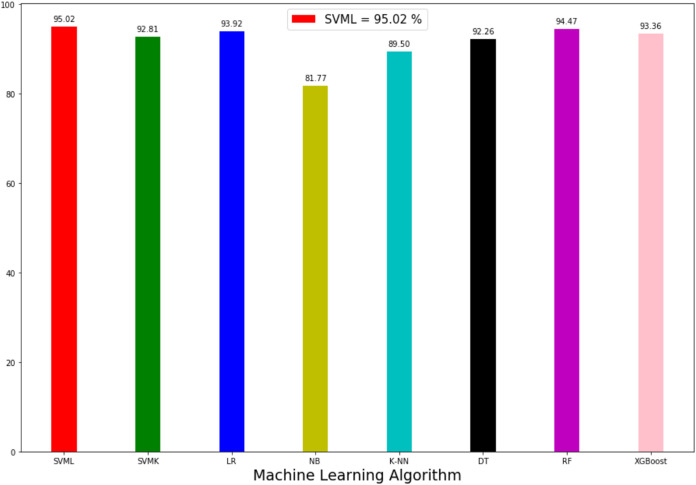
Cyber-attacks have become one of the biggest problems of the world. They cause serious financial damages to countries and people every day. The increase in cyber-attacks also brings along cyber-crime. The key factors in the fight against crime and criminals are identifying the perpetrators of cyber-crime and understanding the methods of attack. Detecting and avoiding cyber-attacks are difficult tasks. However, researchers have recently been solving these problems by developing security models and making predictions through artificial intelligence methods. A high number of methods of crime prediction are available in the literature. On the other hand, they suffer from a deficiency in predicting cyber-crime and cyber-attack methods. This problem can be tackled by identifying an attack and the perpetrator of such attack, using actual data. The data include the type of crime, gender of perpetrator, damage and methods of attack. The data can be acquired from the applications of the persons who were exposed to cyber-attacks to the forensic units. In this paper, we analyze cyber-crimes in two different models with machine-learning methods and predict the effect of the defined features on the detection of the cyber-attack method and the perpetrator. We used eight machine-learning methods in our approach and concluded that their accuracy ratios were close. The Support Vector Machine Linear was found out to be the most successful in the cyber-attack method, with an accuracy rate of 95.02%. In the first model, we could predict the types of attacks that the victims were likely to be exposed to with a high accuracy. The Logistic Regression was the leading method in detecting attackers with an accuracy rate of 65.42%. In the second model, we predicted whether the perpetrators could be identified by comparing their characteristics. Our results have revealed that the probability of cyber-attack decreases as the education and income level of victim increases. We believe that cyber-crime units will use the proposed model. It will also facilitate the detection of cyber-attacks and make the fight against these attacks easier and more effective.

摘要

网络攻击已成为全球最大的问题之一。它们每天都给国家和人民造成严重的经济损失。网络攻击的增加还带来了网络犯罪。打击犯罪和罪犯的关键因素是识别网络犯罪的实施者并了解攻击方法。检测和避免网络攻击是艰巨的任务。然而,研究人员最近通过开发安全模型和利用人工智能方法进行预测来解决这些问题。文献中存在大量犯罪预测方法。另一方面,它们在预测网络犯罪和网络攻击方法方面存在不足。通过使用实际数据识别攻击及其实施者,可以解决这个问题。这些数据包括犯罪类型、犯罪者性别、损失和攻击方法。这些数据可以从遭受网络攻击的人员向法医单位提交的申请中获取。在本文中,我们使用机器学习方法在两种不同模型中分析网络犯罪,并预测所定义特征对检测网络攻击方法和犯罪者的影响。我们在方法中使用了八种机器学习方法,得出它们的准确率相近。发现支持向量机线性模型在网络攻击方法方面最为成功,准确率为95.02%。在第一个模型中,我们能够高精度地预测受害者可能遭受的攻击类型。逻辑回归在检测攻击者方面是领先方法,准确率为65.42%。在第二个模型中,我们通过比较犯罪者的特征来预测是否能够识别他们。我们的结果表明,随着受害者教育水平和收入水平的提高,网络攻击的可能性会降低。我们相信网络犯罪单位将使用所提出的模型。它还将便于检测网络攻击,并使打击这些攻击的工作更加轻松有效。
https://cdn.ncbi.nlm.nih.gov/pmc/blobs/f082/8049120/89016c86d926/peerj-cs-07-475-g009.jpg
https://cdn.ncbi.nlm.nih.gov/pmc/blobs/f082/8049120/f068acda98b1/peerj-cs-07-475-g001.jpg
https://cdn.ncbi.nlm.nih.gov/pmc/blobs/f082/8049120/faba6513742c/peerj-cs-07-475-g002.jpg
https://cdn.ncbi.nlm.nih.gov/pmc/blobs/f082/8049120/a577be3e977c/peerj-cs-07-475-g003.jpg
https://cdn.ncbi.nlm.nih.gov/pmc/blobs/f082/8049120/a0cc0a5094f5/peerj-cs-07-475-g004.jpg
https://cdn.ncbi.nlm.nih.gov/pmc/blobs/f082/8049120/b499686ef989/peerj-cs-07-475-g005.jpg
https://cdn.ncbi.nlm.nih.gov/pmc/blobs/f082/8049120/4df6f92a2a11/peerj-cs-07-475-g006.jpg
https://cdn.ncbi.nlm.nih.gov/pmc/blobs/f082/8049120/c98069c7d500/peerj-cs-07-475-g007.jpg
https://cdn.ncbi.nlm.nih.gov/pmc/blobs/f082/8049120/4fdfdd2b9402/peerj-cs-07-475-g008.jpg
https://cdn.ncbi.nlm.nih.gov/pmc/blobs/f082/8049120/89016c86d926/peerj-cs-07-475-g009.jpg
https://cdn.ncbi.nlm.nih.gov/pmc/blobs/f082/8049120/f068acda98b1/peerj-cs-07-475-g001.jpg
https://cdn.ncbi.nlm.nih.gov/pmc/blobs/f082/8049120/faba6513742c/peerj-cs-07-475-g002.jpg
https://cdn.ncbi.nlm.nih.gov/pmc/blobs/f082/8049120/a577be3e977c/peerj-cs-07-475-g003.jpg
https://cdn.ncbi.nlm.nih.gov/pmc/blobs/f082/8049120/a0cc0a5094f5/peerj-cs-07-475-g004.jpg
https://cdn.ncbi.nlm.nih.gov/pmc/blobs/f082/8049120/b499686ef989/peerj-cs-07-475-g005.jpg
https://cdn.ncbi.nlm.nih.gov/pmc/blobs/f082/8049120/4df6f92a2a11/peerj-cs-07-475-g006.jpg
https://cdn.ncbi.nlm.nih.gov/pmc/blobs/f082/8049120/c98069c7d500/peerj-cs-07-475-g007.jpg
https://cdn.ncbi.nlm.nih.gov/pmc/blobs/f082/8049120/4fdfdd2b9402/peerj-cs-07-475-g008.jpg
https://cdn.ncbi.nlm.nih.gov/pmc/blobs/f082/8049120/89016c86d926/peerj-cs-07-475-g009.jpg

相似文献

1
Cyber-attack method and perpetrator prediction using machine learning algorithms.使用机器学习算法进行网络攻击方法及作案者预测
PeerJ Comput Sci. 2021 Apr 9;7:e475. doi: 10.7717/peerj-cs.475. eCollection 2021.
2
Personalized insulin dose manipulation attack and its detection using interval-based temporal patterns and machine learning algorithms.个性化胰岛素剂量操纵攻击及其基于区间的时间模式和机器学习算法检测
J Biomed Inform. 2022 Aug;132:104129. doi: 10.1016/j.jbi.2022.104129. Epub 2022 Jun 30.
3
Defending the Defender: Adversarial Learning Based Defending Strategy for Learning Based Security Methods in Cyber-Physical Systems (CPS).捍卫防御者:基于对抗学习的防御策略,用于网络物理系统 (CPS) 中的基于学习的安全方法。
Sensors (Basel). 2023 Jun 9;23(12):5459. doi: 10.3390/s23125459.
4
Cyber security in the age of COVID-19: A timeline and analysis of cyber-crime and cyber-attacks during the pandemic.新冠疫情时代的网络安全:疫情期间网络犯罪与网络攻击的时间线及分析
Comput Secur. 2021 Jun;105:102248. doi: 10.1016/j.cose.2021.102248. Epub 2021 Mar 3.
5
Development of an IoT Architecture Based on a Deep Neural Network against Cyber Attacks for Automated Guided Vehicles.基于深度神经网络的物联网架构开发,以应对自动化引导车辆的网络攻击。
Sensors (Basel). 2021 Dec 18;21(24):8467. doi: 10.3390/s21248467.
6
Artificial Intelligence Algorithm-Based Economic Denial of Sustainability Attack Detection Systems: Cloud Computing Environments.基于人工智能算法的经济可持续性否认攻击检测系统:云计算环境。
Sensors (Basel). 2022 Jun 21;22(13):4685. doi: 10.3390/s22134685.
7
Improved Wireless Medical Cyber-Physical System (IWMCPS) Based on Machine Learning.基于机器学习的改进型无线医疗信息物理系统(IWMCPS)
Healthcare (Basel). 2023 Jan 29;11(3):384. doi: 10.3390/healthcare11030384.
8
Cyber Sextortion: An Exploratory Analysis of Different Perpetrators Engaging in a Similar Crime.网络敲诈勒索:对实施类似犯罪的不同犯罪者的探索性分析
J Interpers Violence. 2022 Jan;37(1-2):258-283. doi: 10.1177/0886260520909186. Epub 2020 Mar 9.
9
Impact, Vulnerabilities, and Mitigation Strategies for Cyber-Secure Critical Infrastructure.网络安全关键基础设施的影响、脆弱性和缓解策略。
Sensors (Basel). 2023 Apr 17;23(8):4060. doi: 10.3390/s23084060.
10
A holistic and proactive approach to forecasting cyber threats.一种整体的、积极主动的网络威胁预测方法。
Sci Rep. 2023 May 17;13(1):8049. doi: 10.1038/s41598-023-35198-1.

引用本文的文献

1
Integrating machine learning for sustaining cybersecurity in digital banks.整合机器学习以维持数字银行的网络安全。
Heliyon. 2024 Sep 6;10(17):e37571. doi: 10.1016/j.heliyon.2024.e37571. eCollection 2024 Sep 15.
2
Human, All Too Human? An All-Around Appraisal of the "Artificial Intelligence Revolution" in Medical Imaging.《人,太有人性了?医学影像领域“人工智能革命”的全面评估》
Front Psychol. 2021 Sep 28;12:710982. doi: 10.3389/fpsyg.2021.710982. eCollection 2021.