Department of Environmental Sciences, Institute of Biochemical Plant Pathology, Helmholtz Zentrum München, München, Germany.
Department of Biology, Heinrich-Heine-Universität Düsseldorf, Düsseldorf, Germany.
Plant Cell. 2021 May 5;33(3):714-734. doi: 10.1093/plcell/koaa044.
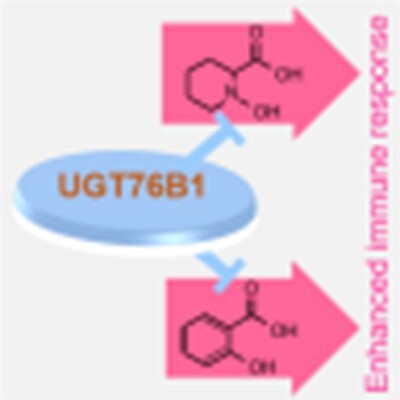
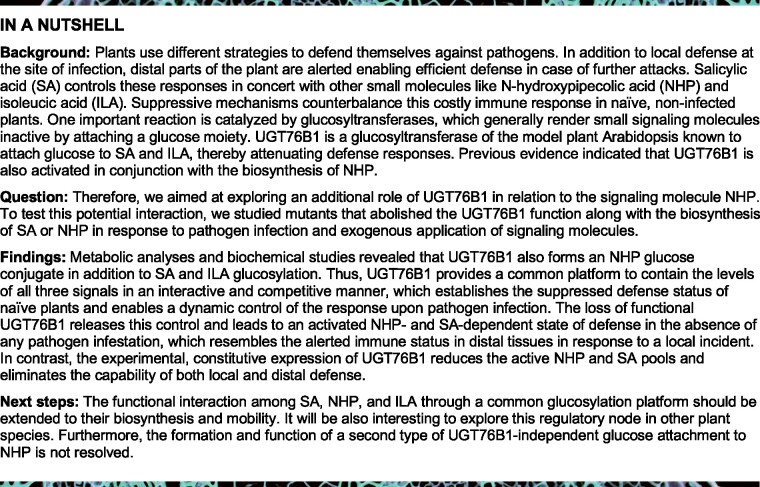
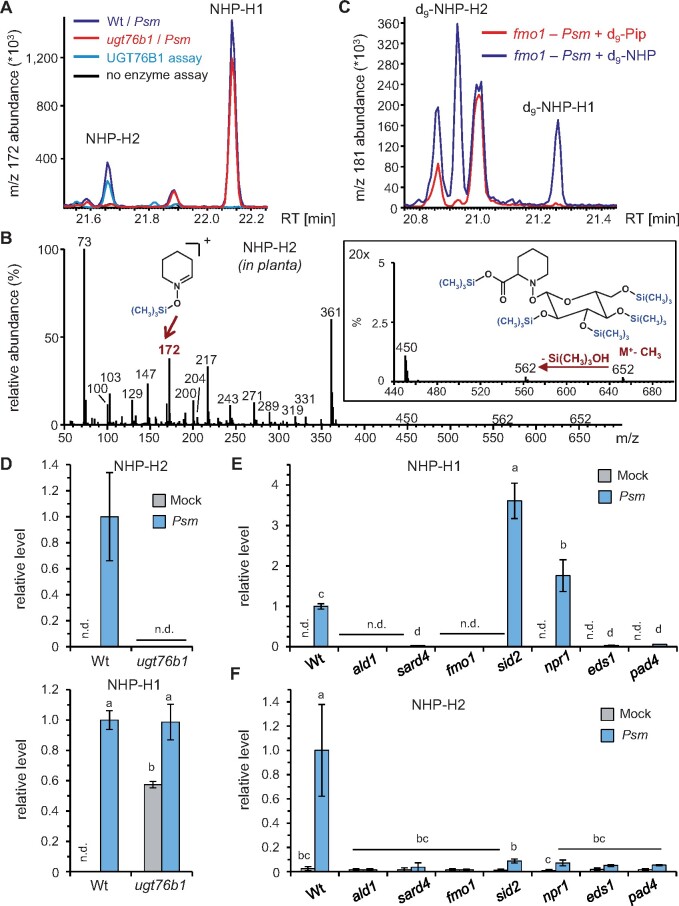
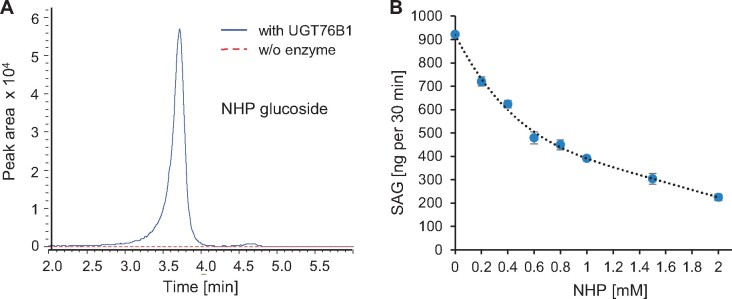
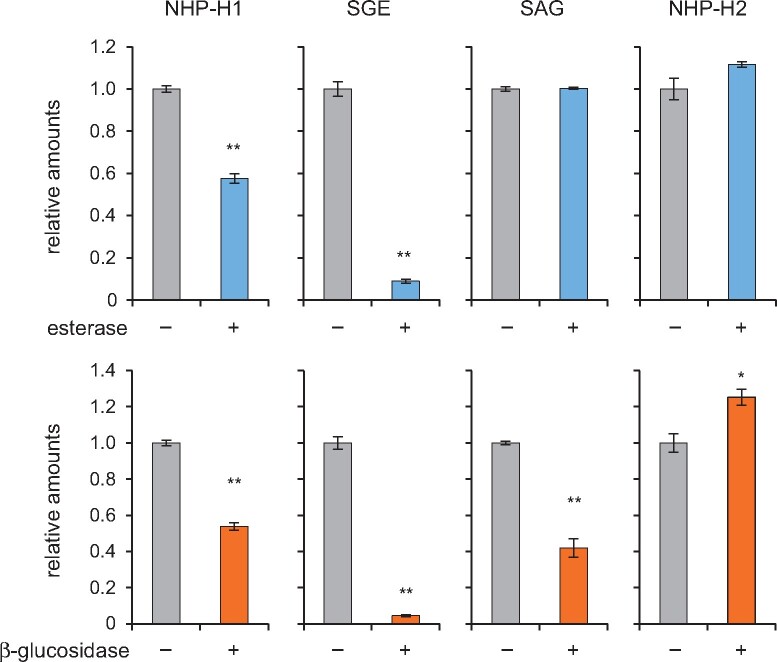
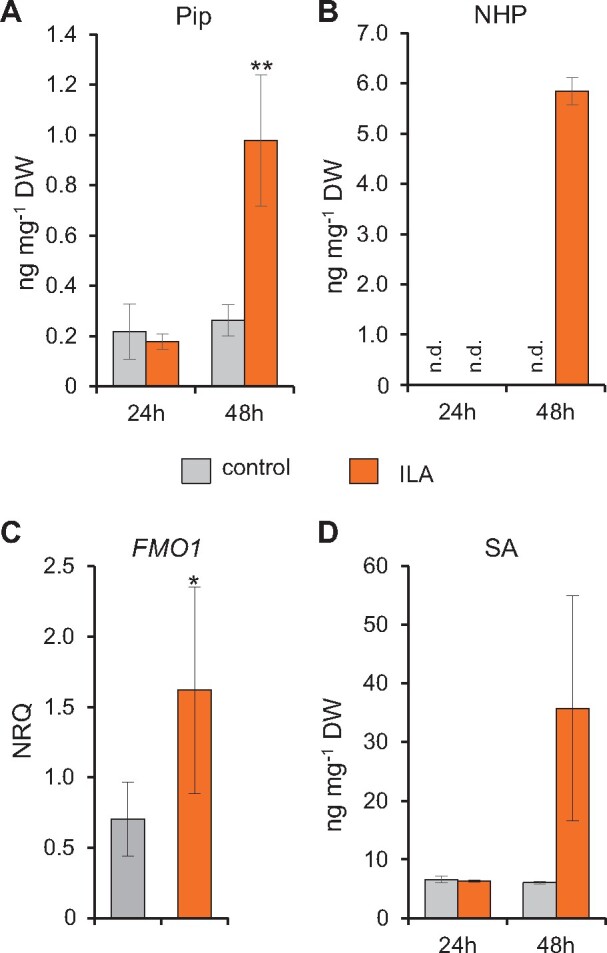
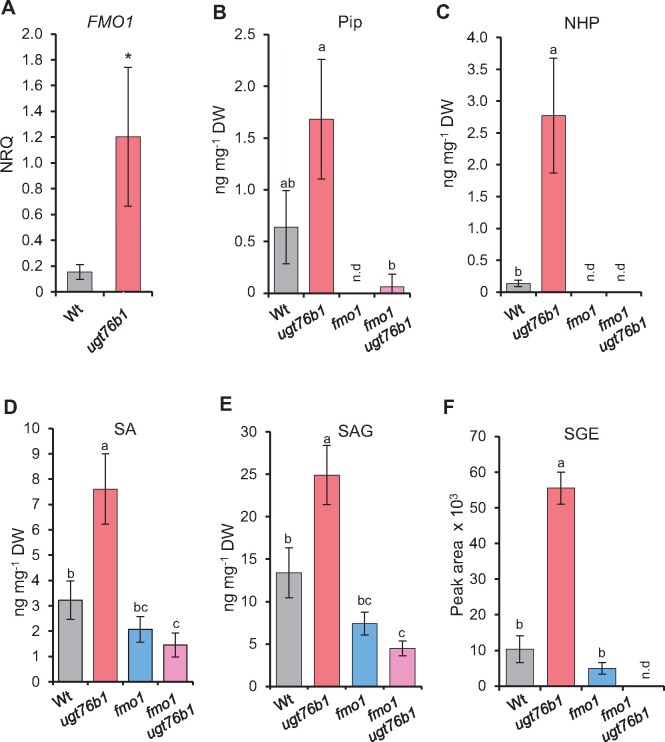
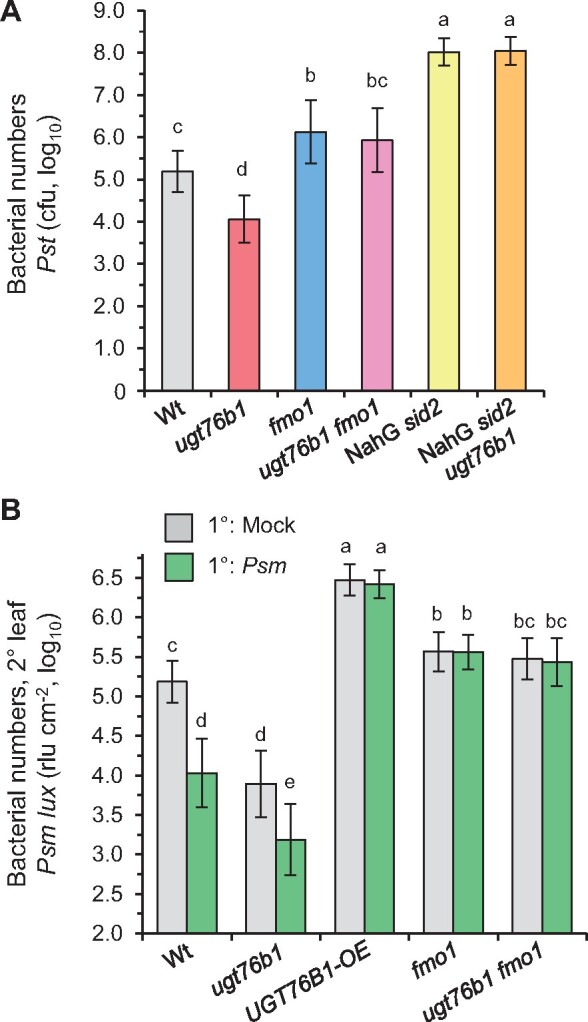
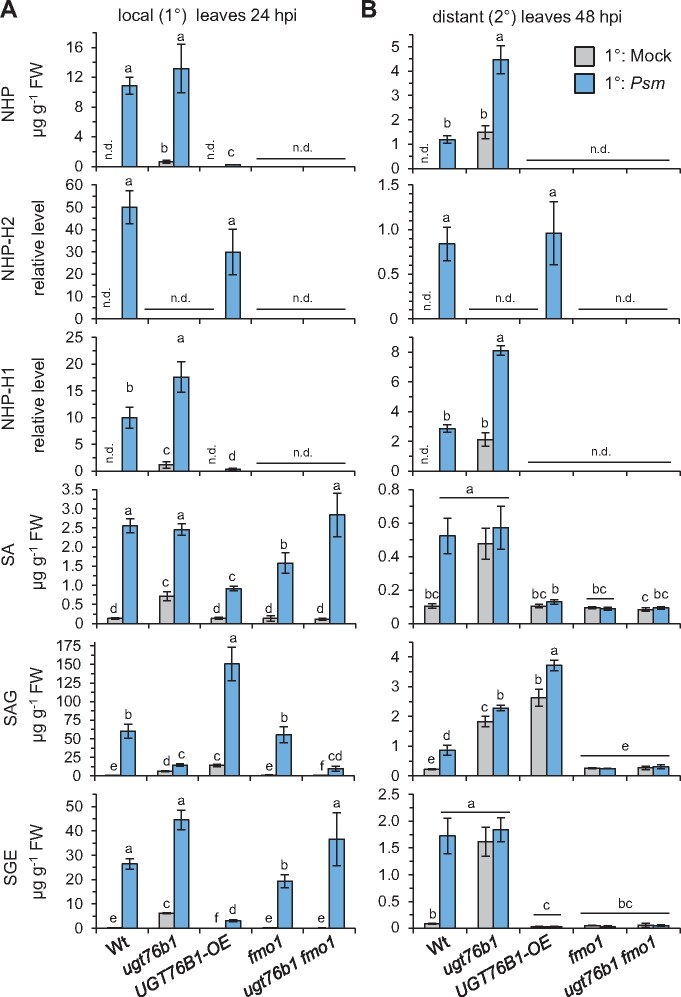
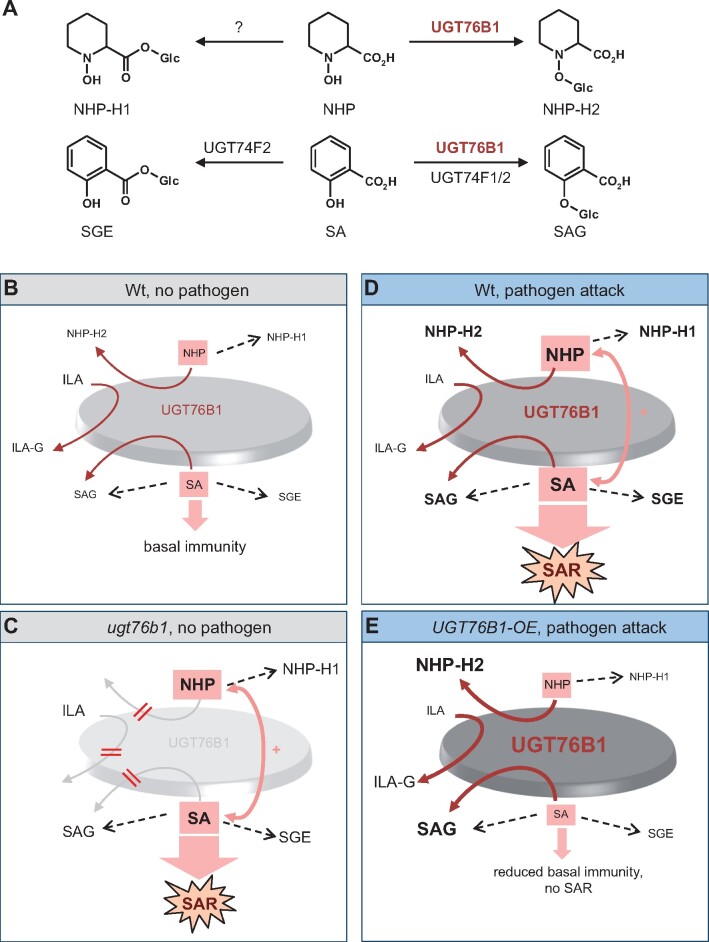
Glucosylation modulates the biological activity of small molecules and frequently leads to their inactivation. The Arabidopsis thaliana glucosyltransferase UGT76B1 is involved in conjugating the stress hormone salicylic acid (SA) as well as isoleucic acid (ILA). Here, we show that UGT76B1 also glucosylates N-hydroxypipecolic acid (NHP), which is synthesized by FLAVIN-DEPENDENT MONOOXYGENASE 1 (FMO1) and activates systemic acquired resistance (SAR). Upon pathogen attack, Arabidopsis leaves generate two distinct NHP hexose conjugates, NHP-O-β-glucoside and NHP glucose ester, whereupon only NHP-O-β-glucoside formation requires a functional SA pathway. The ugt76b1 mutants specifically fail to generate the NHP-O-β-glucoside, and recombinant UGT76B1 synthesizes NHP-O-β-glucoside in vitro in competition with SA and ILA. The loss of UGT76B1 elevates the endogenous levels of NHP, SA, and ILA and establishes a constitutive SAR-like immune status. Introgression of the fmo1 mutant lacking NHP biosynthesis into the ugt76b1 background abolishes this SAR-like resistance. Moreover, overexpression of UGT76B1 in Arabidopsis shifts the NHP and SA pools toward O-β-glucoside formation and abrogates pathogen-induced SAR. Our results further indicate that NHP-triggered immunity is SA-dependent and relies on UGT76B1 as a common metabolic hub. Thereby, UGT76B1-mediated glucosylation controls the levels of active NHP, SA, and ILA in concert to balance the plant immune status.
糖基化调节小分子的生物活性,经常导致其失活。拟南芥葡萄糖基转移酶 UGT76B1 参与结合应激激素水杨酸(SA)和异亮氨酸(ILA)。在这里,我们表明 UGT76B1 还可以糖基化 N-羟基哌啶酸(NHP),它是由黄素依赖性单加氧酶 1(FMO1)合成的,并激活系统获得性抗性(SAR)。在受到病原体攻击时,拟南芥叶片会产生两种不同的 NHP 己糖缀合物,NHP-O-β-葡萄糖苷和 NHP 葡萄糖酯,只有 NHP-O-β-葡萄糖苷的形成需要一个功能正常的 SA 途径。ugt76b1 突变体特异性地无法生成 NHP-O-β-葡萄糖苷,重组 UGT76B1 在体外与 SA 和 ILA 竞争合成 NHP-O-β-葡萄糖苷。UGT76B1 的缺失会提高内源性 NHP、SA 和 ILA 的水平,并建立一个组成型 SAR 样免疫状态。将缺乏 NHP 生物合成的 fmo1 突变体引入 ugt76b1 背景中会消除这种 SAR 样抗性。此外,在拟南芥中过表达 UGT76B1 会使 NHP 和 SA 库向 O-β-葡萄糖苷形成转移,并阻断病原体诱导的 SAR。我们的研究结果进一步表明,NHP 触发的免疫是 SA 依赖性的,并依赖于 UGT76B1 作为一个共同的代谢枢纽。因此,UGT76B1 介导的糖基化共同控制活性 NHP、SA 和 ILA 的水平,以平衡植物的免疫状态。