Department of Biology, Institute for Molecular Ecophysiology of Plants, Heinrich Heine University, Düsseldorf D-40225, Germany.
Department of Plant Molecular Biology and Physiology, Albrecht-von-Haller Institute for Plant Sciences, University of Göttingen, Göttingen D-37077, Germany.
Plant Physiol. 2021 Jul 6;186(3):1679-1705. doi: 10.1093/plphys/kiab166.
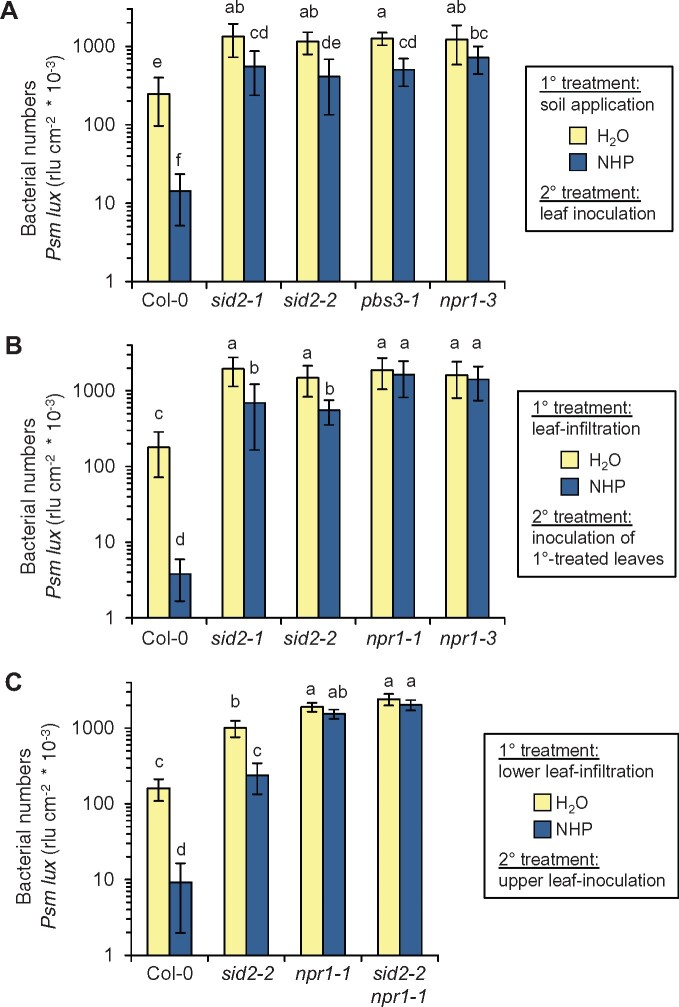
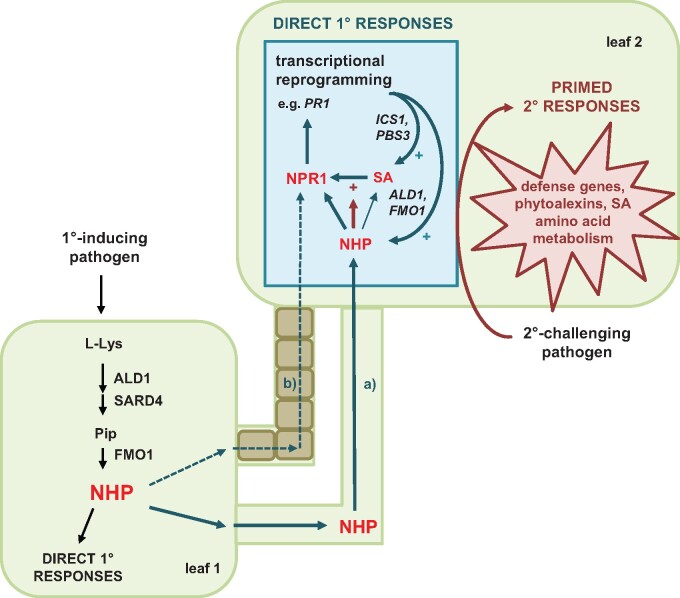
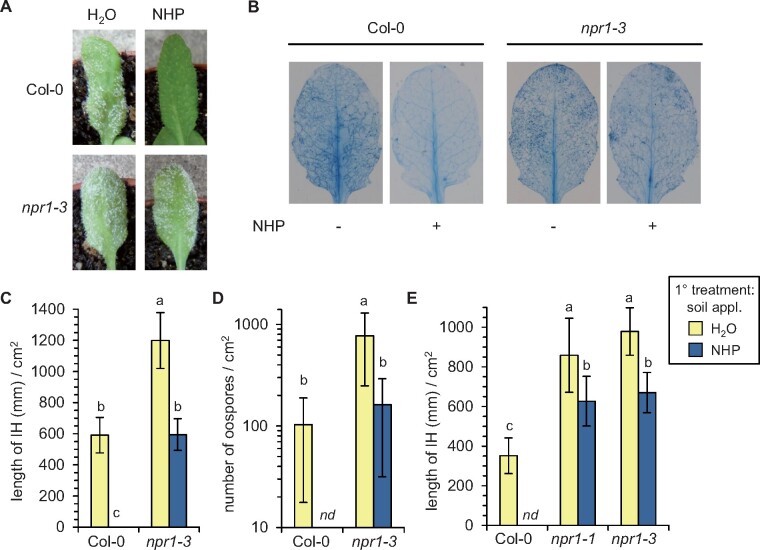
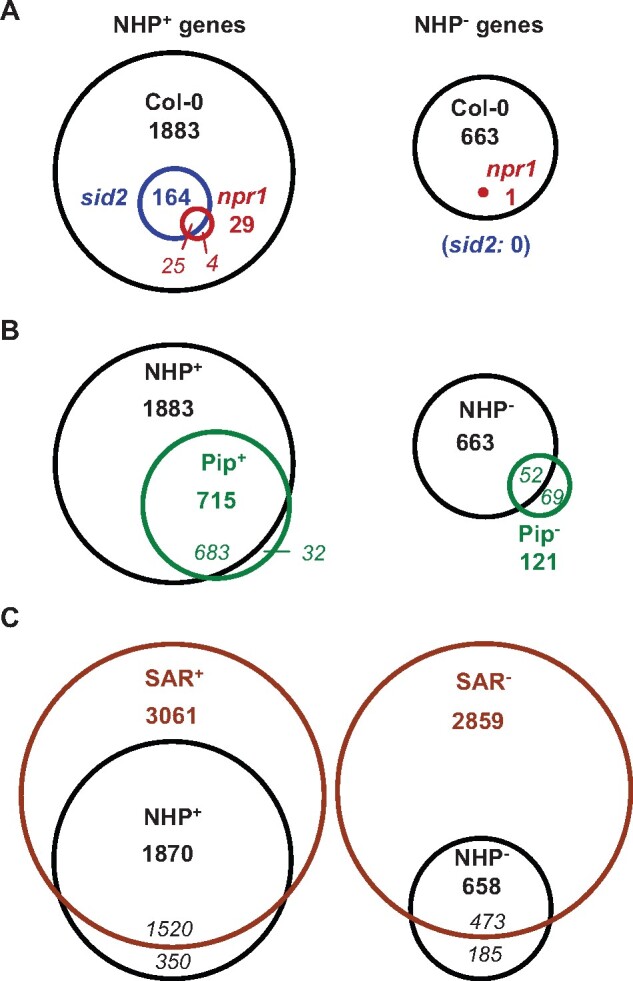
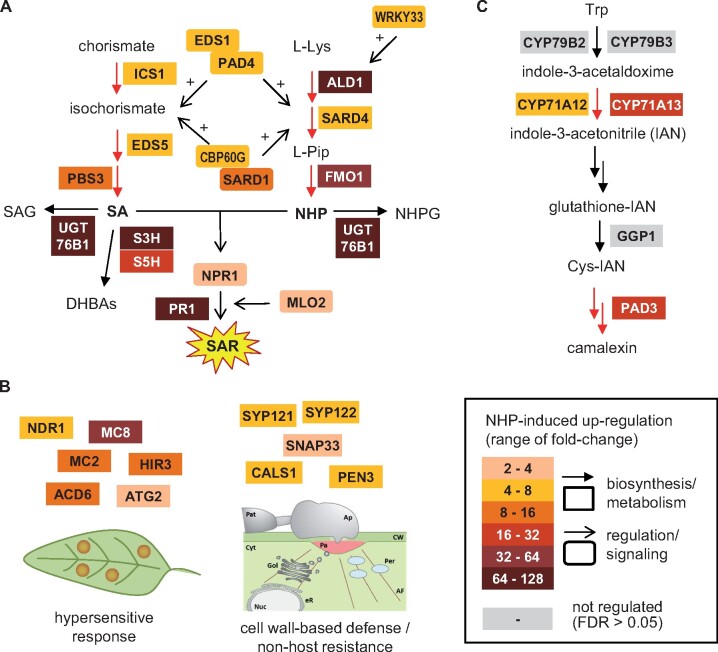
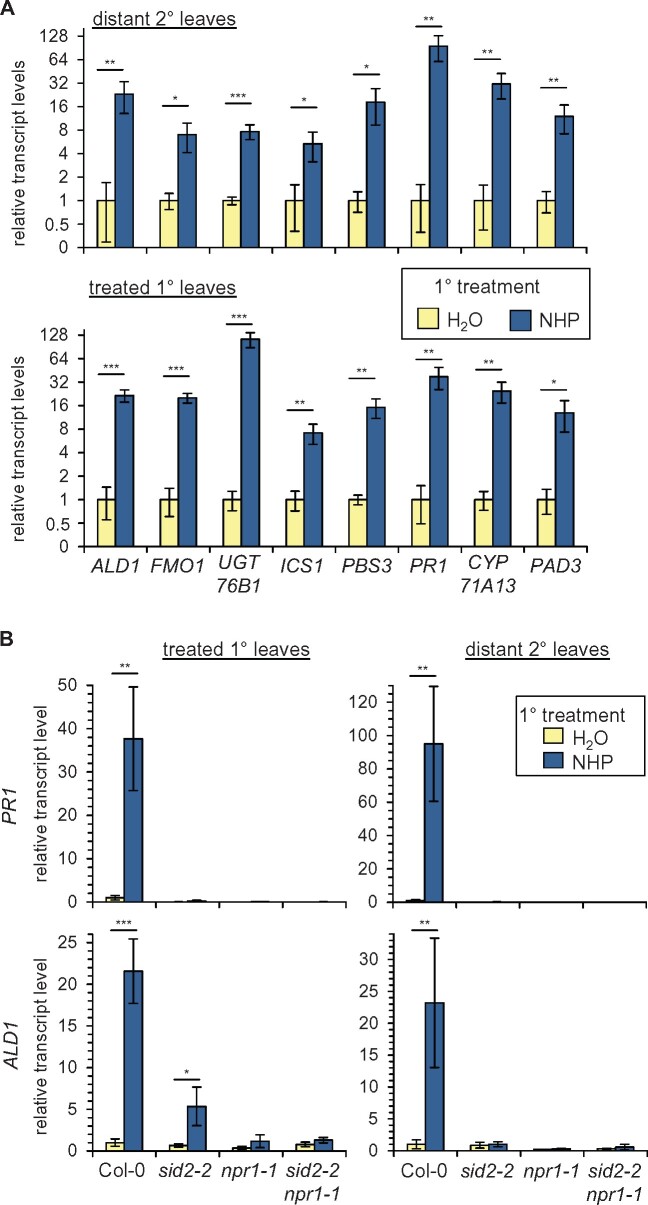
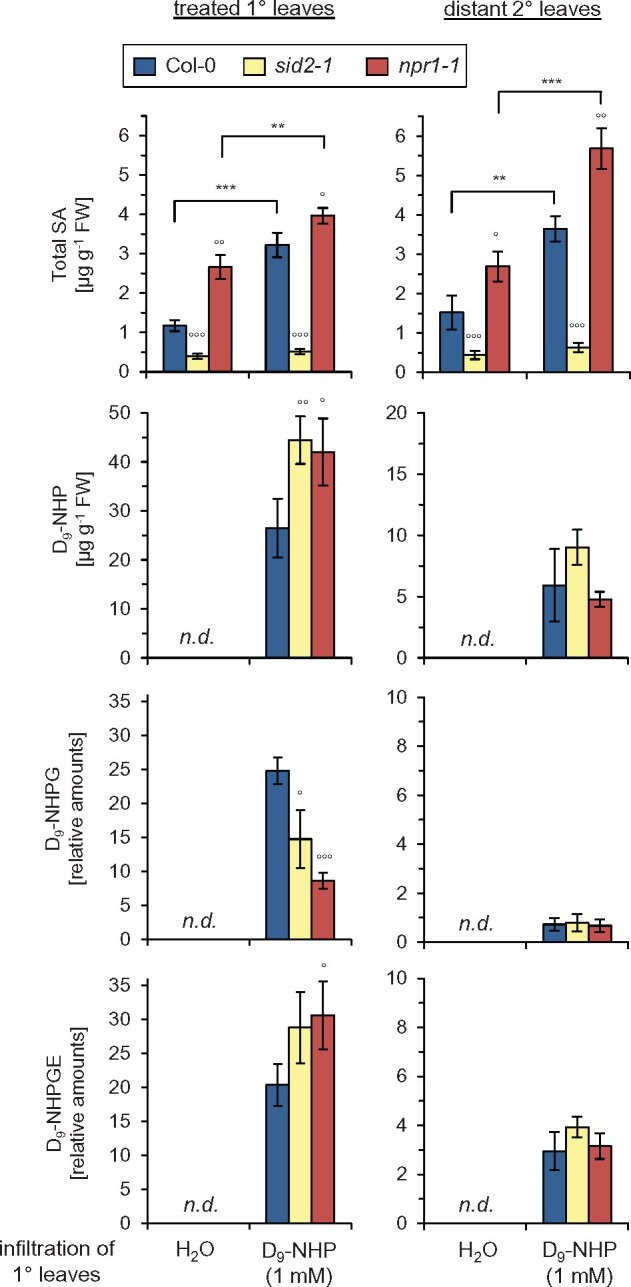
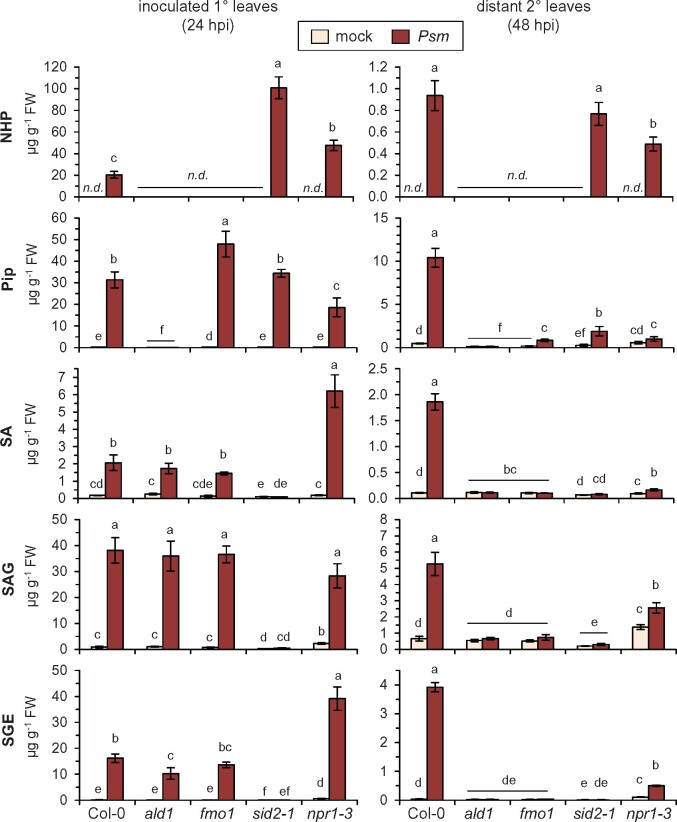
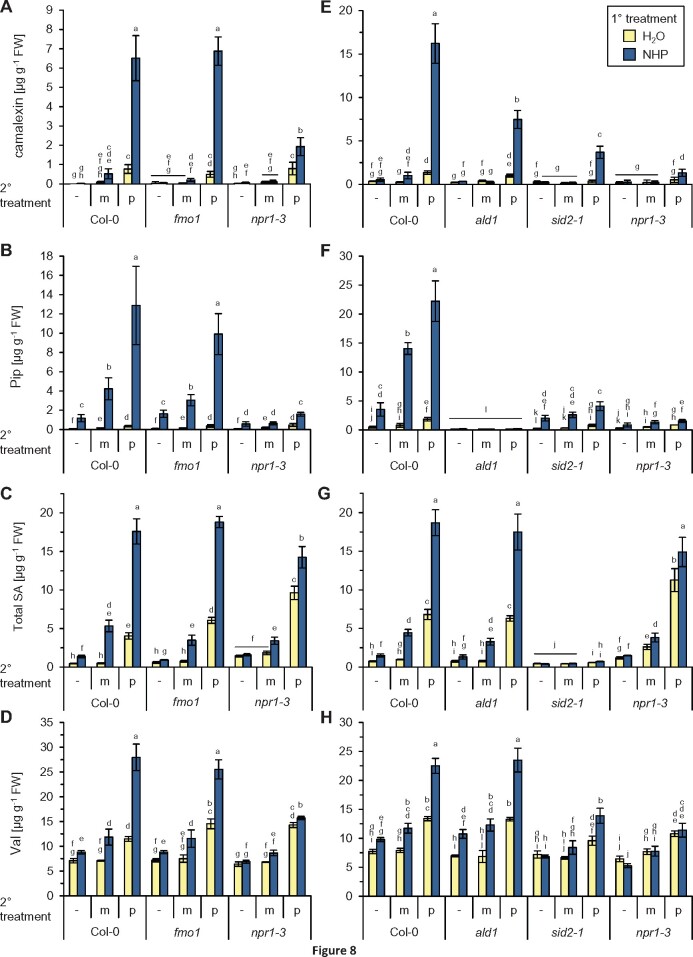
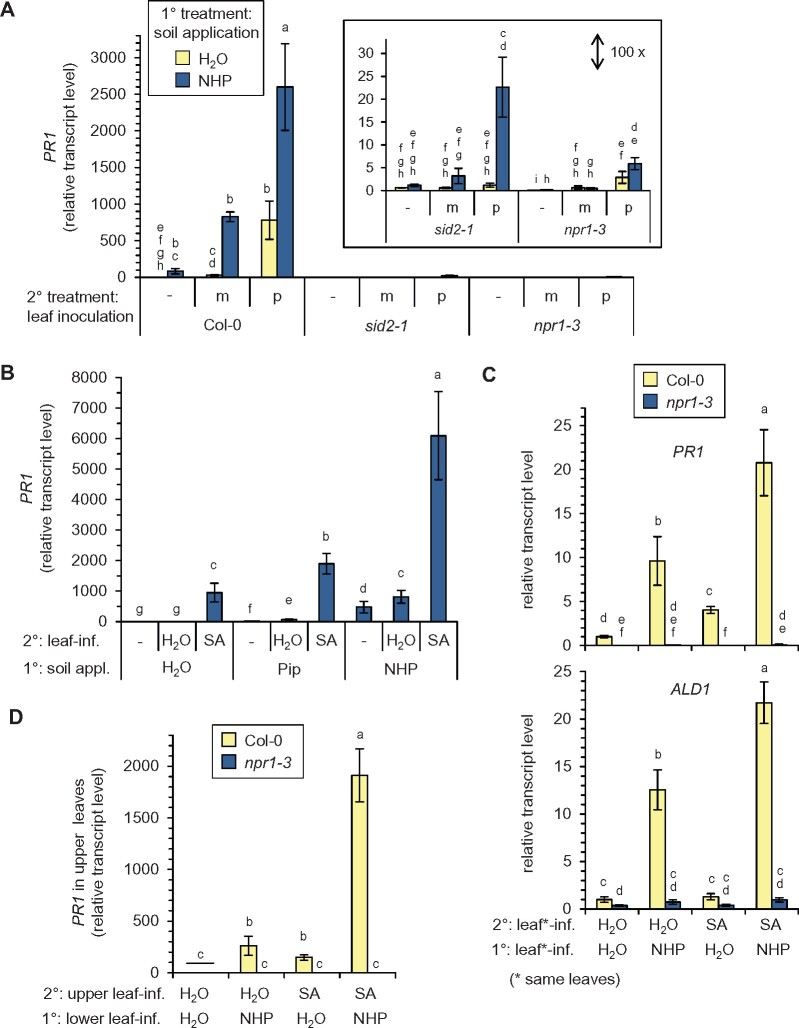
N-hydroxypipecolic acid (NHP) accumulates in the plant foliage in response to a localized microbial attack and induces systemic acquired resistance (SAR) in distant leaf tissue. Previous studies indicated that pathogen inoculation of Arabidopsis (Arabidopsis thaliana) systemically activates SAR-related transcriptional reprogramming and a primed immune status in strict dependence of FLAVIN-DEPENDENT MONOOXYGENASE 1 (FMO1), which mediates the endogenous biosynthesis of NHP. Here, we show that elevations of NHP by exogenous treatment are sufficient to induce a SAR-reminiscent transcriptional response that mobilizes key components of immune surveillance and signal transduction. Exogenous NHP primes Arabidopsis wild-type and NHP-deficient fmo1 plants for a boosted induction of pathogen-triggered defenses, such as the biosynthesis of the stress hormone salicylic acid (SA), accumulation of the phytoalexin camalexin and branched-chain amino acids, as well as expression of defense-related genes. NHP also sensitizes the foliage systemically for enhanced SA-inducible gene expression. NHP-triggered SAR, transcriptional reprogramming, and defense priming are fortified by SA accumulation, and require the function of the transcriptional coregulator NON-EXPRESSOR OF PR GENES1 (NPR1). Our results suggest that NPR1 transduces NHP-activated immune signaling modes with predominantly SA-dependent and minor SA-independent features. They further support the notion that NHP functions as a mobile immune regulator capable of moving independently of active SA signaling between leaves to systemically activate immune responses.
N-羟基哌啶酸(NHP)在植物叶片中积累,以响应局部微生物攻击,并诱导远处叶片组织中的系统获得性抗性(SAR)。先前的研究表明,拟南芥(Arabidopsis thaliana)的病原体接种系统地激活与 SAR 相关的转录重编程,并在 flavin-dependent monoxygenase 1(FMO1)的严格依赖下,引发免疫状态,FMO1 介导 NHP 的内源性生物合成。在这里,我们表明,外源处理引起的 NHP 升高足以诱导类似于 SAR 的转录反应,该反应动员了免疫监视和信号转导的关键成分。外源 NHP 使拟南芥野生型和 NHP 缺陷型 fmo1 植物为增强的病原体触发防御(例如应激激素水杨酸(SA)的生物合成、植物抗毒素 camalexin 和支链氨基酸的积累以及防御相关基因的表达)做好了准备。NHP 还使叶片系统地对增强的 SA 诱导基因表达敏感。NHP 触发的 SAR、转录重编程和防御启动由 SA 积累增强,并需要转录共调节剂 NON-EXPRESSOR OF PR GENES1(NPR1)的功能。我们的结果表明,NPR1 转导 NHP 激活的免疫信号模式,主要依赖于 SA,而较少依赖于 SA 独立特征。它们进一步支持这样的观点,即 NHP 作为一种能够在叶片之间独立于活性 SA 信号移动以系统地激活免疫反应的可移动免疫调节剂发挥作用。