Department of Pathology and Microbiology, University of Nebraska Medical Center, 985900 Nebraska Medical Center, Omaha, NE, 68198-5900, USA.
Cancer Metastasis Rev. 2021 Jun;40(2):447-476. doi: 10.1007/s10555-021-09970-6. Epub 2021 May 6.
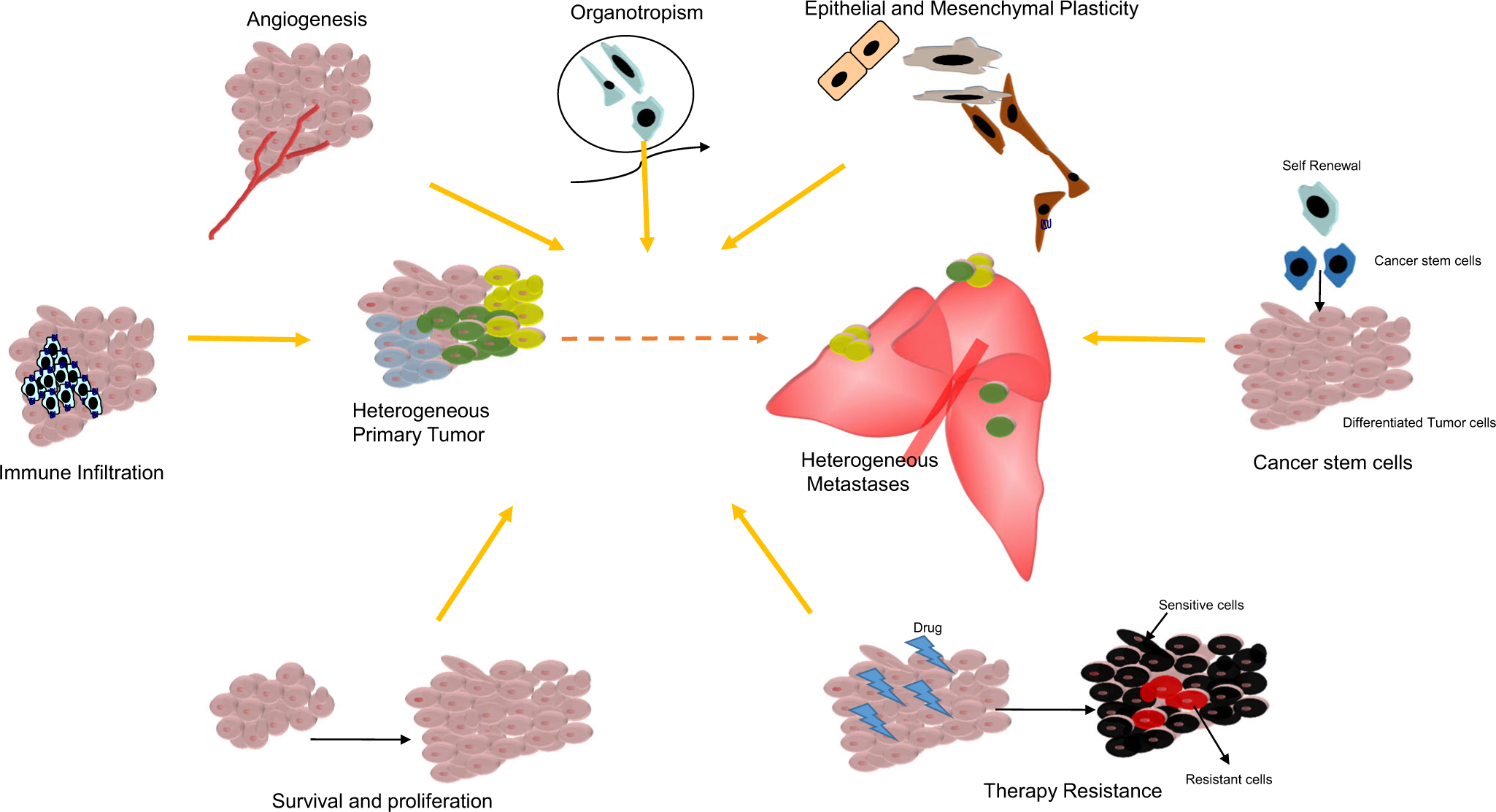
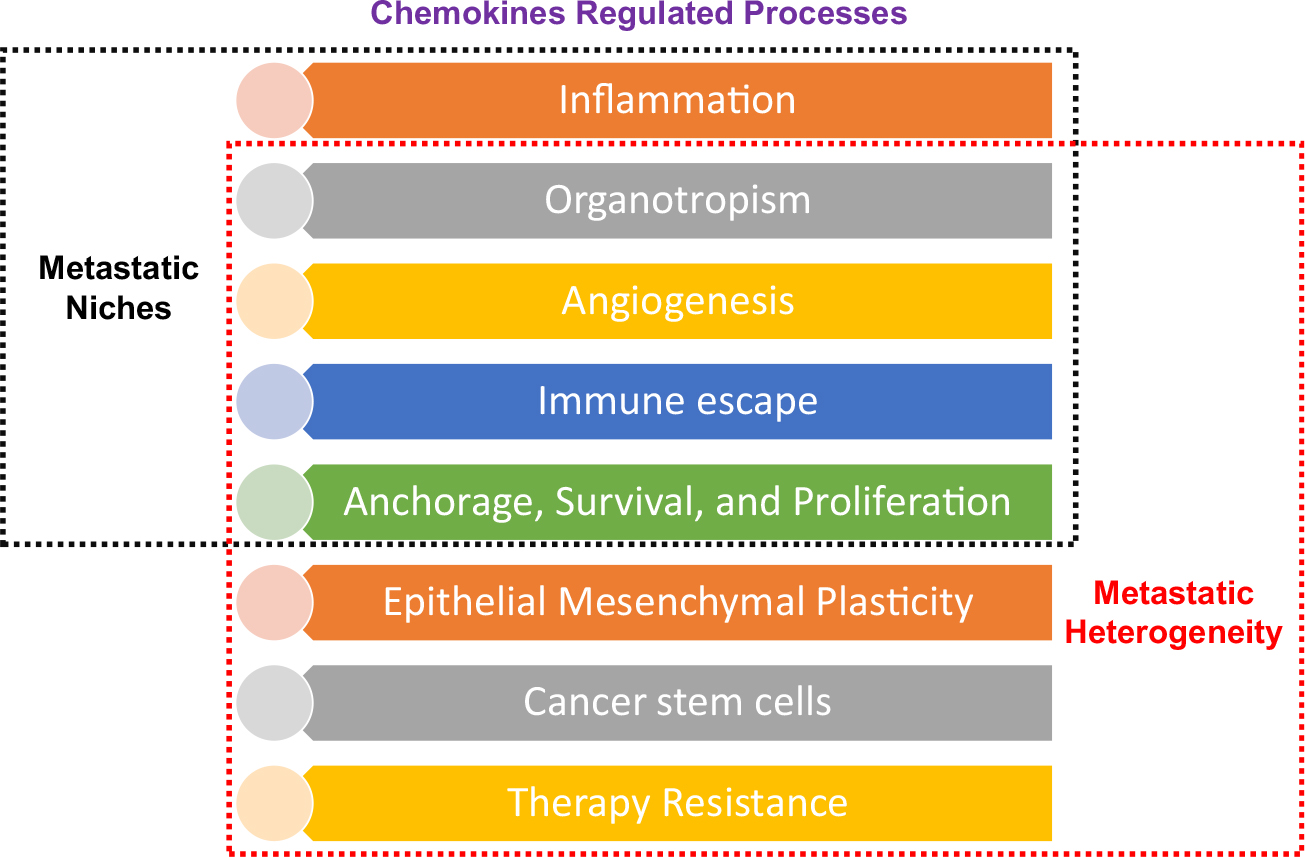
Chemokines, a subfamily of the cell cytokines, are low molecular weight proteins known to induce chemotaxis in leukocytes in response to inflammatory and pathogenic signals. A plethora of literature demonstrates that chemokines and their receptors regulate tumor progression and metastasis. With these diverse functionalities, chemokines act as a fundamental link between the tumor cells and their microenvironment. Recent studies demonstrate that the biology of chemokines and their receptor in metastasis is complex as numerous chemokines are involved in regulating site-specific tumor growth and metastasis. Successful treatment of disseminated cancer is a significant challenge. The most crucial problem for treating metastatic cancer is developing therapy regimes capable of overcoming heterogeneity problems within primary tumors and among metastases and within metastases (intralesional). This heterogeneity of malignant tumor cells can be related to metastatic potential, response to chemotherapy or specific immunotherapy, and many other factors. In this review, we have emphasized the role of chemokines in the process of metastasis and metastatic heterogeneity. Individual chemokines may not express the full potential to address metastatic heterogeneity, but chemokine networks need exploration. Understanding the interplay between chemokine-chemokine receptor networks between the tumor cells and their microenvironment is a novel approach to overcome the problem of metastatic heterogeneity. Recent advances in the understanding of chemokine networks pave the way for developing a potential targeted therapeutic strategy to treat metastatic cancer.
趋化因子是细胞因子的一个亚家族,是已知能够在炎症和致病信号刺激下诱导白细胞趋化的低分子量蛋白。大量文献表明,趋化因子及其受体调节肿瘤的进展和转移。趋化因子具有多种功能,它们作为肿瘤细胞与其微环境之间的基本联系。最近的研究表明,趋化因子及其受体在转移中的生物学非常复杂,因为许多趋化因子参与调节特定部位的肿瘤生长和转移。成功治疗转移性癌症是一个重大挑战。治疗转移性癌症的最关键问题是开发能够克服原发性肿瘤和转移灶内以及转移灶内(瘤内)异质性问题的治疗方案。这种恶性肿瘤细胞的异质性可能与转移潜能、对化疗或特定免疫治疗的反应以及许多其他因素有关。在这篇综述中,我们强调了趋化因子在转移和转移异质性过程中的作用。个别趋化因子可能无法充分发挥解决转移异质性的潜力,但需要探索趋化因子网络。了解肿瘤细胞与其微环境之间趋化因子-趋化因子受体网络的相互作用是克服转移异质性问题的一种新方法。对趋化因子网络的理解的最新进展为开发治疗转移性癌症的潜在靶向治疗策略铺平了道路。