IRCCS Centro Neurolesi Bonino Pulejo, Messina, Italy.
Acta Neurol Belg. 2021 Aug;121(4):837-847. doi: 10.1007/s13760-021-01684-4. Epub 2021 May 7.
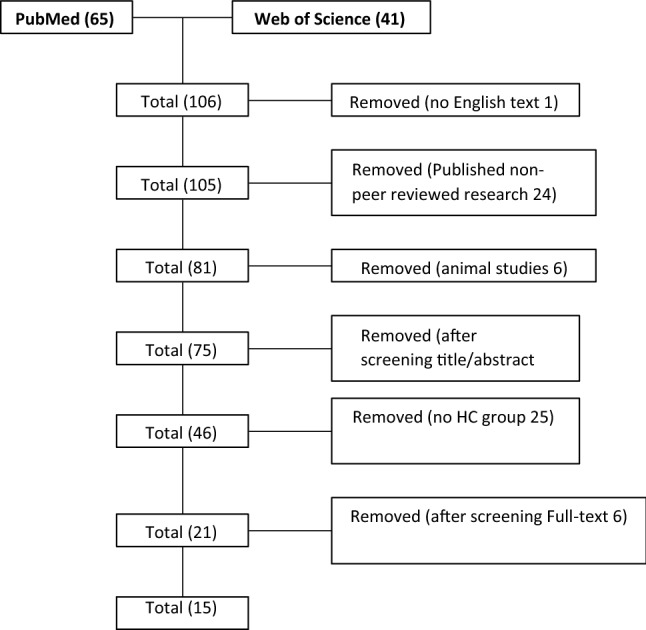
Standard treatment of Parkinson's disease involves the dopaminergic medications. Deep brain stimulation of the subthalamic nucleus (STN-DBS) is an important neurosurgical intervention often used as alternative treatment to drug therapy; however, it can be associated with increase of impulsive behaviors. This descriptive review focused on studies investigating the correlation between Deep brain stimulation of the subthalamic nucleus and impulsivity in Parkinson's disease patients, arguing, the action's mechanism and the specific role of the subthalamic nucleus. We searched on PubMed and Web of Science databases and screening references of included studies and review articles for additional citations. From initial 106 studies, only 15 met the search criteria. Parkinson's Disease patients with and without Deep Brain Stimulation were compared with healthy controls, through 16 different tasks that assessed some aspects of impulsivity. Both Deep brain stimulation of the subthalamic nucleus and medication were associated with impulsive behavior and influenced decision-making processes. Moreover, findings demonstrated that: Impulse Control Disorders (ICDs) occurred soon after surgery, while, in pharmacological treatment, they appeared mainly after the initiation of treatment or the increase in dosage, especially with dopamine agonists. The subthalamic nucleus plays a part in the fronto-striato-thalamic-cortical loops mediating motor, cognitive, and emotional functions: this could explain the role of the Deep Brain Stimulation in behavior modulation in Parkinson's Disease patients. Indeed, increase impulsivity has been reported also after deep brain stimulation of the subthalamic nucleus independently by dopaminergic medication status.
帕金森病的标准治疗包括多巴胺能药物。丘脑底核深部脑刺激(STN-DBS)是一种重要的神经外科干预措施,通常用作药物治疗的替代治疗方法;然而,它可能与冲动行为的增加有关。本描述性综述重点研究了丘脑底核深部脑刺激与帕金森病患者冲动之间的相关性,认为该作用的机制和丘脑底核的特定作用。我们在 PubMed 和 Web of Science 数据库中进行了搜索,并对纳入研究和综述文章的参考文献进行了筛选,以获取其他引文。最初有 106 项研究,只有 15 项符合搜索标准。通过 16 项不同的任务,比较了有和没有丘脑底核深部脑刺激的帕金森病患者与健康对照组之间的差异,这些任务评估了冲动的某些方面。丘脑底核深部脑刺激和药物都与冲动行为有关,并影响决策过程。此外,研究结果表明:冲动控制障碍(ICD)在手术后不久发生,而在药物治疗中,它们主要出现在开始治疗或增加剂量后,特别是在使用多巴胺激动剂时。丘脑底核在介导运动、认知和情感功能的额纹状体丘脑皮质回路中起作用:这可以解释丘脑底核深部脑刺激在帕金森病患者行为调节中的作用。事实上,即使在不考虑多巴胺能药物状态的情况下,丘脑底核深部脑刺激也会导致冲动性增加。