Department of Biostatistics and Bioinformatics, Emory University, Atlanta, USA.
Gangarosa Department of Environmental Health, Emory University, Atlanta, USA.
Environ Health. 2021 May 7;20(1):55. doi: 10.1186/s12940-021-00735-w.
Ambient temperature observations from single monitoring stations (usually located at the major international airport serving a city) are routinely used to estimate heat exposures in epidemiologic studies. This method of exposure assessment does not account for potential spatial variability in ambient temperature. In environmental health research, there is increasing interest in utilizing spatially-resolved exposure estimates to minimize exposure measurement error.
We conducted time-series analyses to investigate short-term associations between daily temperature metrics and emergency department (ED) visits for well-established heat-related morbidities in five US cities that represent different climatic regions: Atlanta, Los Angeles, Phoenix, Salt Lake City, and San Francisco. In addition to airport monitoring stations, we derived several exposure estimates for each city using a national meteorology data product (Daymet) available at 1 km spatial resolution.
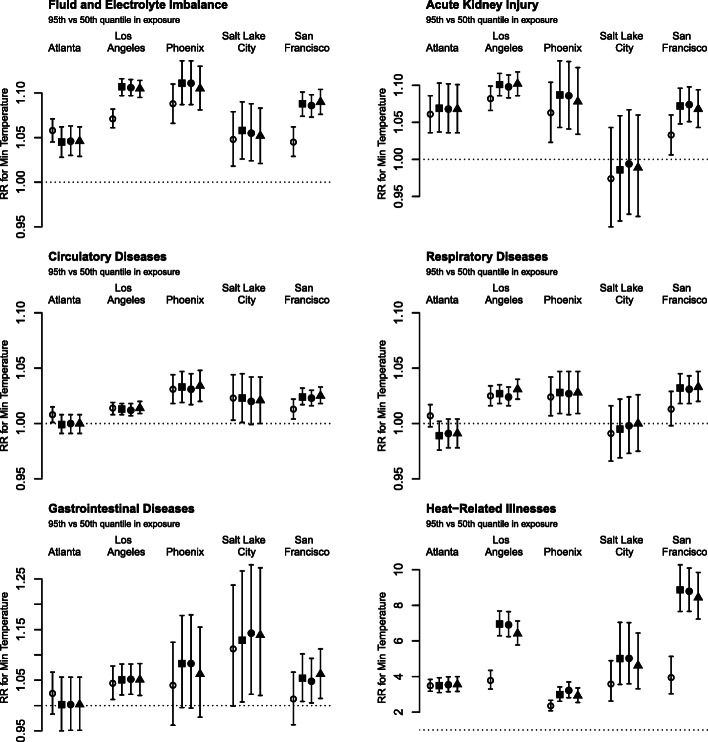
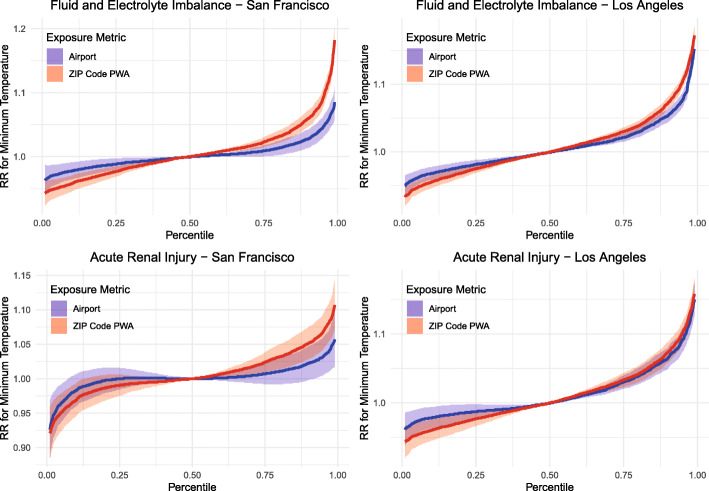
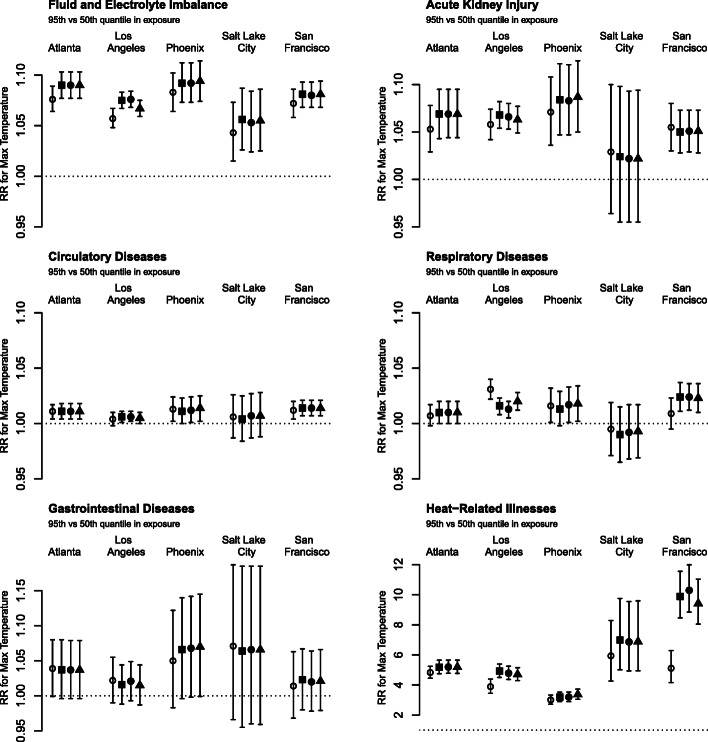
Across cities, we found positive associations between same-day temperature (maximum or minimum) and ED visits for heat-sensitive outcomes, including acute renal injury and fluid and electrolyte imbalance. We also found that exposure assessment methods accounting for spatial variability in temperature and at-risk population size often resulted in stronger relative risk estimates compared to the use of observations at airports. This pattern was most apparent when examining daily minimum temperature and in cities where the major airport is located further away from the urban center.
Epidemiologic studies based on single monitoring stations may underestimate the effect of temperature on morbidity when the station is less representative of the exposure of the at-risk population.
环境温度观测通常来自单一监测站(通常位于为城市服务的主要国际机场),用于估算流行病学研究中的热暴露。这种暴露评估方法没有考虑环境温度的潜在空间变异性。在环境卫生研究中,人们越来越感兴趣的是利用空间分辨率较高的暴露估计值来最小化暴露测量误差。
我们进行了时间序列分析,以研究五个代表不同气候区域的美国城市(亚特兰大、洛杉矶、凤凰城、盐湖城和旧金山)中每日温度指标与因确立的与热有关的发病率之间的短期关联。除了机场监测站,我们还利用全国气象数据产品(Daymet)为每个城市推导出了几种暴露估计值,该产品的空间分辨率为 1 公里。
在各个城市中,我们发现当日温度(最高或最低温度)与热敏感结果(包括急性肾损伤、液体和电解质失衡)的急诊就诊之间存在正相关关系。我们还发现,考虑到温度和高危人群规模的空间变异性的暴露评估方法通常会导致比使用机场观测值更强的相对风险估计值。当研究每日最低温度时,这种模式最为明显,而且在主要机场距离城市中心较远的城市中,这种模式更为明显。
基于单一监测站的流行病学研究可能会低估温度对发病率的影响,尤其是当监测站不能代表高危人群的暴露情况时。