Division of Clinical Neuroscience, Chiba University Center for Forensic Mental Health, Chiba, Japan.
Key Laboratory of Medical Electrophysiology of Ministry of Education and Medical Electrophysiological Key Laboratory of Sichuan Province, Collaborative Innovation Center for Prevention and Treatment of Cardiovascular Disease, Institute of Cardiovascular Research, Southwest Medical University, Luzhou, Sichuan, China.
Mol Psychiatry. 2022 Jan;27(1):559-573. doi: 10.1038/s41380-021-01121-1. Epub 2021 May 7.
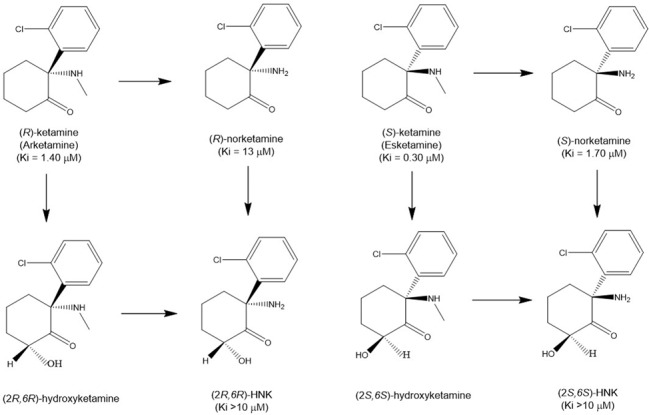
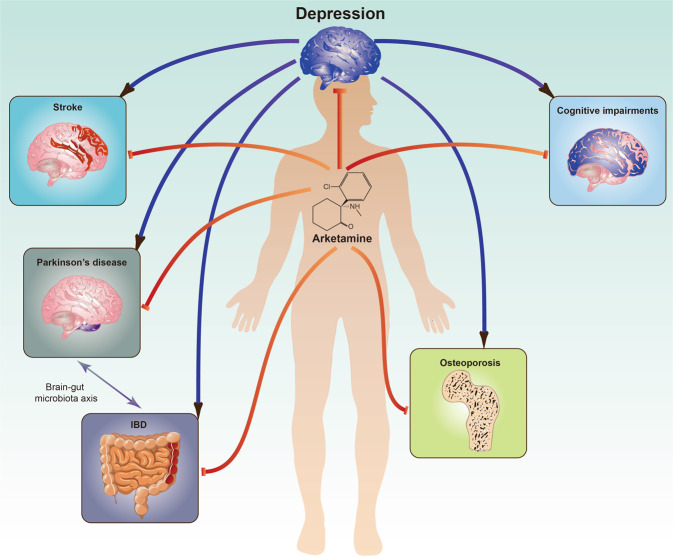
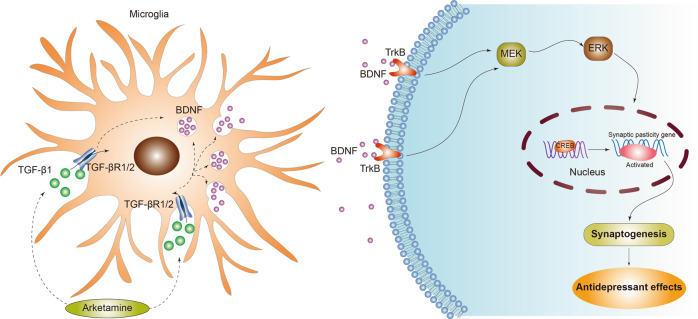
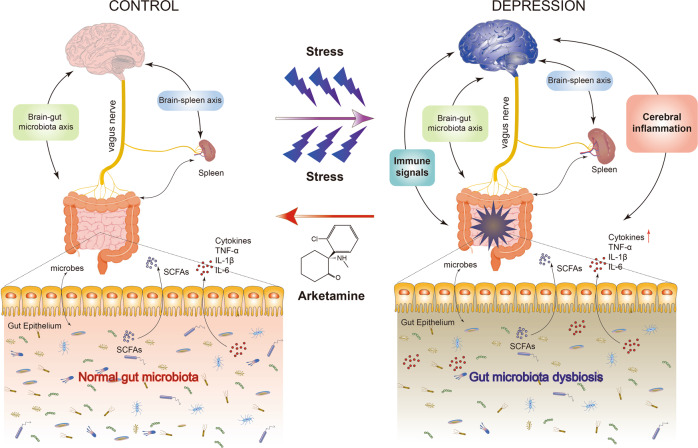
The discovery of robust antidepressant actions exerted by the N-methyl-D-aspartate receptor (NMDAR) antagonist (R,S)-ketamine has been a crucial breakthrough in mood disorder research. (R,S)-ketamine is a racemic mixture of equal amounts of (R)-ketamine (arketamine) and (S)-ketamine (esketamine). In 2019, an esketamine nasal spray from Johnson & Johnson was approved in the United States of America and Europe for treatment-resistant depression. However, an increasing number of preclinical studies show that arketamine has greater potency and longer-lasting antidepressant-like effects than esketamine in rodents, despite the lower binding affinity of arketamine for the NMDAR. In clinical trials, non-ketamine NMDAR-related compounds did not exhibit ketamine-like robust antidepressant actions in patients with depression, despite these compounds showing antidepressant-like effects in rodents. Thus, the rodent data do not necessarily translate to humans due to the complexity of human psychiatric disorders. Collectively, the available studies indicate that it is unlikely that NMDAR plays a major role in the antidepressant action of (R,S)-ketamine and its enantiomers, although the precise molecular mechanisms underlying antidepressant actions of (R,S)-ketamine and its enantiomers remain unclear. In this paper, we review recent findings on the molecular mechanisms underlying the antidepressant actions of (R,S)-ketamine and its potent enantiomer arketamine. Furthermore, we discuss the possible role of the brain-gut-microbiota axis and brain-spleen axis in stress-related psychiatric disorders and in the antidepressant-like action of arketamine. Finally, we discuss the potential of arketamine as a treatment for cognitive impairment in psychiatric disorders, Parkinson's disease, osteoporosis, inflammatory bowel diseases, and stroke.
N-甲基-D-天冬氨酸受体(NMDAR)拮抗剂(R,S)-氯胺酮具有强大的抗抑郁作用,这一发现是心境障碍研究的一个重大突破。(R,S)-氯胺酮是(R)-氯胺酮(阿氯胺酮)和(S)-氯胺酮(艾氯胺酮)等量的外消旋混合物。2019 年,强生公司的艾氯胺酮鼻喷雾剂在美国和欧洲获得批准,用于治疗难治性抑郁症。然而,越来越多的临床前研究表明,尽管阿氯胺酮对 NMDAR 的结合亲和力较低,但在啮齿动物中,阿氯胺酮比艾氯胺酮具有更强的效力和更持久的抗抑郁样作用。在临床试验中,非氯胺酮 NMDAR 相关化合物在抑郁症患者中并未表现出类似氯胺酮的强大抗抑郁作用,尽管这些化合物在啮齿动物中表现出抗抑郁样作用。因此,由于人类精神疾病的复杂性,啮齿动物数据不一定适用于人类。综上所述,现有研究表明,NMDAR 不太可能在(R,S)-氯胺酮及其对映体的抗抑郁作用中发挥主要作用,尽管(R,S)-氯胺酮及其对映体的抗抑郁作用的确切分子机制尚不清楚。在本文中,我们综述了(R,S)-氯胺酮及其强效对映体阿氯胺酮抗抑郁作用的分子机制的最新研究结果。此外,我们讨论了脑-肠-微生物轴和脑-脾轴在应激相关精神疾病和阿氯胺酮的抗抑郁样作用中的可能作用。最后,我们讨论了阿氯胺酮作为治疗精神障碍、帕金森病、骨质疏松症、炎症性肠病和中风认知障碍的潜力。