Department of Genetics, Perelman School of Medicine, University of Pennsylvania, Philadelphia, PA, USA.
Department of Physiology, Pennsylvania Muscle Institute, Perelman School of Medicine, University of Pennsylvania, Philadelphia, PA, USA.
Dev Cell. 2021 May 17;56(10):1526-1540.e7. doi: 10.1016/j.devcel.2021.04.017. Epub 2021 May 7.
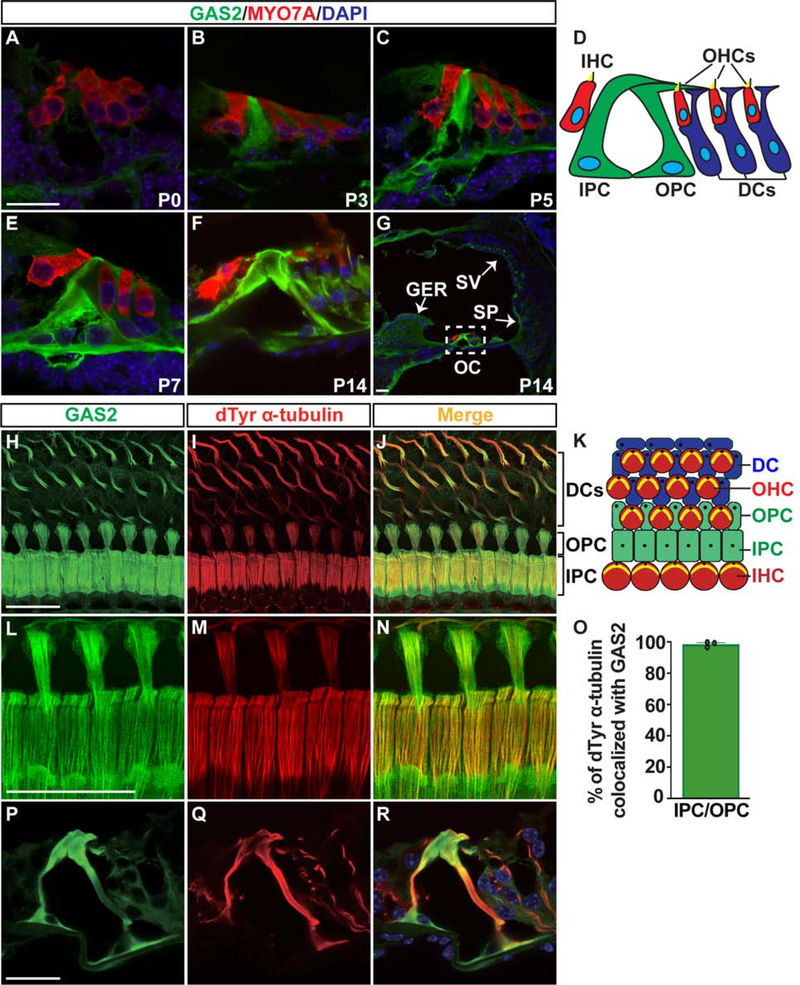
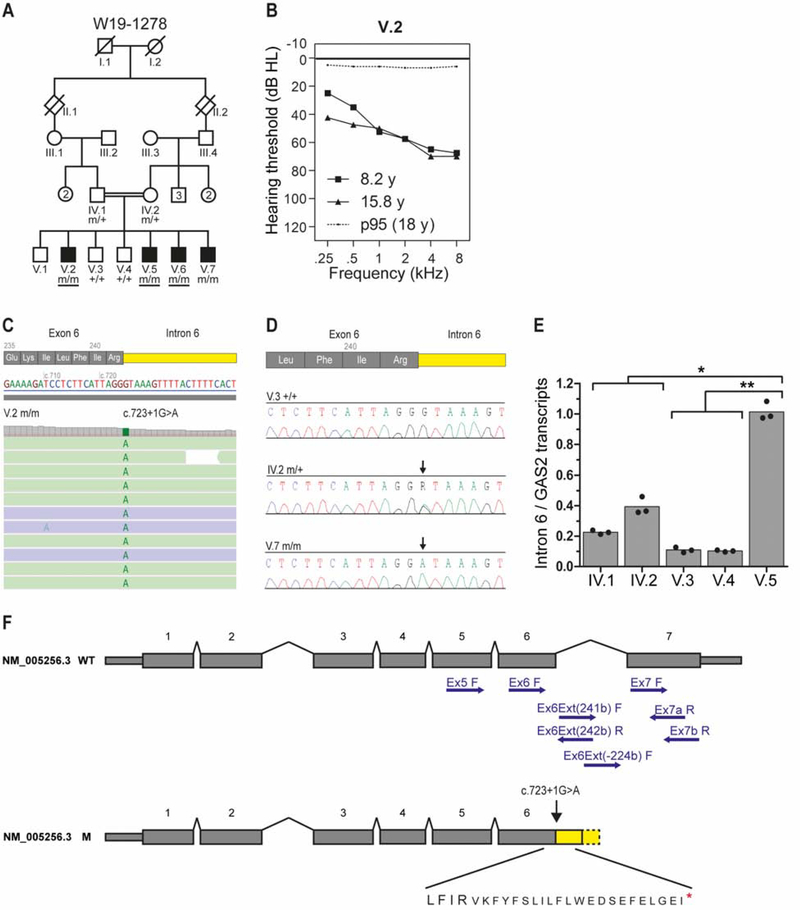
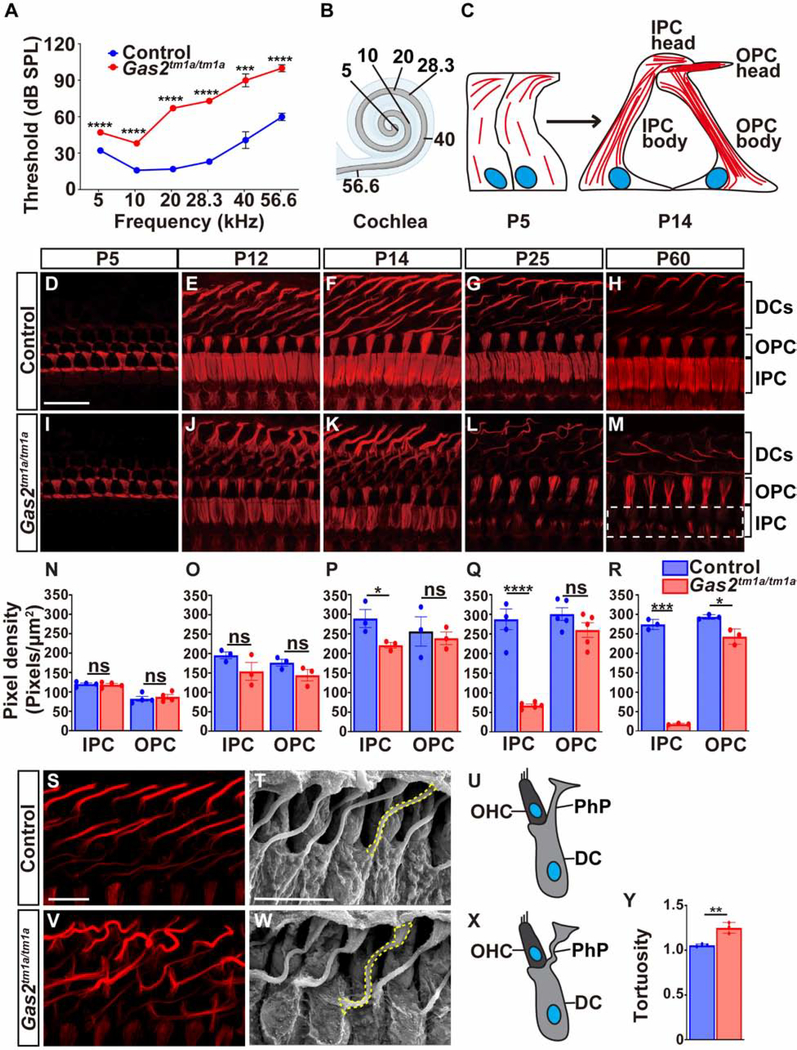
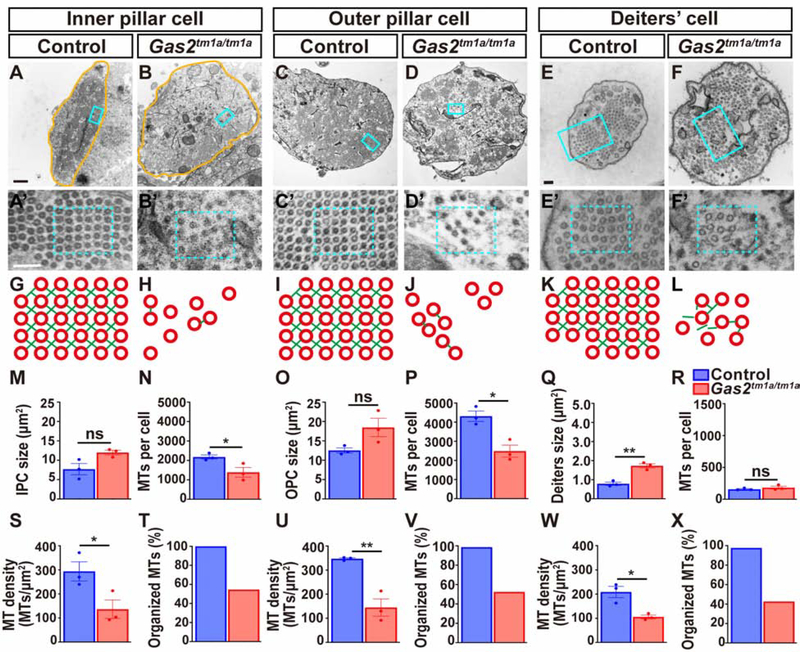
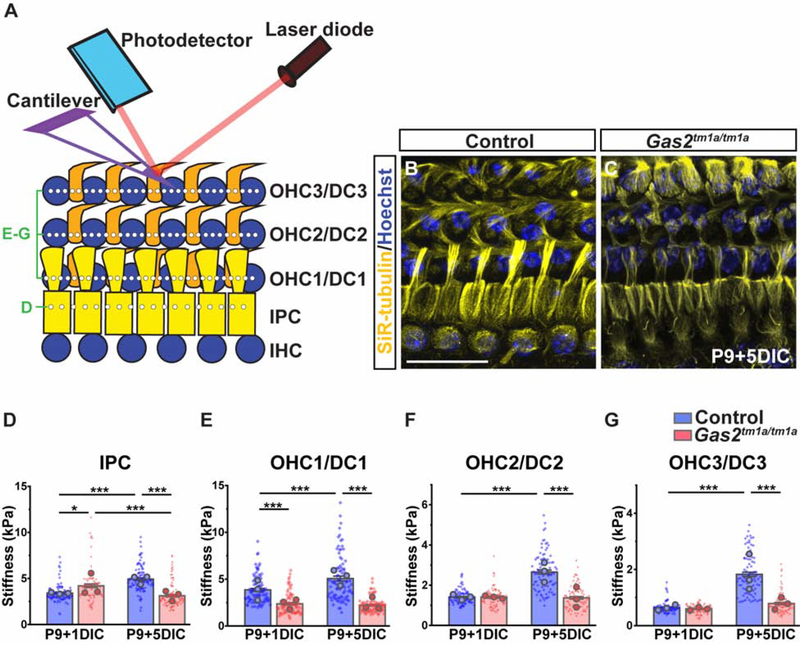
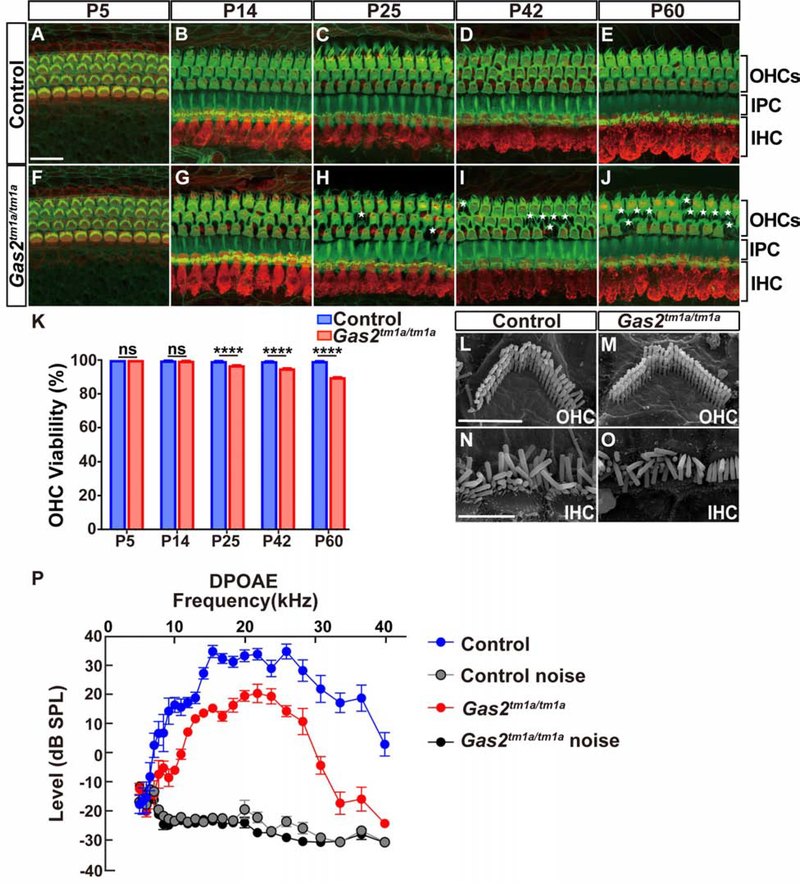
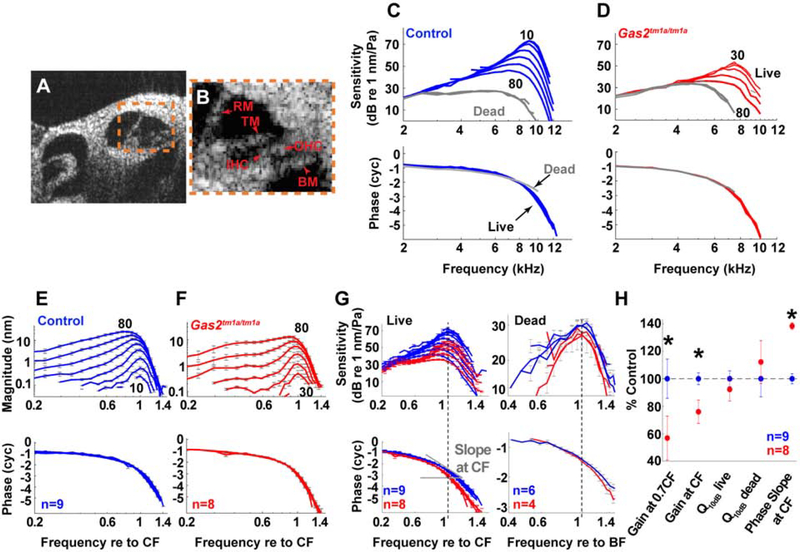
In mammals, sound is detected by mechanosensory hair cells that are activated in response to vibrations at frequency-dependent positions along the cochlear duct. We demonstrate that inner ear supporting cells provide a structural framework for transmitting sound energy through the cochlear partition. Humans and mice with mutations in GAS2, encoding a cytoskeletal regulatory protein, exhibit hearing loss due to disorganization and destabilization of microtubule bundles in pillar and Deiters' cells, two types of inner ear supporting cells with unique cytoskeletal specializations. Failure to maintain microtubule bundle integrity reduced supporting cell stiffness, which in turn altered cochlear micromechanics in Gas2 mutants. Vibratory responses to sound were measured in cochleae from live mice, revealing defects in the propagation and amplification of the traveling wave in Gas2 mutants. We propose that the microtubule bundling activity of GAS2 imparts supporting cells with mechanical properties for transmitting sound energy through the cochlea.
在哺乳动物中,声音是由机械敏感毛细胞检测到的,这些毛细胞在耳蜗管的频率相关位置受到振动的刺激而被激活。我们证明,内耳支持细胞为通过耳蜗隔板传输声能提供了一个结构框架。人类和小鼠的 GAS2 基因突变,该基因编码一种细胞骨架调节蛋白,由于支柱和 Deiters 细胞(内耳支持细胞的两种类型,具有独特的细胞骨架特化)中的微管束的组织和不稳定性,导致听力损失。未能维持微管束的完整性降低了支持细胞的硬度,这反过来又改变了 Gas2 突变体中的耳蜗微力学。通过活体小鼠的耳蜗测量了对声音的振动反应,揭示了 Gas2 突变体中传播和放大行波的缺陷。我们提出,GAS2 的微管束集活动赋予支持细胞通过耳蜗传输声能的机械特性。