Research Center, CHU Ste-Justine, Université de Montréal, Montreal, Quebec, Canada; Department of Pharmacology & Physiology, Université de Montréal, Montreal, Quebec, Canada.
Research Center, CHU Ste-Justine, Université de Montréal, Montreal, Quebec, Canada.
J Lipid Res. 2021;62:100085. doi: 10.1016/j.jlr.2021.100085. Epub 2021 May 5.
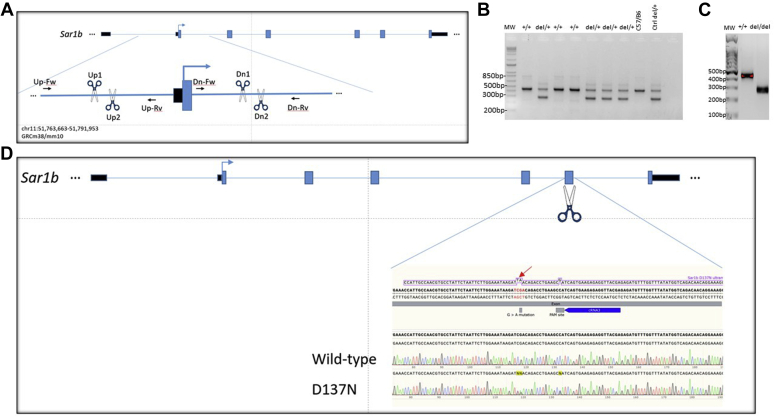
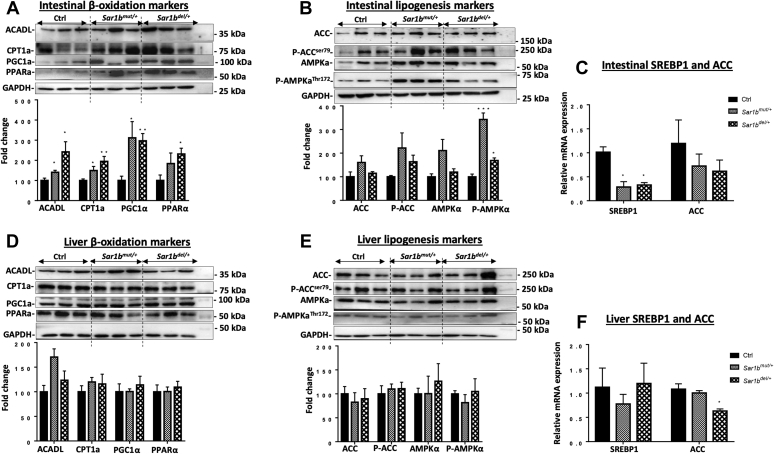
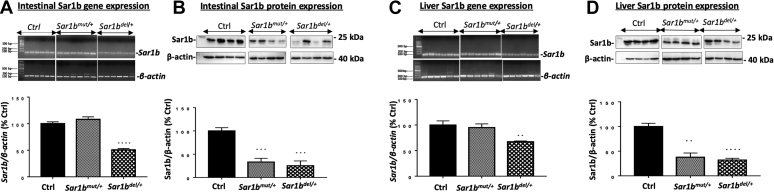
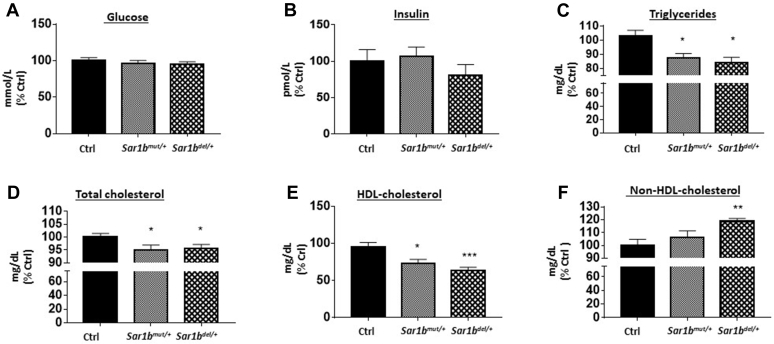
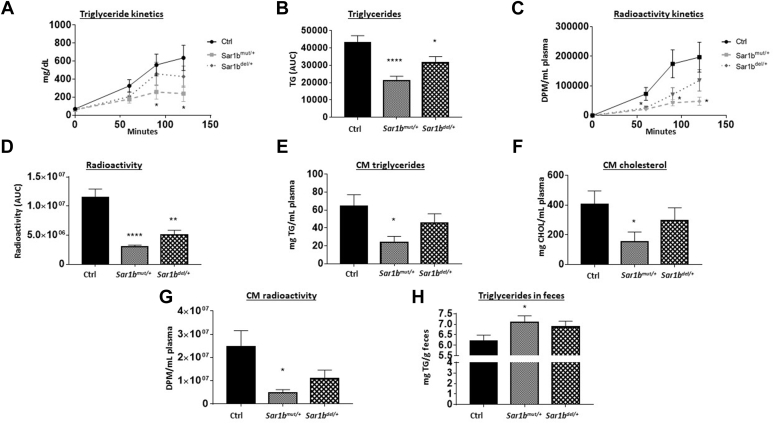
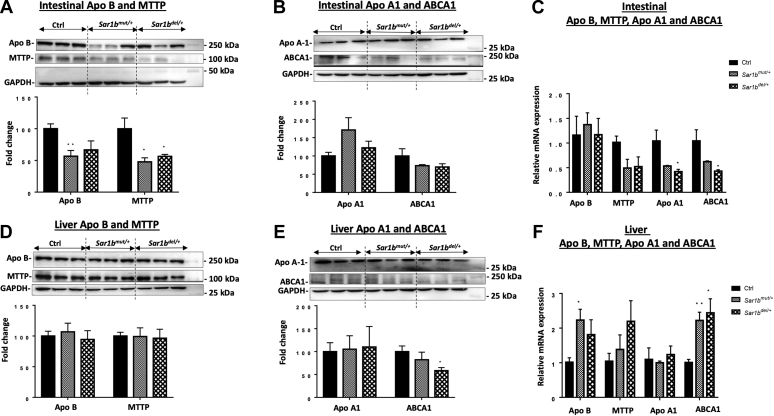
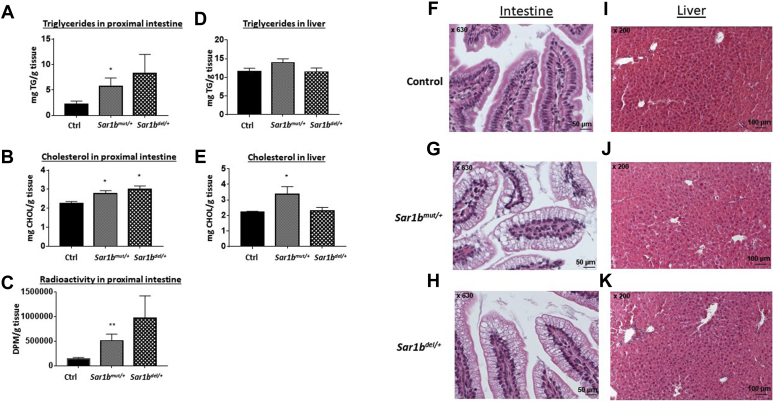
Chylomicron retention disease (CRD) is an autosomal recessive disorder associated with biallelic Sar1b mutations leading to defects in intracellular chylomicron (CM) trafficking and secretion. To date, a direct cause-effect relationship between CRD and Sar1b mutation has not been established, but genetically modified animal models provide an opportunity to elucidate unrecognized aspects of these mutations. To examine the physiological role and molecular mechanisms of Sar1b function, we generated mice expressing either a targeted deletion or mutation of human Sar1b using the CRISPR-Cas9 system. We found that deletion or mutation of Sar1b in mice resulted in late-gestation lethality of homozygous embryos. Moreover, compared with WT mice, heterozygotes carrying a single disrupted Sar1b allele displayed lower plasma levels of triglycerides, total cholesterol, and HDL-cholesterol, along with reduced CM secretion following gastric lipid gavage. Similarly, decreased expression of apolipoprotein B and microsomal triglyceride transfer protein was observed in correlation with the accumulation of mucosal lipids. Inefficient fat absorption in heterozygotes was confirmed via an increase in fecal lipid excretion. Furthermore, genetically modified Sar1b affected intestinal lipid homeostasis as demonstrated by enhanced fatty acid β-oxidation and diminished lipogenesis through the modulation of transcription factors. This is the first reported mammalian animal model with human Sar1b genetic defects, which reproduces some of the characteristic CRD features and provides a direct cause-effect demonstration.
乳糜微粒滞留病(CRD)是一种常染色体隐性疾病,与双等位基因 Sar1b 突变相关,导致细胞内乳糜微粒(CM)转运和分泌缺陷。迄今为止,尚未确定 CRD 与 Sar1b 突变之间存在直接的因果关系,但遗传修饰动物模型提供了阐明这些突变未被认识的方面的机会。为了研究 Sar1b 功能的生理作用和分子机制,我们使用 CRISPR-Cas9 系统生成了表达靶向人 Sar1b 缺失或突变的小鼠。我们发现,小鼠中 Sar1b 的缺失或突变导致纯合子胚胎在妊娠后期死亡。此外,与 WT 小鼠相比,携带单个破坏的 Sar1b 等位基因的杂合子表现出较低的血浆甘油三酯、总胆固醇和 HDL-胆固醇水平,以及胃脂质灌胃后 CM 分泌减少。同样,观察到载脂蛋白 B 和微粒体甘油三酯转移蛋白的表达减少与粘膜脂质的积累相关。杂合子中脂肪吸收效率降低通过粪便脂质排泄增加得到证实。此外,遗传修饰的 Sar1b 通过调节转录因子影响肠道脂质稳态,表现为脂肪酸β氧化增强和脂肪生成减少。这是第一个报道具有人 Sar1b 遗传缺陷的哺乳动物动物模型,其再现了一些 CRD 的特征,并提供了直接的因果关系证明。