Department of Psychiatry and Behavioral Sciences, Rush University Medical Center, 1645 W. Jackson Blvd., Suite 603, Chicago, IL, 60612, USA.
Department of Psychology, University of Alabama At Birmingham, 1300 University Blvd., Birmingham, AL, 35233, USA.
Mol Autism. 2021 May 8;12(1):32. doi: 10.1186/s13229-021-00443-9.
Intervention during the first years of life for children with autism spectrum disorder (ASD) may have the strongest impact on long-term brain development and functioning. Yet, barriers such as a shortage of trained professionals contribute to significant delays in service. The goal of this proof-of-concept study was to explore strategies that support timely and equitable deployment of ASD-specific interventions.
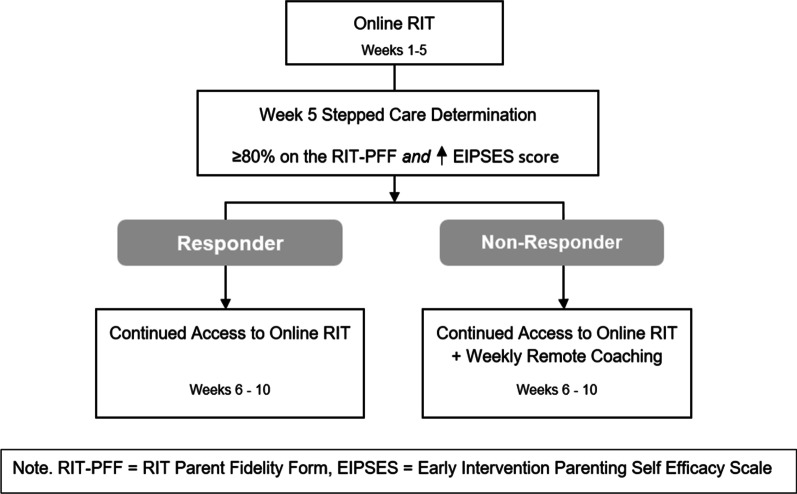
This 15-week, randomized proof-of-concept study explored the acceptability of a digital parent mediated intervention online reciprocal imitation training (RIT; a naturalistic developmental behavioral intervention) and compared it to a treatment as usual (TAU) control on parent and child outcomes. Eligible children were between 18 and 60 months, met the cutoff for ASD on the Autism Diagnostic Observation Schedule-2nd Edition and demonstrate significant social imitation deficits. Primary outcomes include the acceptability of RIT (Scale of Treatment Perceptions) and the feasibility of the Online RIT digital intervention (online RIT attributes). Secondary outcomes included parent fidelity (RIT parent fidelity form) and parental self-efficacy (Early Intervention Parenting Self-Efficacy Scale). Exploratory outcome measures included child social communication (Social Communication Checklist), child imitation skills (Unstructured Imitation Assessment), and family quality of life (Beach Center Family Quality of Life Scale).
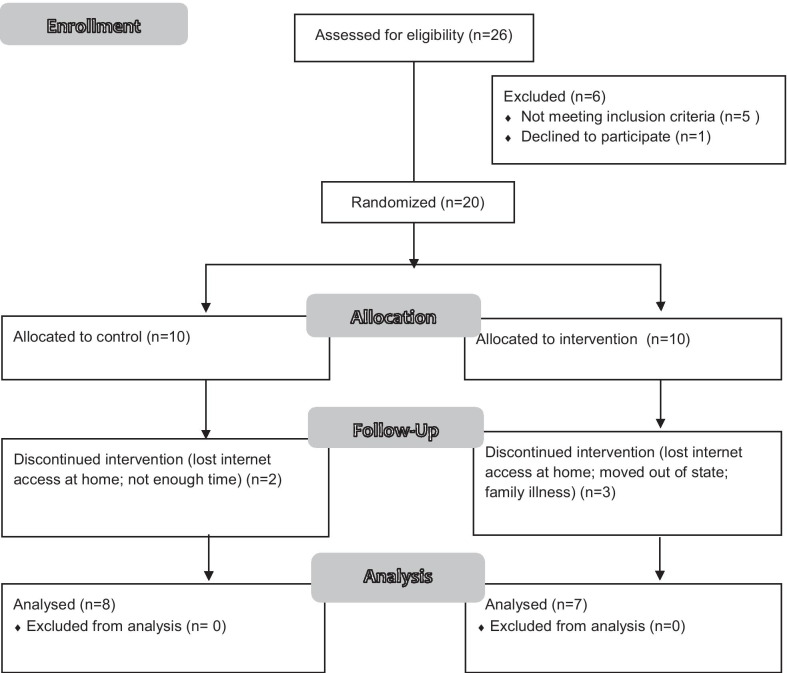
Twenty participants were randomized in a 1:1 fashion. The acceptability and feasibility of RIT and the Online RIT digital intervention were rated highly. Among the secondary outcomes, there were significant group differences in parent fidelity (p < .001) and self-efficacy (p = .029). On exploratory outcomes, there were group differences in child social communication (p = .048). There were no significant group differences in imitation ability (p = .05) or family quality of life (p = .22).
There are several limitations with this study, including the small sample size as well as lack of data on enactment and website engagement. This study was not able to address questions related to which variables predict program engagement and treatment response, which will be critical for determining which families may benefit from such a stepped-care delivery model.
Overall, the Online RIT program delivered in a stepped-care format shows strong acceptability and holds promise as an innovative delivery model. Trial registration ClinicalTrials.gov, NCT04467073. Registered 10 July 2020- Retrospectively registered, https://clinicaltrials.gov/ct2/show/NCT04467073.
对自闭症谱系障碍(ASD)儿童进行的早期干预可能对大脑的长期发育和功能产生最深远的影响。然而,专业人员短缺等障碍导致服务出现严重延误。本概念验证研究的目标是探索支持 ASD 特定干预措施及时和公平部署的策略。
这项为期 15 周的随机概念验证研究探讨了在线互惠模仿训练(RIT;一种自然发展行为干预)的数字家长介导干预的可接受性,并将其与治疗作为常规(TAU)对照组的家长和儿童结果进行了比较。符合条件的儿童年龄在 18 至 60 个月之间,在自闭症诊断观察量表第二版上达到 ASD 截止值,并表现出显著的社交模仿缺陷。主要结果包括 RIT 的可接受性(治疗感知量表)和在线 RIT 数字干预的可行性(在线 RIT 属性)。次要结果包括家长的保真度(RIT 家长保真度表)和家长的自我效能感(早期干预育儿自我效能感量表)。探索性结果测量包括儿童社交沟通(社交沟通检查表)、儿童模仿技能(非结构化模仿评估)和家庭生活质量(海滩中心家庭生活质量量表)。
以 1:1 的比例随机分配了 20 名参与者。RIT 和在线 RIT 数字干预的可接受性和可行性评价很高。在次要结果中,家长的保真度(p < 0.001)和自我效能感(p = 0.029)存在显著的组间差异。在探索性结果中,儿童社交沟通方面存在组间差异(p = 0.048)。模仿能力(p = 0.05)或家庭生活质量(p = 0.22)无显著组间差异。
本研究存在一些局限性,包括样本量小以及缺乏实施和网站参与的数据。本研究无法解决哪些变量预测计划参与和治疗反应的问题,这对于确定哪些家庭可能从这种分阶段护理模式中受益至关重要。
总的来说,分阶段提供的在线 RIT 计划具有很强的可接受性,并有望成为一种创新的交付模式。
ClinicalTrials.gov,NCT04467073。2020 年 7 月 10 日注册-回顾性注册,https://clinicaltrials.gov/ct2/show/NCT04467073。