Department of Medicine, Università degli Studi di Udine, p.le Kolbe 4, 33100, Udine, Italy.
DAHFMO Unit of Histology and Medical Embryology, Sapienza University of Rome, via Antonio Scarpa 16, 00161, Rome, Italy.
Genome Biol. 2021 May 10;22(1):129. doi: 10.1186/s13059-021-02340-z.
Cellular senescence is a permanent state of replicative arrest defined by a specific pattern of gene expression. The epigenome in senescent cells is sculptured in order to sustain the new transcriptional requirements, particularly at enhancers and super-enhancers. How these distal regulatory elements are dynamically modulated is not completely defined.
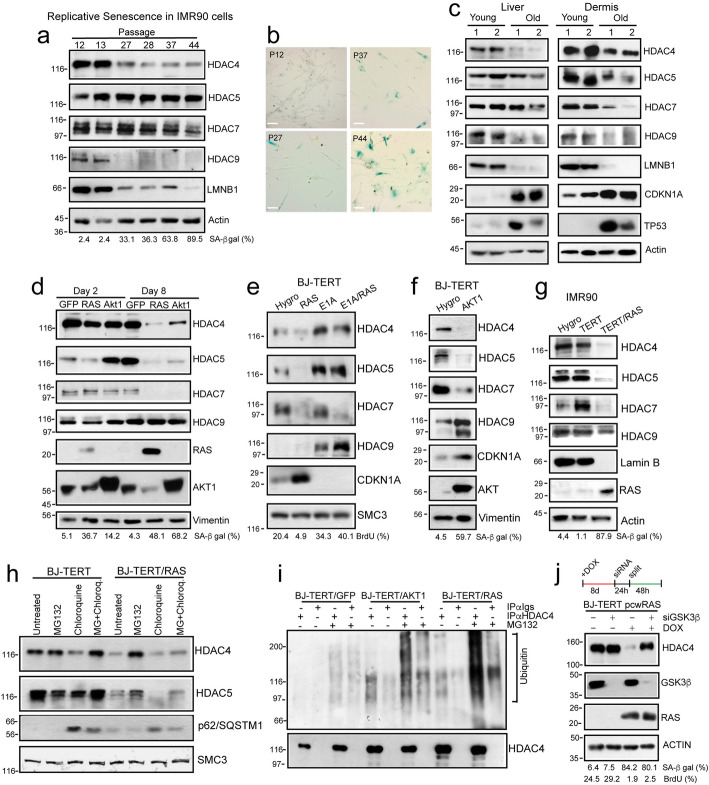
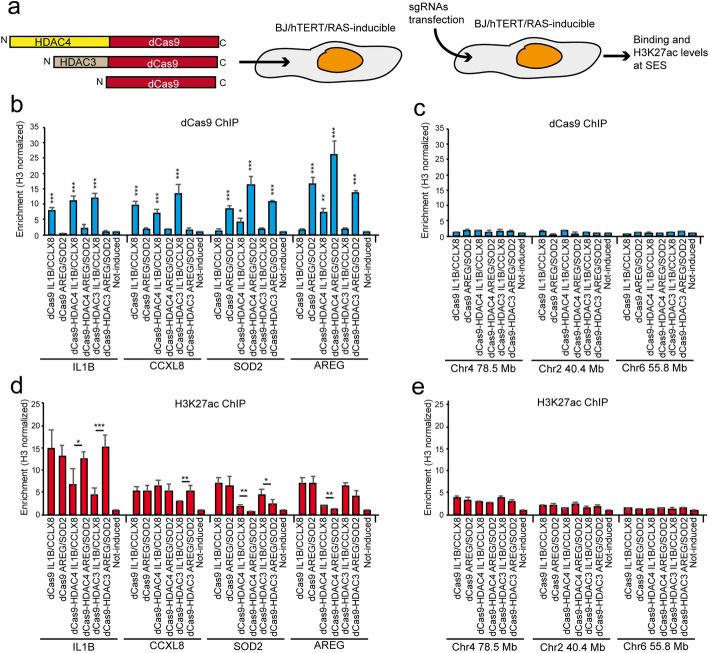
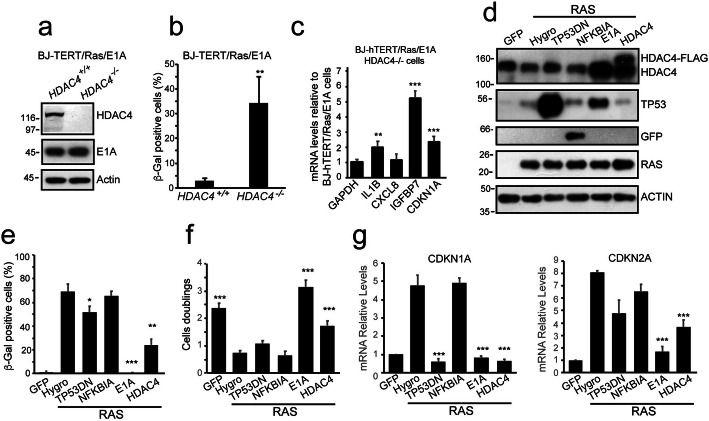
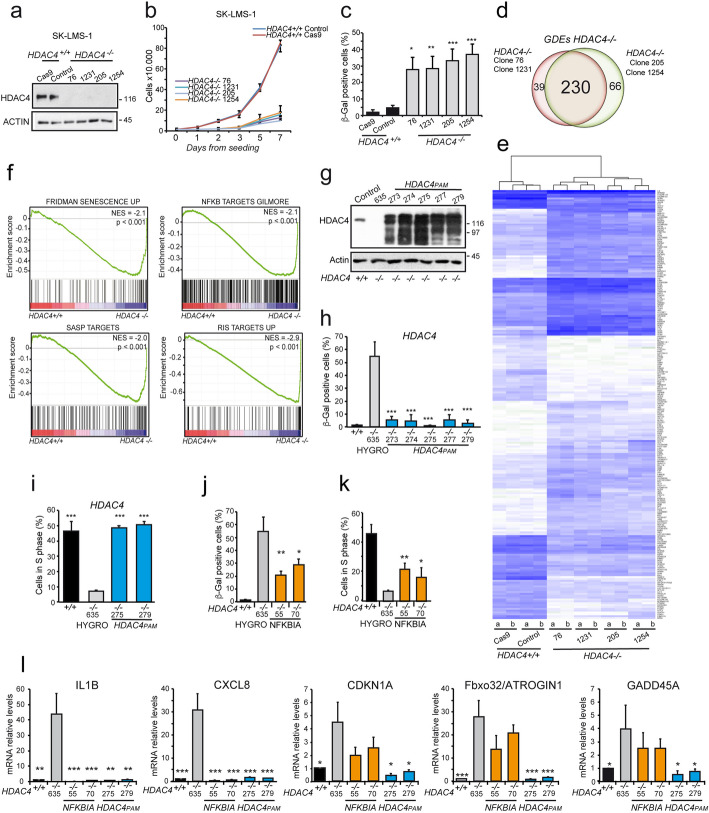
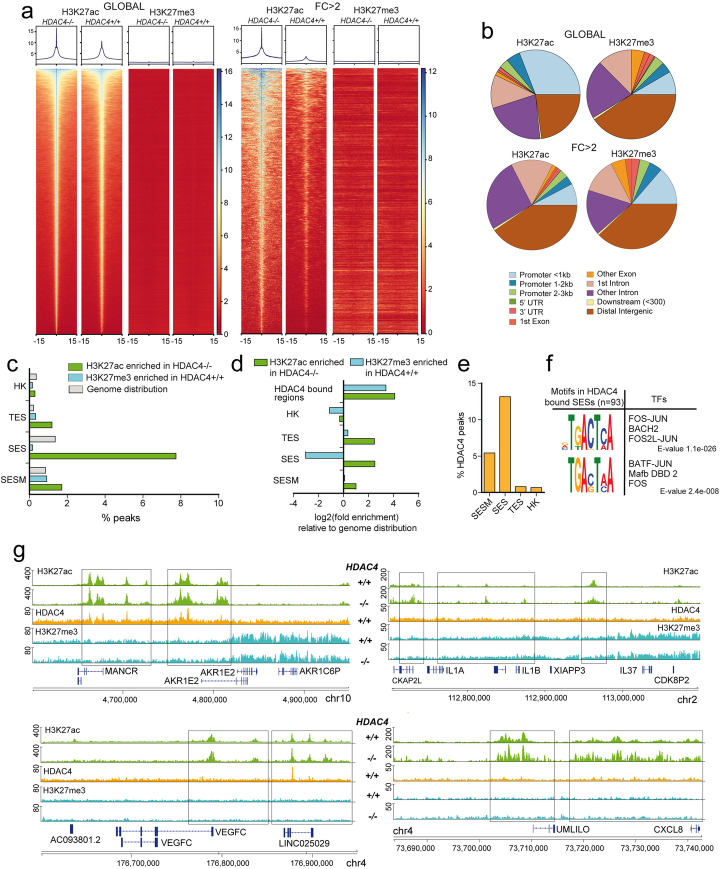
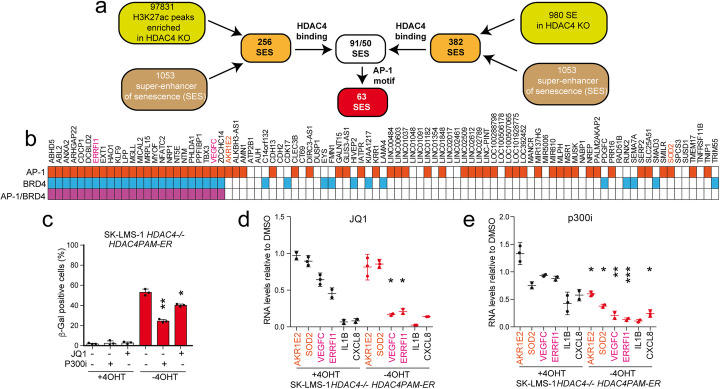
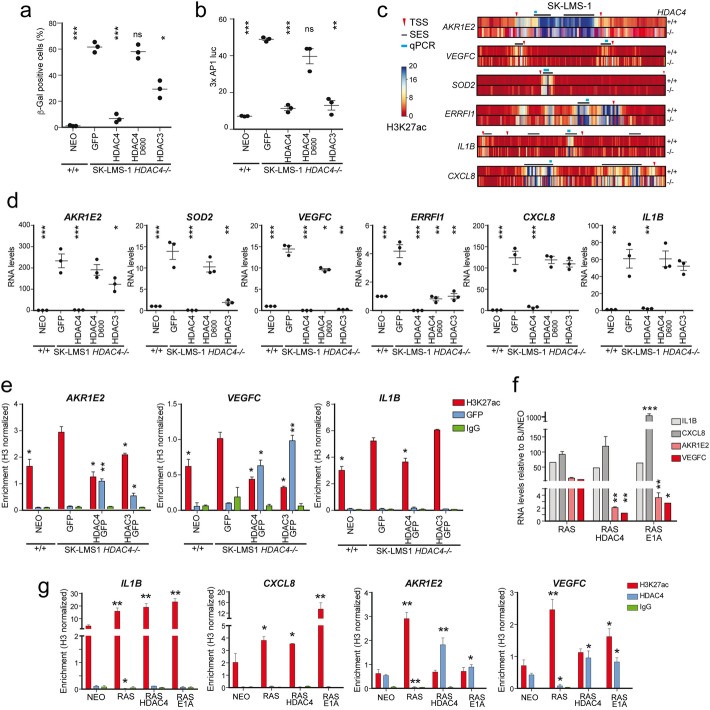
Enhancer regions are defined by the presence of H3K27 acetylation marks, which can be modulated by class IIa HDACs, as part of multi-protein complexes. Here, we explore the regulation of class IIa HDACs in different models of senescence. We find that HDAC4 is polyubiquitylated and degraded during all types of senescence and it selectively binds and monitors H3K27ac levels at specific enhancers and super-enhancers that supervise the senescent transcriptome. Frequently, these HDAC4-modulated elements are also monitored by AP-1/p300. The deletion of HDAC4 in transformed cells which have bypassed oncogene-induced senescence is coupled to the re-appearance of senescence and the execution of the AP-1/p300 epigenetic program.
Overall, our manuscript highlights a role of HDAC4 as an epigenetic reader and controller of enhancers and super-enhancers that supervise the senescence program. More generally, we unveil an epigenetic checkpoint that has important consequences in aging and cancer.
细胞衰老(cellular senescence)是一种由特定基因表达模式定义的复制性静止的永久状态。衰老细胞中的表观基因组(epigenome)被塑造,以维持新的转录需求,特别是在增强子(enhancers)和超级增强子(super-enhancers)上。这些远端调控元件(distal regulatory elements)是如何动态调节的还不完全清楚。
增强子区域由 H3K27 乙酰化标记的存在定义,这些标记可以被 IIa 类组蛋白去乙酰化酶(HDACs)作为多蛋白复合物的一部分来调节。在这里,我们探索了 IIa 类 HDACs 在不同衰老模型中的调节作用。我们发现 HDAC4 在所有类型的衰老过程中都被多泛素化和降解,它选择性地结合和监测特定增强子和超级增强子上的 H3K27ac 水平,这些增强子和超级增强子监管着衰老转录组。通常,这些由 HDAC4 调节的元件也受到 AP-1/p300 的监测。在已经绕过致癌基因诱导衰老的转化细胞中删除 HDAC4,会导致衰老的重新出现和 AP-1/p300 表观遗传程序的执行。
总的来说,我们的论文强调了 HDAC4 作为增强子和超级增强子的表观遗传学阅读器和控制器的作用,这些增强子和超级增强子监管着衰老程序。更广泛地说,我们揭示了一个在衰老和癌症中具有重要后果的表观遗传检查点。