Kruse Martin, Whitten Rayne J
Department of Biology, Bates College, Lewiston, ME, United States.
Program in Neuroscience, Bates College, Lewiston, ME, United States.
Front Pharmacol. 2021 Apr 21;12:663840. doi: 10.3389/fphar.2021.663840. eCollection 2021.
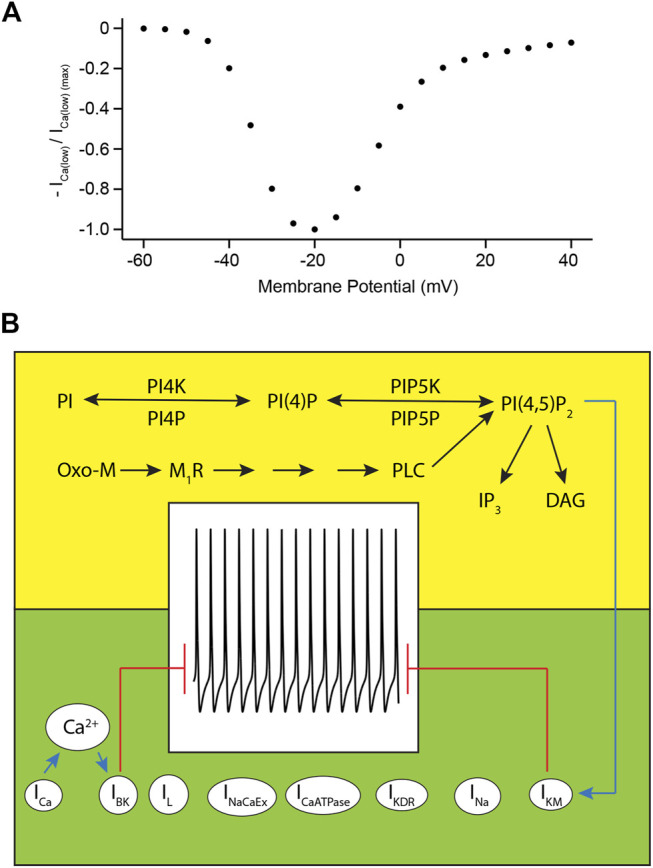
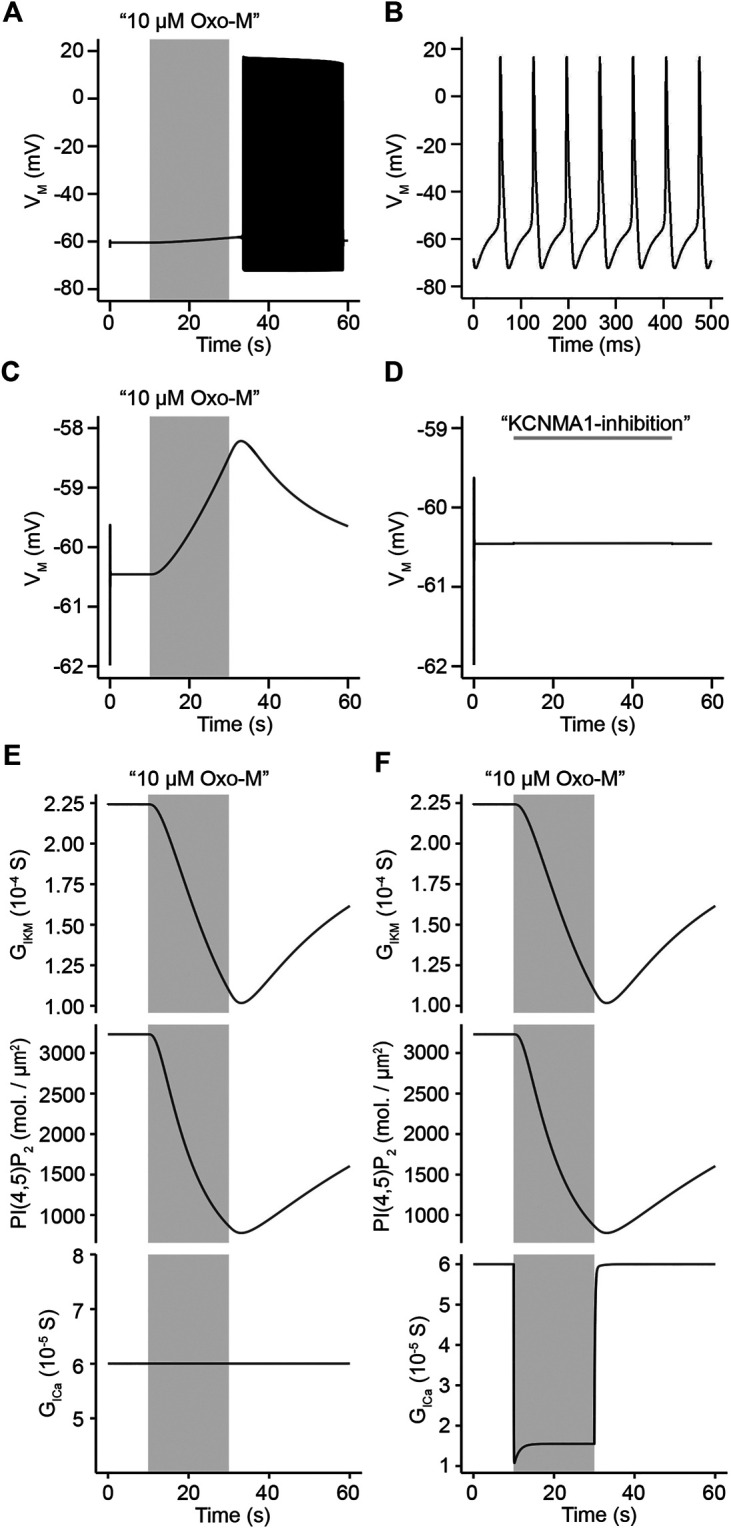
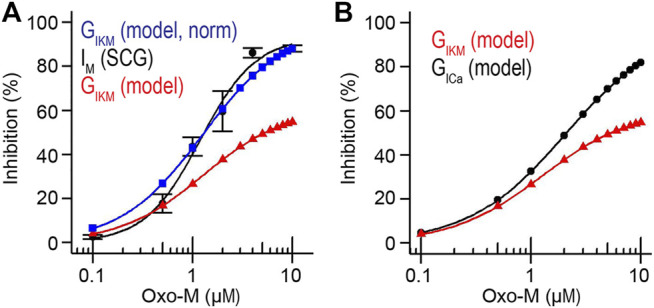
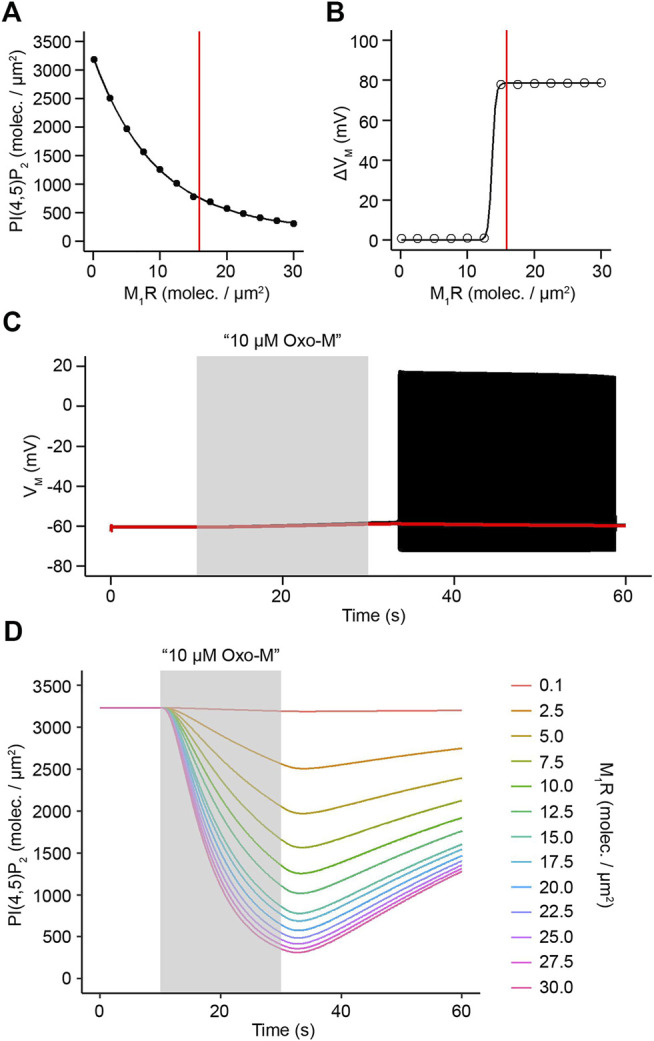
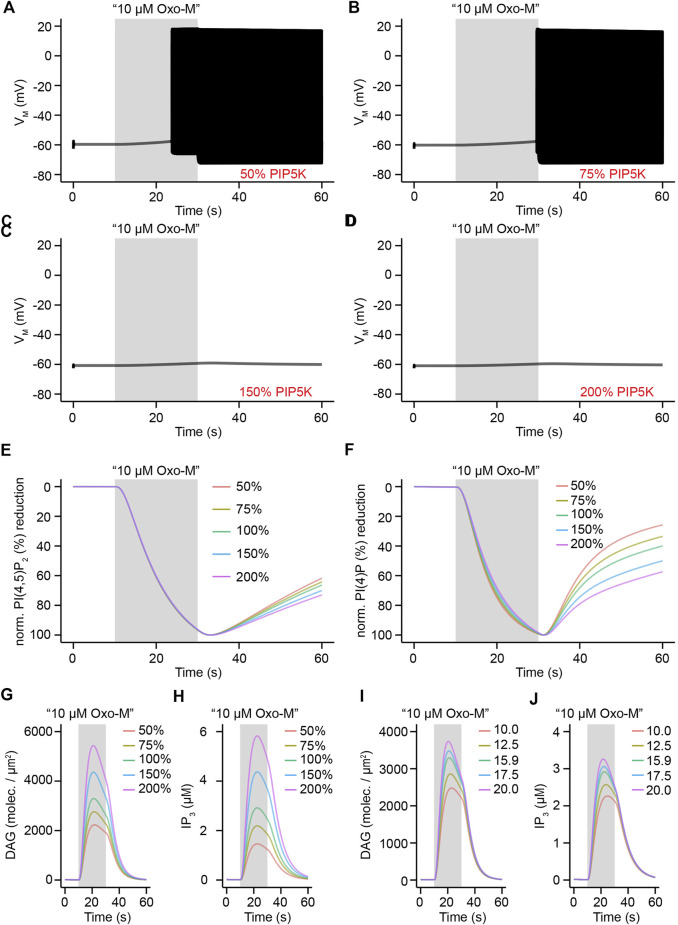
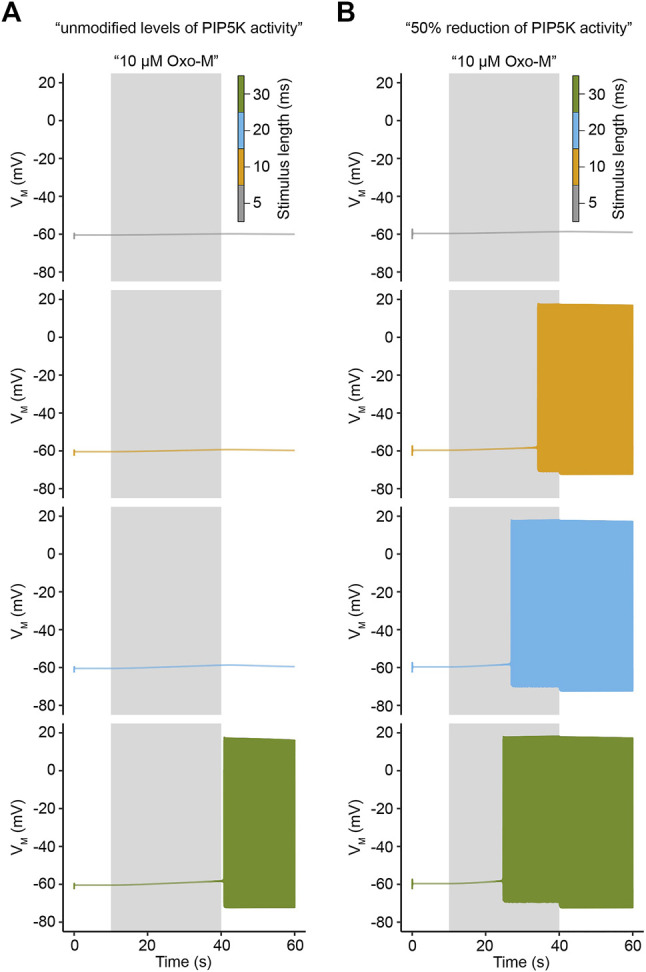
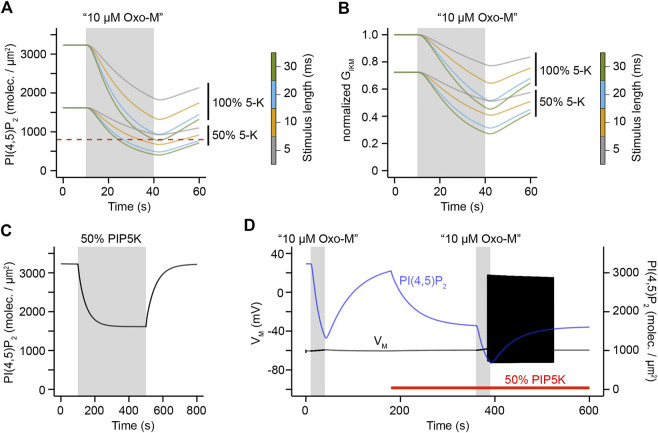
Phosphoinositides are members of a family of minor phospholipids that make up about 1% of all lipids in most cell types. Despite their low abundance they have been found to be essential regulators of neuronal activities such as action potential firing, release and re-uptake of neurotransmitters, and interaction of cytoskeletal proteins with the plasma membrane. Activation of several different neurotransmitter receptors can deplete phosphoinositide levels by more than 90% in seconds, thereby profoundly altering neuronal behavior; however, despite the physiological importance of this mechanism we still lack a profound quantitative understanding of the connection between phosphoinositide metabolism and neuronal activity. Here, we present a model that describes phosphoinositide metabolism and phosphoinositide-dependent action potential firing in sympathetic neurons. The model allows for a simulation of activation of muscarinic acetylcholine receptors and its effects on phosphoinositide levels and their regulation of action potential firing in these neurons. In this paper, we describe the characteristics of the model, its calibration to experimental data, and use the model to analyze how alterations of surface density of muscarinic acetylcholine receptors or altered activity levels of a key enzyme of phosphoinositide metabolism influence action potential firing of sympathetic neurons. In conclusion, the model provides a comprehensive framework describing the connection between muscarinic acetylcholine signaling, phosphoinositide metabolism, and action potential firing in sympathetic neurons which can be used to study the role of these signaling systems in health and disease.
磷酸肌醇是一类微量磷脂家族的成员,在大多数细胞类型中占所有脂质的约1%。尽管它们含量很低,但已发现它们是神经元活动的重要调节因子,如动作电位发放、神经递质的释放和再摄取,以及细胞骨架蛋白与质膜的相互作用。几种不同神经递质受体的激活可在数秒内使磷酸肌醇水平降低90%以上,从而深刻改变神经元行为;然而,尽管这种机制具有生理重要性,但我们仍然缺乏对磷酸肌醇代谢与神经元活动之间联系的深入定量理解。在这里,我们提出了一个描述交感神经元中磷酸肌醇代谢和磷酸肌醇依赖性动作电位发放的模型。该模型允许模拟毒蕈碱型乙酰胆碱受体的激活及其对磷酸肌醇水平的影响以及它们对这些神经元动作电位发放的调节。在本文中,我们描述了该模型的特征、对实验数据的校准,并使用该模型分析毒蕈碱型乙酰胆碱受体表面密度的改变或磷酸肌醇代谢关键酶活性水平的改变如何影响交感神经元的动作电位发放。总之,该模型提供了一个全面的框架,描述了交感神经元中毒蕈碱型乙酰胆碱信号传导、磷酸肌醇代谢和动作电位发放之间的联系,可用于研究这些信号系统在健康和疾病中的作用。