Weyerer Veronika, Strissel Pamela L, Stöhr Christine, Eckstein Markus, Wach Sven, Taubert Helge, Brandl Lisa, Geppert Carol I, Wullich Bernd, Cynis Holger, Beckmann Matthias W, Seliger Barbara, Hartmann Arndt, Strick Reiner
Institute of Pathology, University Hospital Erlangen, Friedrich-Alexander University Erlangen-Nuernberg, Erlangen, Germany.
Department of Gynecology and Obstetrics, University Hospital Erlangen, Comprehensive Cancer Center, European Metropolitan Area Erlangen-Nuremberg (CCC ER-EMN), Friedrich-Alexander-University Erlangen-Nuernberg, Erlangen, Germany.
Front Oncol. 2021 Apr 22;11:657187. doi: 10.3389/fonc.2021.657187. eCollection 2021.
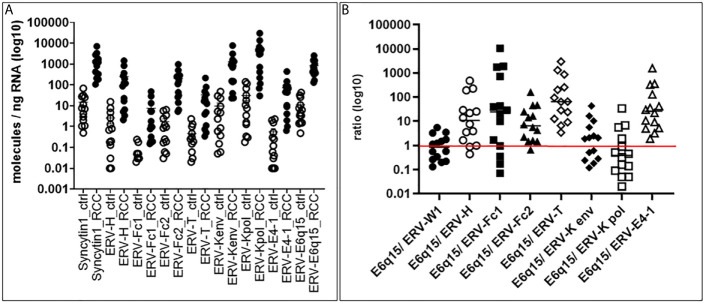
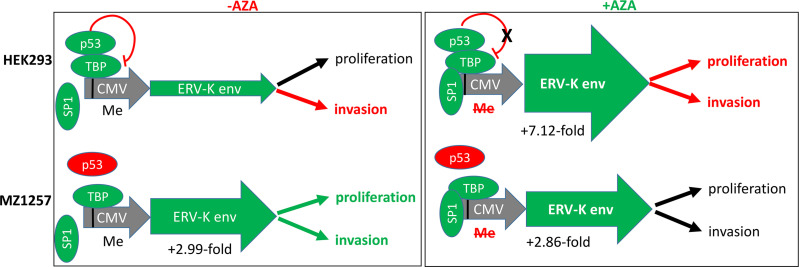
Renal cell carcinoma (RCC) is one of the ten most common cancers for men and women with an approximate 75% overall 5-year survival. Sixteen histological tumor subtypes exist and the most common are papillary, chromophobe and clear cell renal cell carcinoma (ccRCC) representing 85% of all RCC. Although epigenetically silenced, endogenous retroviral (ERV) genes become activated in tumors and function to ignite immune responses. Research has intensified to understand ERV protein function and their role as tumor antigens and targets for cancer (immune) therapy. ERV-K env is overexpressed and implicated as a therapeutic target for breast cancer, however studies in RCC are limited. In this investigation a human RCC tissue microarray (TMA) (n=374) predominantly consisting of the most common histological tumor subtypes was hybridized with an ERV-K env antibody and correlated with patient clinical data. TMA results showed the highest amount of ERV-K env protein expression and the strongest significant membrane expression in ccRCC versus other RCC subtypes. High ERV-K env total protein expression of all tumor subtypes significantly correlated with low tumor grading and a longer disease specific survival using multivariable analyses. Cell proliferation and invasion were assayed using the kidney cell lines HEK293 with wild-type p53 and a ccRCC cell line MZ1257RC mutated for p53. Transfecting these cell lines with a codon optimized overexpressing CMV vector was performed with or without 5'-Aza-2'-deoxycytidine (Aza) treatment to sustain promoter de-methylation. MZ1257RC showed induction of expression and significantly increased both proliferation and invasion in the presence or absence of Aza. HEK293 cells demonstrated a restriction of expression and invasion with no changes in proliferation in the absence of Aza. However, in the presence of Aza despite increased expression, an inhibition of HEK293 proliferation and a further restriction of invasion was found. This study supports ERV-K env as a single prognostic indicator for better survival of RCC, which we propose represents a new tumor antigen. In addition, ERV-K env significantly regulates proliferation and invasion depending on p53 status and Aza treatment.
肾细胞癌(RCC)是男性和女性中最常见的十种癌症之一,总体5年生存率约为75%。肾细胞癌存在16种组织学肿瘤亚型,最常见的是乳头状、嫌色细胞和透明细胞肾细胞癌(ccRCC),占所有肾细胞癌的85%。内源性逆转录病毒(ERV)基因虽然在表观遗传上沉默,但在肿瘤中会被激活,并起到引发免疫反应的作用。为了解ERV蛋白功能及其作为肿瘤抗原和癌症(免疫)治疗靶点的作用,研究力度不断加大。ERV-K env在乳腺癌中过表达,并被认为是一个治疗靶点,然而在肾细胞癌方面的研究有限。在本研究中,将一个主要由最常见组织学肿瘤亚型组成的人类肾细胞癌组织微阵列(TMA)(n = 374)与一种ERV-K env抗体进行杂交,并与患者临床数据相关联。TMA结果显示,与其他肾细胞癌亚型相比,ccRCC中ERV-K env蛋白表达量最高,且膜表达的显著性最强。使用多变量分析,所有肿瘤亚型的高ERV-K env总蛋白表达与低肿瘤分级和更长的疾病特异性生存期显著相关。使用具有野生型p53的肾细胞系HEK293和p53发生突变的ccRCC细胞系MZ1257RC来检测细胞增殖和侵袭。用密码子优化的过表达CMV载体转染这些细胞系,并在有或没有5'-氮杂-2'-脱氧胞苷(Aza)处理的情况下进行,以维持启动子去甲基化。MZ1257RC显示出表达的诱导,并且在有或没有Aza的情况下,增殖和侵袭均显著增加。在没有Aza的情况下,HEK293细胞表现出表达和侵袭受到限制,而增殖没有变化。然而,在有Aza的情况下,尽管表达增加,但发现HEK293细胞的增殖受到抑制,侵袭进一步受限。本研究支持ERV-K env作为肾细胞癌患者更好生存的单一预后指标,我们认为它代表一种新的肿瘤抗原。此外,ERV-K env根据p53状态和Aza处理显著调节增殖和侵袭。