Tucci Jonathan, Chen Ting, Margulis Katherine, Orgel Etan, Paszkiewicz Rebecca L, Cohen Michael D, Oberley Matthew J, Wahhab Rachel, Jones Anthony E, Divakaruni Ajit S, Hsu Cheng-Chih, Noll Sarah E, Sheng Xia, Zare Richard N, Mittelman Steven D
Diabetes and Obesity Program, Center for Endocrinology, Diabetes and Metabolism, Children's Hospital Los Angeles, Los Angeles, CA, United States.
Division of Pediatric Endocrinology, University of California Los Angeles (UCLA) Children's Discovery and Innovation Institute, David Geffen School of Medicine UCLA, Los Angeles, CA, United States.
Front Oncol. 2021 Apr 22;11:665763. doi: 10.3389/fonc.2021.665763. eCollection 2021.
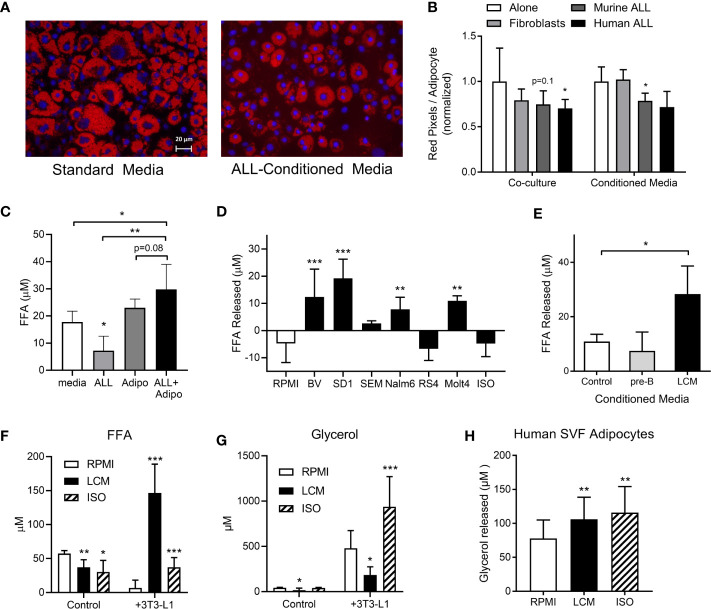
There is increasing evidence that adipocytes play an active role in the cancer microenvironment. We have previously reported that adipocytes interact with acute lymphoblastic leukemia (ALL) cells, contributing to chemotherapy resistance and treatment failure. In the present study, we investigated whether part of this resistance is due to adipocyte provision of lipids to ALL cells.
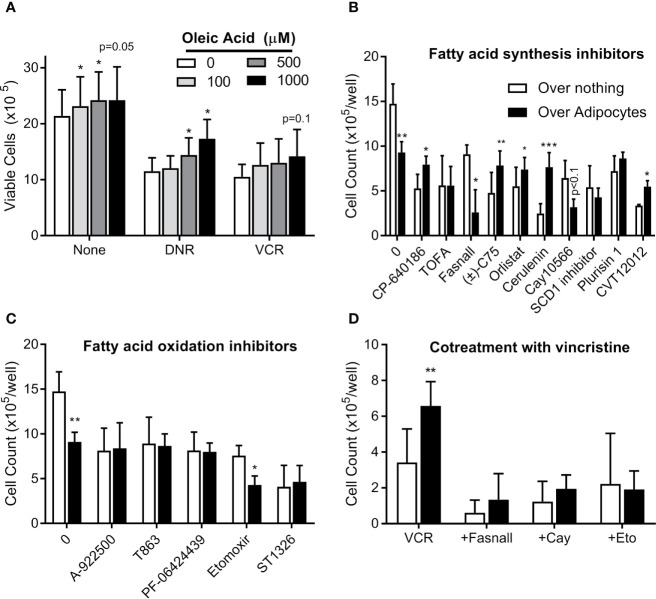
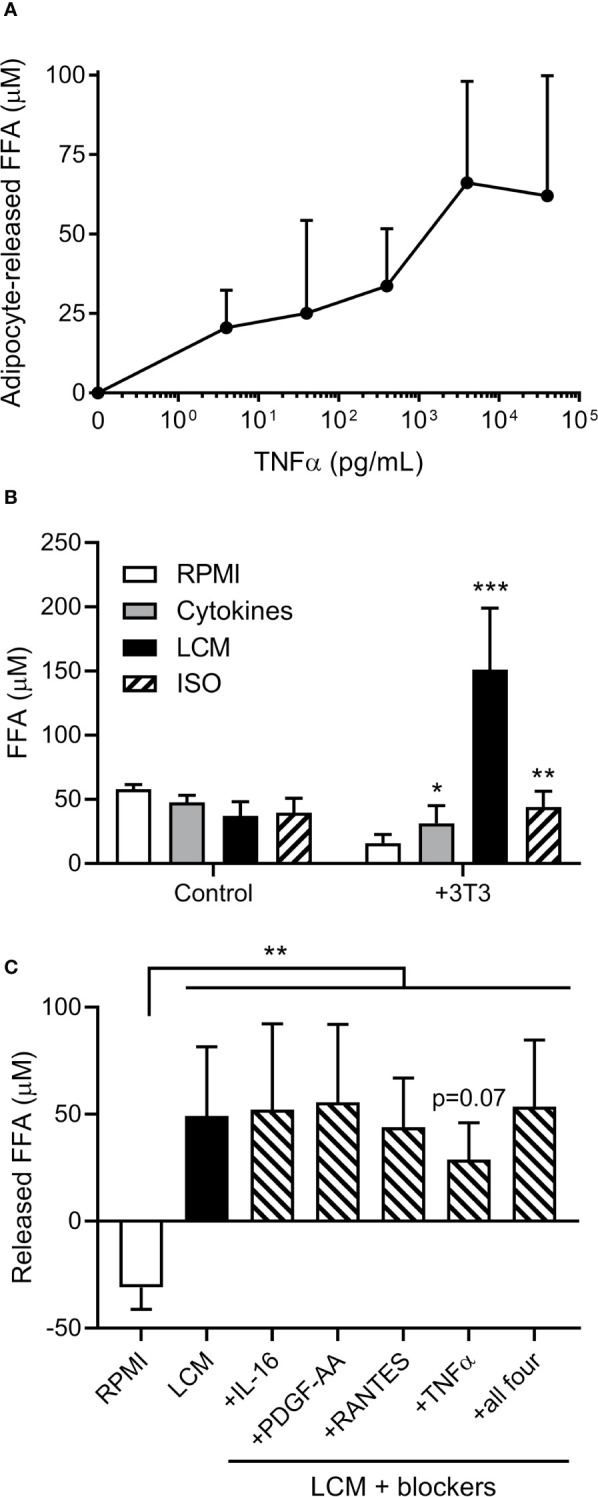
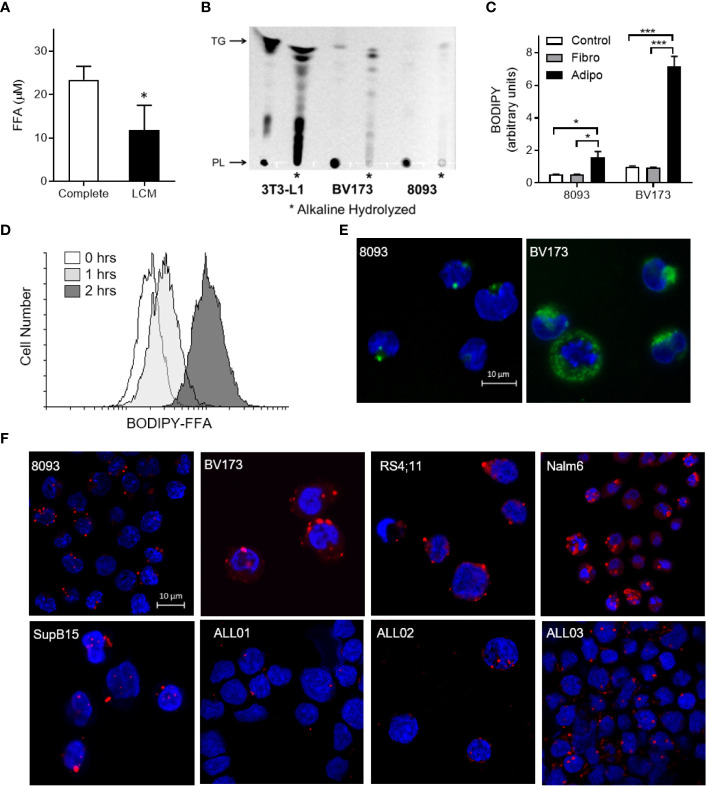
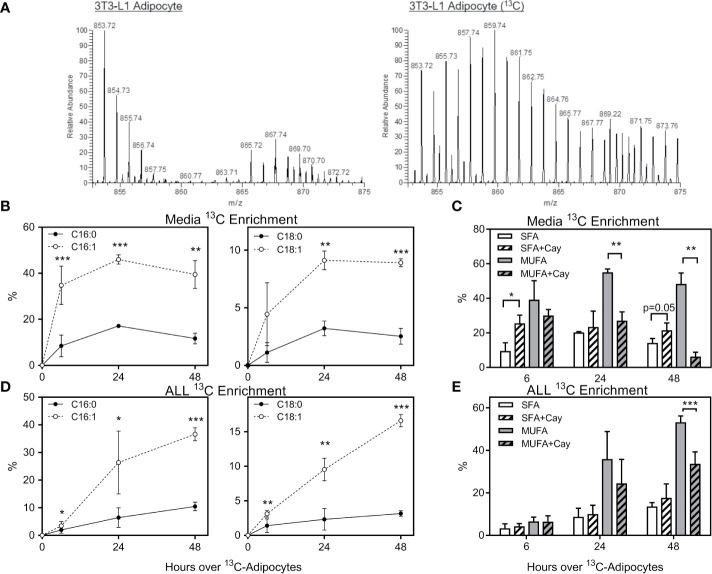
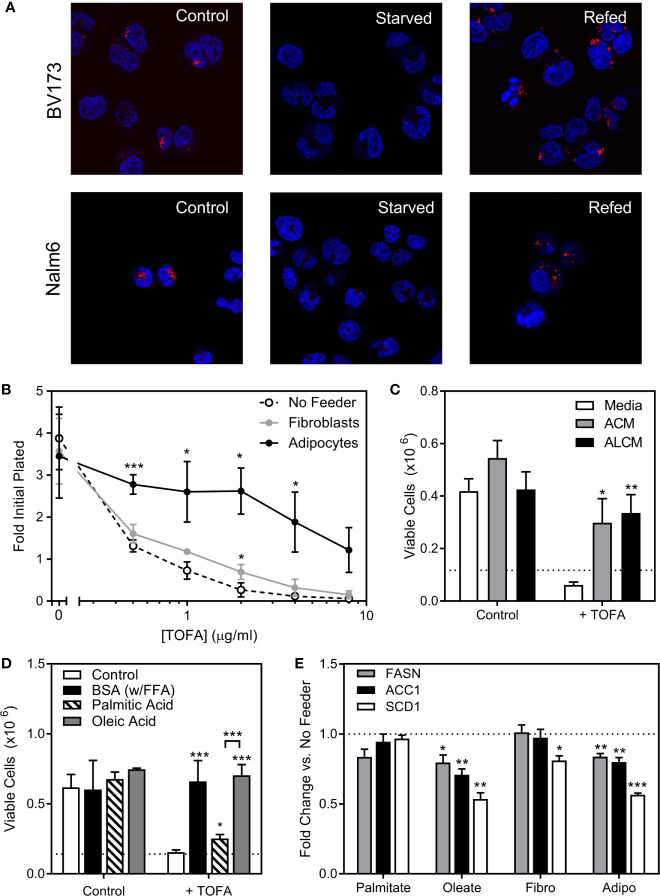
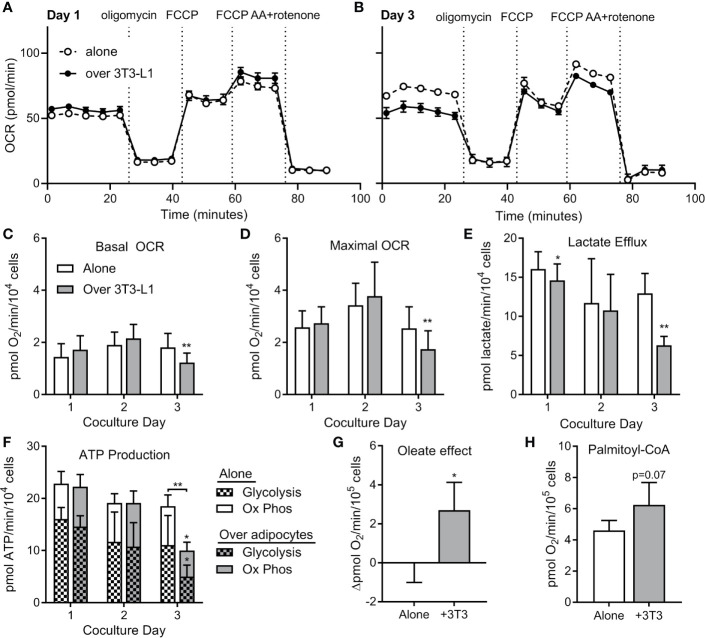
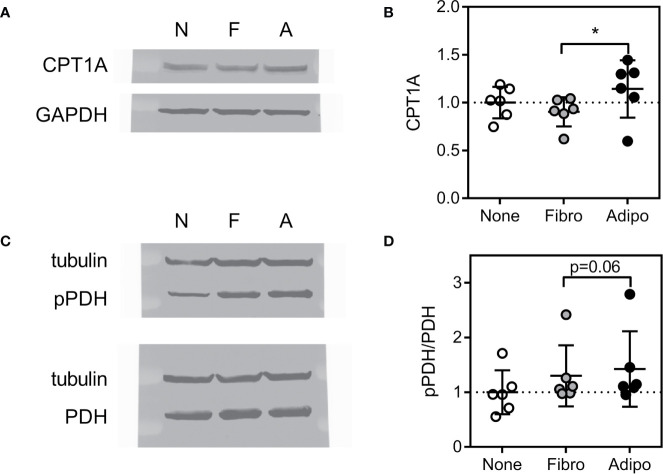
We cultured 3T3-L1 adipocytes, and tested whether ALL cells or ALL-released cytokines induced FFA release. We investigated whether ALL cells took up these FFA, and using fluorescent tagged BODIPY-FFA and lipidomics, evaluated which lipid moieties were being transferred from adipocytes to ALL. We evaluated the effects of adipocyte-derived lipids on ALL cell metabolism using a Seahorse XF analyzer and expression of enzymes important for lipid metabolism, and tested whether these lipids could protect ALL cells from chemotherapy. Finally, we evaluated a panel of lipid synthesis and metabolism inhibitors to determine which were affected by the presence of adipocytes.
Adipocytes release free fatty acids (FFA) when in the presence of ALL cells. These FFA are taken up by the ALL cells and incorporated into triglycerides and phospholipids. Some of these lipids are stored in lipid droplets, which can be utilized in states of fuel deprivation. Adipocytes preferentially release monounsaturated FFA, and this can be attenuated by inhibiting the desaturating enzyme steroyl-CoA decarboxylase-1 (SCD1). Adipocyte-derived FFA can relieve ALL cell endogenous lipogenesis and reverse the cytotoxicity of pharmacological acetyl-CoA carboxylase (ACC) inhibition. Further, adipocytes alter ALL cell metabolism, shifting them from glucose to FFA oxidation. Interestingly, the unsaturated fatty acid, oleic acid, protects ALL cells from modest concentrations of chemotherapy, such as those that might be present in the ALL microenvironment. In addition, targeting lipid synthesis and metabolism can potentially reverse adipocyte protection of ALL cells.
These findings uncover a previously unidentified interaction between ALL cells and adipocytes, leading to transfer of FFA for use as a metabolic fuel and macromolecule building block. This interaction may contribute to ALL resistance to chemotherapy, and could potentially be targeted to improve ALL treatment outcome.
越来越多的证据表明脂肪细胞在癌症微环境中发挥着积极作用。我们之前报道过脂肪细胞与急性淋巴细胞白血病(ALL)细胞相互作用,导致化疗耐药和治疗失败。在本研究中,我们调查了这种耐药性的部分原因是否是脂肪细胞向ALL细胞提供脂质。
我们培养了3T3-L1脂肪细胞,并测试ALL细胞或ALL释放的细胞因子是否诱导游离脂肪酸(FFA)释放。我们研究了ALL细胞是否摄取这些FFA,并使用荧光标记的BODIPY-FFA和脂质组学评估了哪些脂质部分从脂肪细胞转移到ALL细胞。我们使用Seahorse XF分析仪评估脂肪细胞衍生的脂质对ALL细胞代谢的影响以及对脂质代谢重要的酶的表达,并测试这些脂质是否能保护ALL细胞免受化疗。最后,我们评估了一组脂质合成和代谢抑制剂,以确定哪些受到脂肪细胞存在的影响。
脂肪细胞在与ALL细胞共存时会释放游离脂肪酸(FFA)。这些FFA被ALL细胞摄取并整合到甘油三酯和磷脂中。其中一些脂质储存在脂滴中,可在营养缺乏状态下被利用。脂肪细胞优先释放单不饱和FFA,抑制去饱和酶硬脂酰辅酶A脱羧酶-1(SCD1)可减弱这种释放。脂肪细胞衍生的FFA可缓解ALL细胞内源性脂肪生成,并逆转药理学上抑制乙酰辅酶A羧化酶(ACC)的细胞毒性。此外,脂肪细胞改变ALL细胞代谢,使其从葡萄糖氧化转变为FFA氧化。有趣的是,不饱和脂肪酸油酸可保护ALL细胞免受中等浓度化疗的影响,比如ALL微环境中可能存在的化疗浓度。此外,靶向脂质合成和代谢可能会逆转脂肪细胞对ALL细胞的保护作用。
这些发现揭示了ALL细胞与脂肪细胞之间一种以前未被识别的相互作用,导致FFA转移用作代谢燃料和大分子构建块。这种相互作用可能导致ALL对化疗产生耐药性,并有可能成为改善ALL治疗结果的靶点。