Department of Virology, University of Helsinki and Helsinki University Hospital, Helsinki, Finland.
Department of Forensic Medicine, University of Helsinki, Helsinki, Finland.
Front Cell Infect Microbiol. 2021 Apr 22;11:657245. doi: 10.3389/fcimb.2021.657245. eCollection 2021.
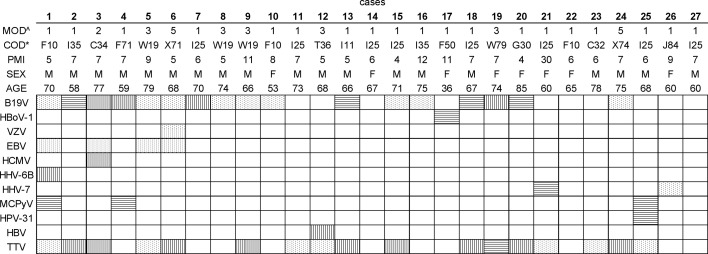
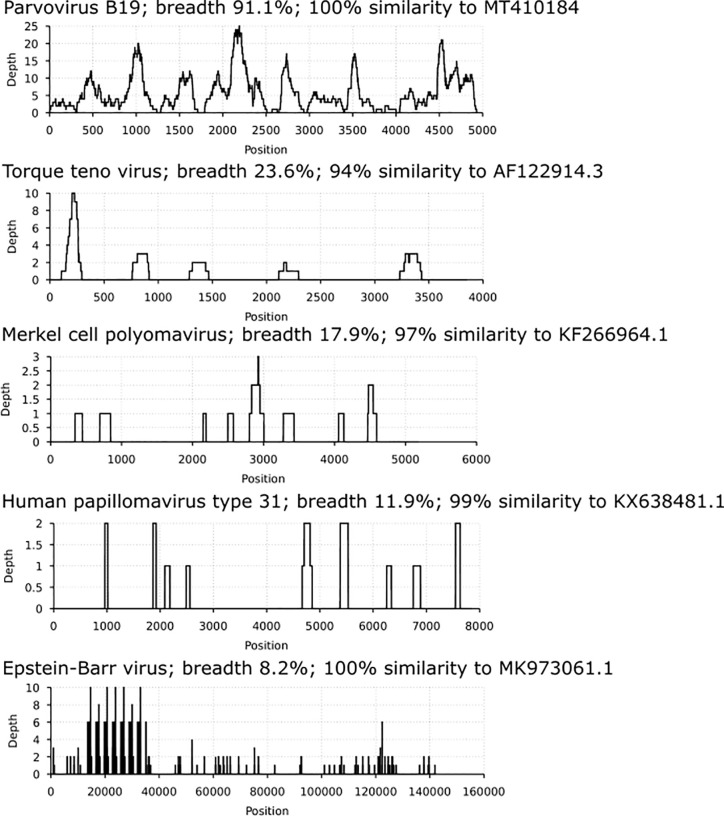
The long-term impact of viruses residing in the human bone marrow (BM) remains unexplored. However, chronic inflammatory processes driven by single or multiple viruses could significantly alter hematopoiesis and immune function. We performed a systematic analysis of the DNAs of 38 viruses in the BM. We detected, by quantitative PCRs and next-generation sequencing, viral DNA in 88.9% of the samples, up to five viruses in one individual. Included were, among others, several herpesviruses, hepatitis B virus, Merkel cell polyomavirus and, unprecedentedly, human papillomavirus 31. Given the reactivation and/or oncogenic potential of these viruses, their repercussion on hematopoietic and malignant disorders calls for careful examination. Furthermore, the implications of persistent infections on the engraftment, regenerative capacity, and outcomes of bone marrow transplantation deserve in-depth evaluation.
病毒在人类骨髓(BM)中长期存在的影响尚未可知。然而,由单一或多种病毒驱动的慢性炎症过程可能会显著改变造血和免疫功能。我们对 38 种病毒的 BM DNA 进行了系统分析。通过定量 PCR 和下一代测序,我们在 88.9%的样本中检测到了病毒 DNA,一个个体中最多可检测到五种病毒。其中包括多种疱疹病毒、乙型肝炎病毒、默克尔细胞多瘤病毒,以及前所未有的人乳头瘤病毒 31。鉴于这些病毒的再激活和/或致癌潜力,它们对造血和恶性疾病的影响需要仔细检查。此外,持续性感染对骨髓移植的植入、再生能力和结果的影响值得深入评估。