Rajczewski Andrew T, Mehta Subina, Nguyen Dinh Duy An, Grüning Björn, Johnson James E, McGowan Thomas, Griffin Timothy J, Jagtap Pratik D
Department of Biochemistry, Molecular and Cell Biology Building, University of Minnesota, 420 Washington Ave SE 7-129, Minneapolis, MN, 55455, USA.
Department of Computer Science, University of Freiburg, Freiburg, Germany.
Clin Proteomics. 2021 May 10;18(1):15. doi: 10.1186/s12014-021-09321-1.
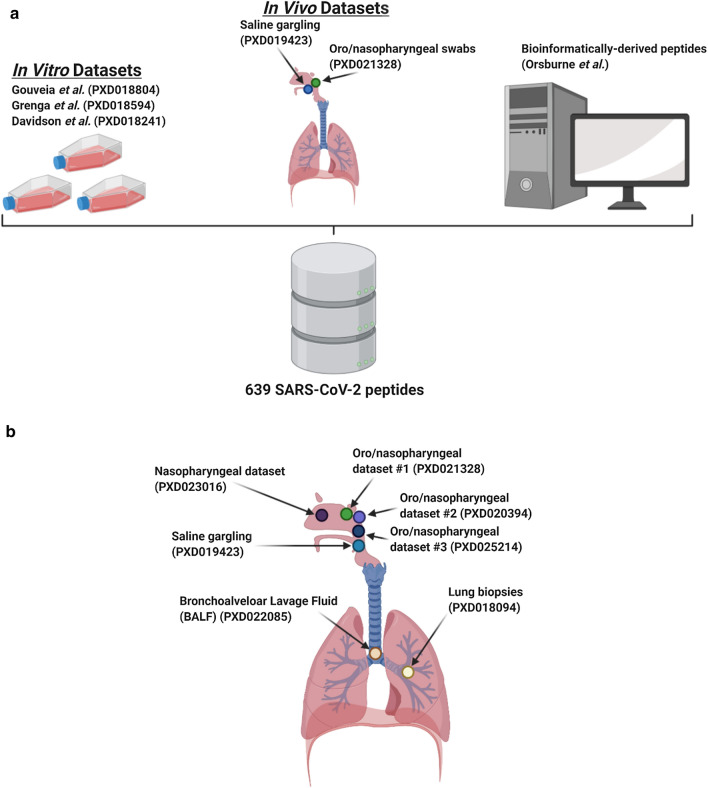
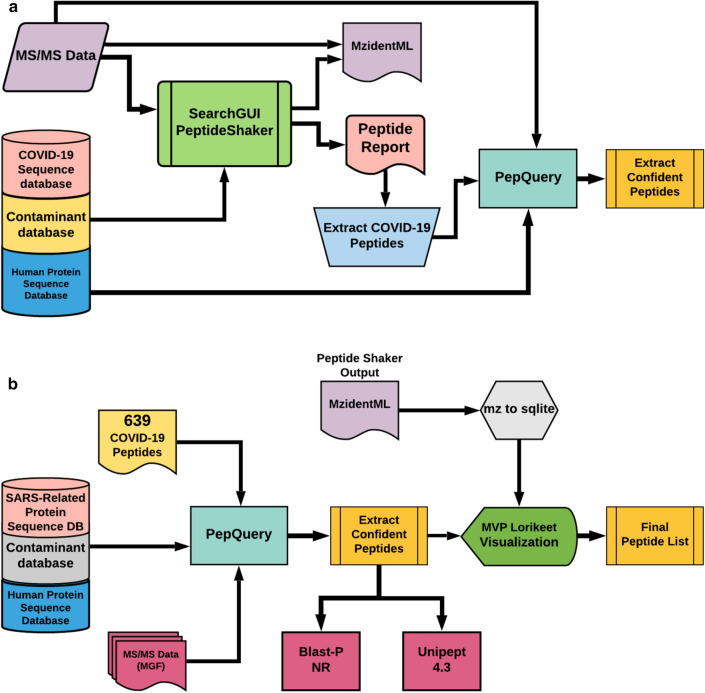
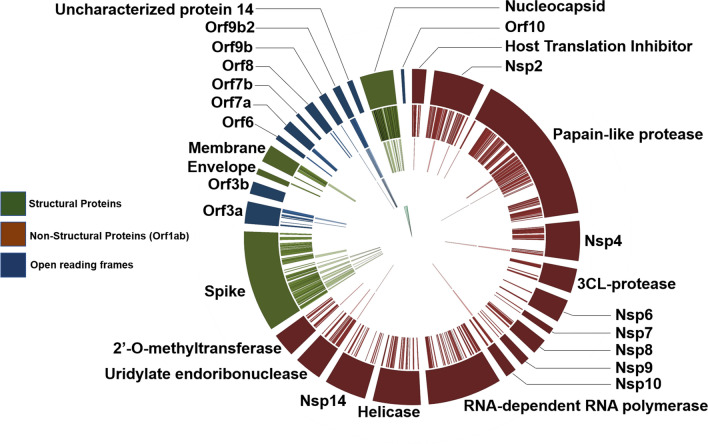
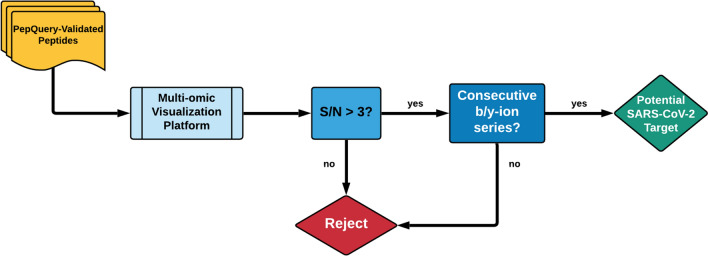
The Coronavirus Disease 2019 (COVID-19) global pandemic has had a profound, lasting impact on the world's population. A key aspect to providing care for those with COVID-19 and checking its further spread is early and accurate diagnosis of infection, which has been generally done via methods for amplifying and detecting viral RNA molecules. Detection and quantitation of peptides using targeted mass spectrometry-based strategies has been proposed as an alternative diagnostic tool due to direct detection of molecular indicators from non-invasively collected samples as well as the potential for high-throughput analysis in a clinical setting; many studies have revealed the presence of viral peptides within easily accessed patient samples. However, evidence suggests that some viral peptides could serve as better indicators of COVID-19 infection status than others, due to potential misidentification of peptides derived from human host proteins, poor spectral quality, high limits of detection etc. METHODS: In this study we have compiled a list of 636 peptides identified from Sudden Acute Respiratory Syndrome Coronavirus 2 (SARS-CoV-2) samples, including from in vitro and clinical sources. These datasets were rigorously analyzed using automated, Galaxy-based workflows containing tools such as PepQuery, BLAST-P, and the Multi-omic Visualization Platform as well as the open-source tools MetaTryp and Proteomics Data Viewer (PDV).
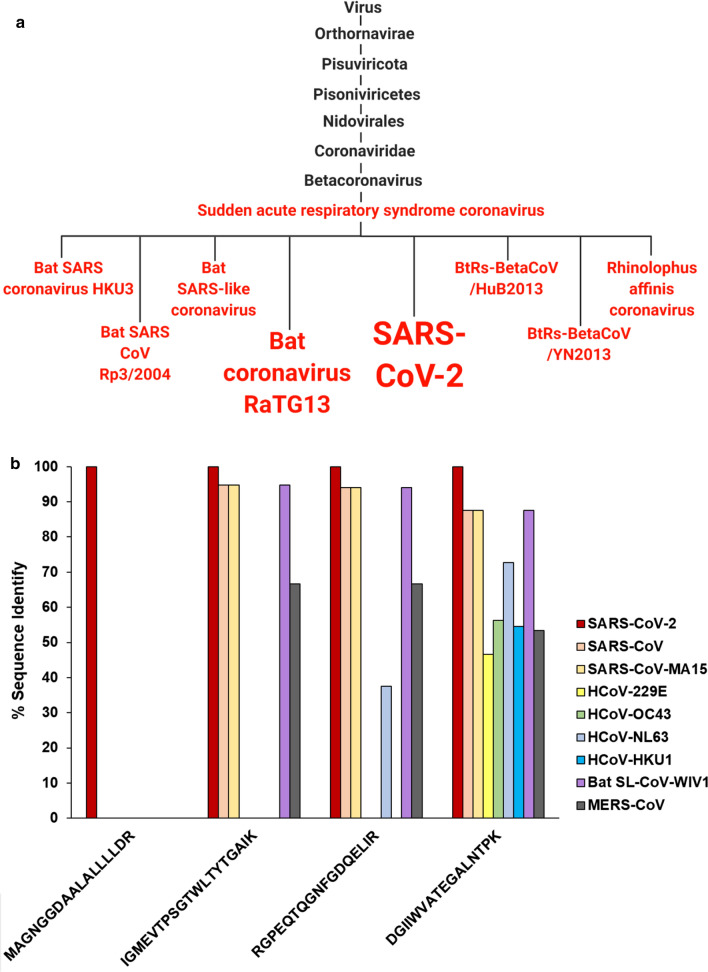
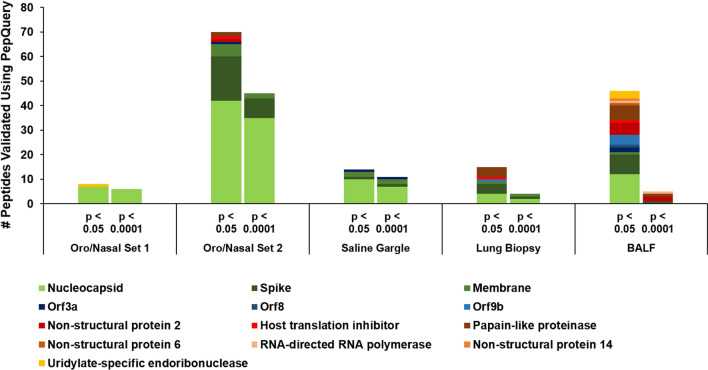
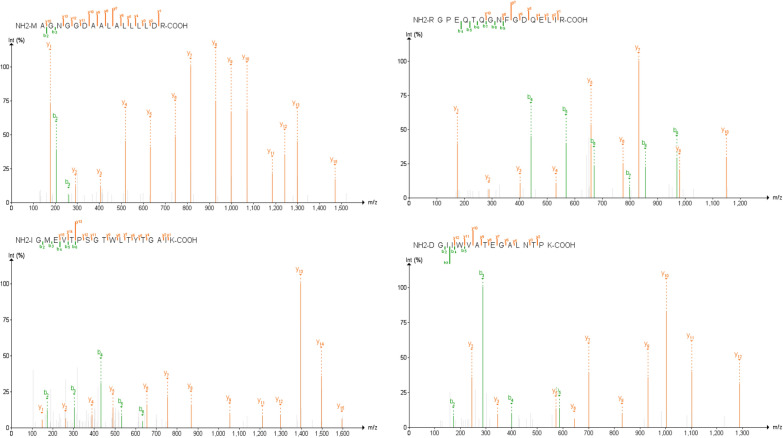
Using PepQuery for confirming peptide spectrum matches, we were able to narrow down the 639-peptide possibilities to 87 peptides that were most robustly detected and specific to the SARS-CoV-2 virus. The specificity of these sequences to coronavirus taxa was confirmed using Unipept and BLAST-P. Through stringent p-value cutoff combined with manual verification of peptide spectrum match quality, 4 peptides derived from the nucleocapsid phosphoprotein and membrane protein were found to be most robustly detected across all cell culture and clinical samples, including those collected non-invasively.
We propose that these peptides would be of the most value for clinical proteomics applications seeking to detect COVID-19 from patient samples. We also contend that samples harvested from the upper respiratory tract and oral cavity have the highest potential for diagnosis of SARS-CoV-2 infection from easily collected patient samples using mass spectrometry-based proteomics assays.
2019年冠状病毒病(COVID-19)全球大流行对世界人口产生了深远而持久的影响。为COVID-19患者提供护理并遏制其进一步传播的一个关键方面是早期准确诊断感染,这通常通过扩增和检测病毒RNA分子的方法来完成。由于能够直接从非侵入性采集的样本中检测分子指标,以及在临床环境中进行高通量分析的潜力,基于靶向质谱的策略检测和定量肽段已被提议作为一种替代诊断工具;许多研究已经揭示了在易于获取的患者样本中存在病毒肽段。然而,有证据表明,由于可能误识源自人类宿主蛋白的肽段、光谱质量差、检测限高等原因,一些病毒肽段作为COVID-19感染状态的指标可能比其他肽段更好。
在本研究中,我们汇编了一份从严重急性呼吸综合征冠状病毒2(SARS-CoV-2)样本中鉴定出的636种肽段的列表,这些样本包括体外样本和临床样本。使用包含PepQuery、BLAST-P和多组学可视化平台等工具的基于Galaxy的自动化工作流程以及开源工具MetaTryp和蛋白质组学数据查看器(PDV)对这些数据集进行了严格分析。
使用PepQuery确认肽谱匹配,我们能够将639种肽段的可能性缩小到87种最能可靠检测且对SARS-CoV-2病毒具有特异性的肽段。使用Unipept和BLAST-P确认了这些序列对冠状病毒分类群的特异性。通过严格的p值截断并结合对肽谱匹配质量的人工验证,发现4种源自核衣壳磷蛋白和膜蛋白的肽段在所有细胞培养和临床样本(包括非侵入性采集的样本)中最能可靠检测到。
我们认为,这些肽段对于试图从患者样本中检测COVID-19的临床蛋白质组学应用最有价值。我们还认为,使用基于质谱的蛋白质组学分析,从上呼吸道和口腔采集的样本在通过易于采集的患者样本诊断SARS-CoV-2感染方面具有最高潜力。