School of Medicine, China Medical University, Taichung, 404, Taiwan.
Department of Orthopedic Surgery, China Medical University Hospital, Taichung, 404, Taiwan.
BMC Musculoskelet Disord. 2021 May 10;22(1):431. doi: 10.1186/s12891-021-04276-8.
Metacarpal shaft fractures are a common type of hand fracture. Despite providing strong fixation strength, plate fixation has numerous shortcomings. Concerning internal fixation with Kirschner wires (K-wires), although this approach is frequently used to treat metacarpal shaft fractures, the lack of functional stability may result in fixation failure.
To evaluate the effect of figure-of-eight cerclage wire on fixation for transverse metacarpal shaft fractures using two K-wires.
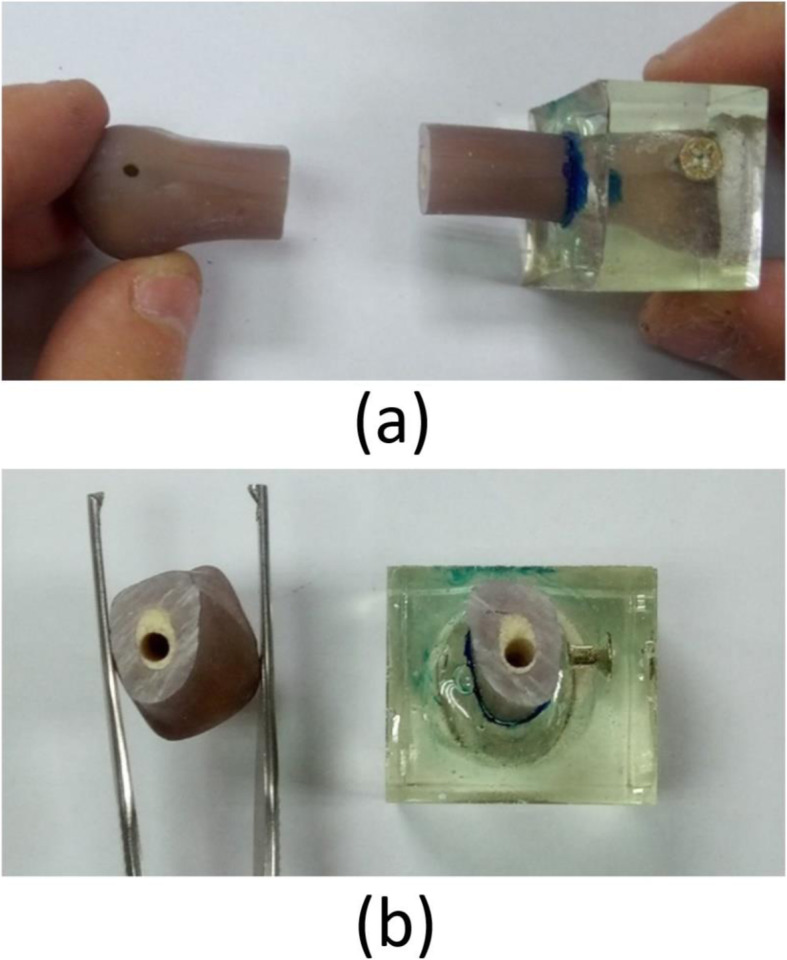
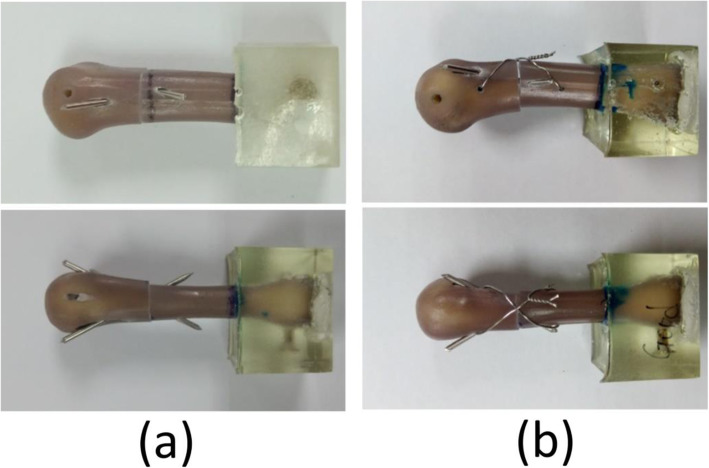
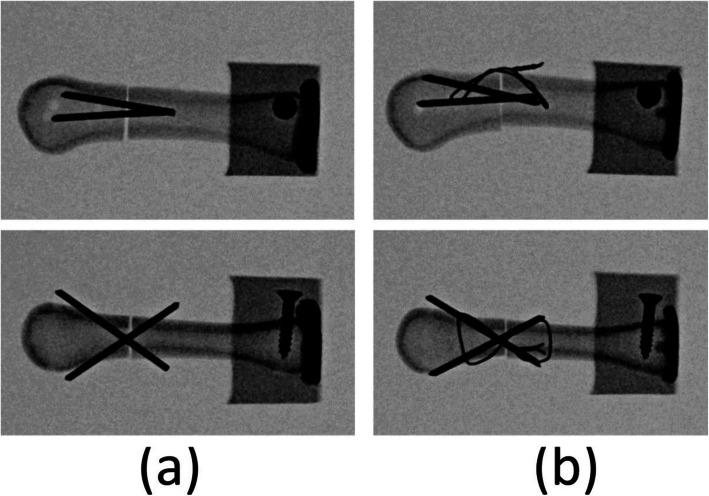
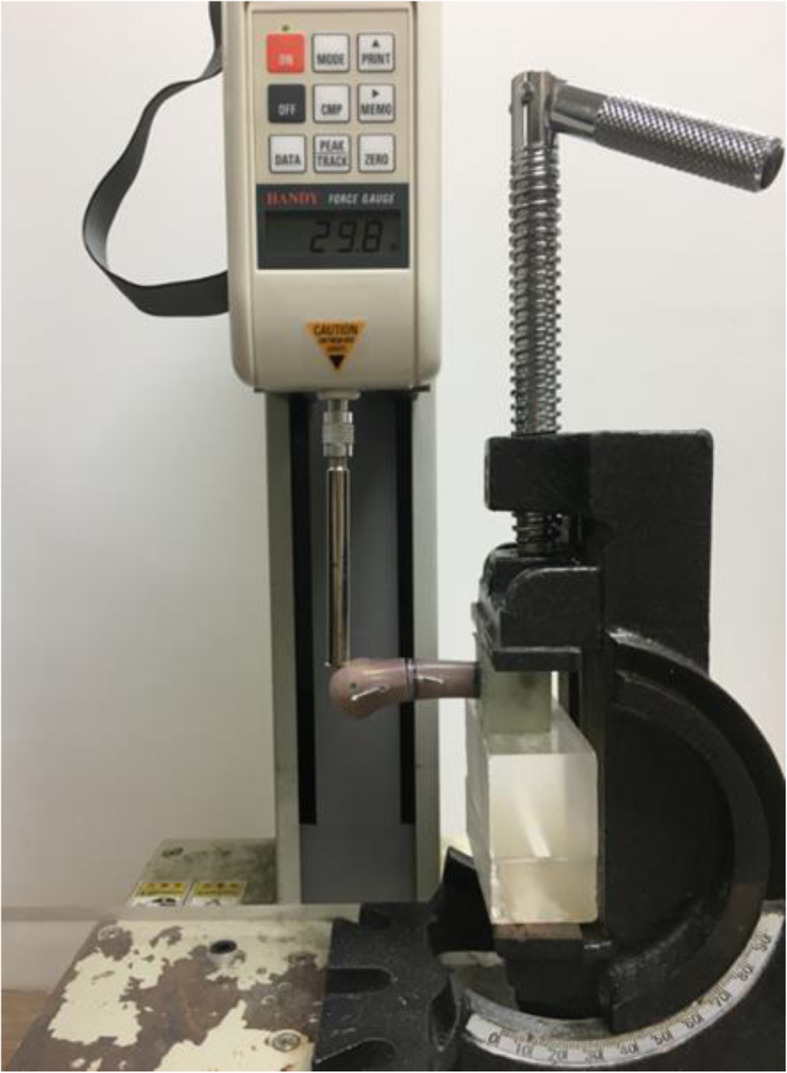
We used a saw blade to create transverse metacarpal shaft fractures in 14 fourth-generation artificial third metacarpal bones (Sawbones, Vashon, WA, USA), which were assigned to groups undergoing fixation with two K-wires (KP) or with two K-wires and figure-of-eight cerclage wire (KP&F8). All specimens were subjected to material testing, specifically cantilever bending tests. The maximum fracture force and stiffness of the two fixation types were determined on the basis of the force-displacement data. The Mann-Whitney U test was used to compare between-group differences in maximum fracture force and stiffness.
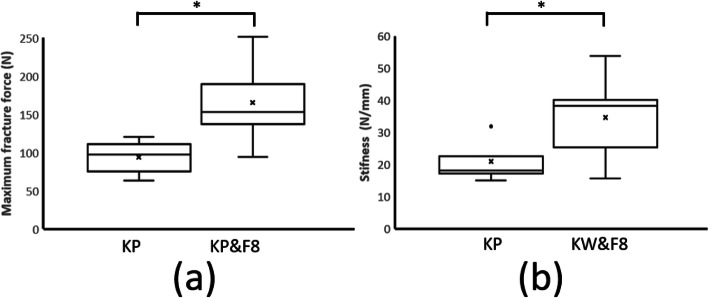
The maximum fracture force of the KP group (median ± interquartile range = 97.30 ± 29.70 N) was significantly lower than that of the KP&F8 group (153.2 ± 69.50 N, p < 0.05; Figure 5a), with the median of the KP&F8 group exceeding that of the KP group by 57.5%. Similarly, stiffness was significantly lower in the KP group (18.14 ± 9.84 N/mm) than in the KP&F8 group (38.25 ± 23.49 N/mm; p < 0.05; Figure 5b), with the median of the KP&F8 group exceeding that of the KP group by 110.9%.
The incorporation of a figure-of-eight cerclage wire increased the maximum fracture force and stiffness by 57.5 and 110.9%, respectively, compared with those achieved in standard two K-wire fixation. Therefore, hand surgeons are advised to consider the proposed approach to increase fixation strength.
掌骨干骨折是一种常见的手部骨折。尽管钢板固定提供了强大的固定强度,但它有许多缺点。关于克氏针(K-wires)内固定,虽然这种方法常用于治疗掌骨干骨折,但缺乏功能稳定性可能导致固定失败。
评估八字形环绕钢丝对两根 K 线固定横行掌骨干骨折的效果。
我们使用锯片在 14 个第四代人工第三掌骨(Sawbones,Vashon,WA,美国)上制造横行掌骨干骨折,将其分为两组,分别采用两根 K 线(KP)或两根 K 线和八字形环绕钢丝(KP&F8)固定。所有标本均进行材料测试,具体为悬臂弯曲试验。根据力-位移数据确定两种固定类型的最大骨折力和刚度。采用 Mann-Whitney U 检验比较两组间最大骨折力和刚度的差异。
KP 组的最大骨折力(中位数±四分位距=97.30±29.70 N)明显低于 KP&F8 组(153.2±69.50 N,p<0.05;图 5a),KP&F8 组中位数比 KP 组高 57.5%。同样,KP 组的刚度(18.14±9.84 N/mm)明显低于 KP&F8 组(38.25±23.49 N/mm;p<0.05;图 5b),KP&F8 组中位数比 KP 组高 110.9%。
与标准两根 K 线固定相比,八字形环绕钢丝的加入分别使最大骨折力和刚度提高了 57.5%和 110.9%。因此,建议手外科医生考虑采用这种方法来增加固定强度。