Danielewicz Hanna, Dębińska Anna, Myszczyszyn Grzegorz, Myszkal Anna, Hirnle Lidia, Drabik-Chamerska Anna, Kalita Danuta, Boznański Andrzej
1st Department of Pediatrics, Allergology and Cardiology, Wroclaw Medical University, ul. Chalubinskiego 2a, 50-368, Wroclaw, Poland.
1st Department of Gynecology and Obstetrics, Wroclaw Medical University, ul. Chalubinskiego 5, 50-368, Wroclaw, Poland.
Allergy Asthma Clin Immunol. 2021 May 10;17(1):46. doi: 10.1186/s13223-021-00547-0.
Worldwide, allergy affects more than one billion people, with particularly rising prevalence in industrialised areas. Specifically, young adults appear to be predominantly targeted for an allergy diagnosis. Allergic diseases in pregnancy are mainly pre-existing but could also occur de novo. The immunological changes while pregnant, with increased Th2 lymphocyte activity, can facilitate allergen sensitisation.
The aim of this study was to evaluate the pattern of specific IgE (sIgE) sensitisation to common inhalant and food allergens in pregnancy, and assess its relationship to self-reported allergic disease.
We assessed 200 pregnant women, aged 20-38 years (mean age = 29 years), participant of ELMA (Epigenetic Hallmark of Maternal Atopy and Diet) study, living in a metropolitan area, with no pregnancy associated metabolic complications, for total IgE and allergen specific IgE to 20 allergens.
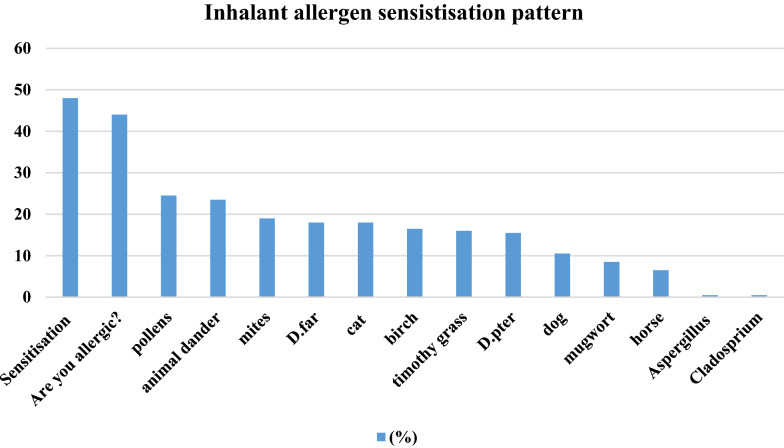
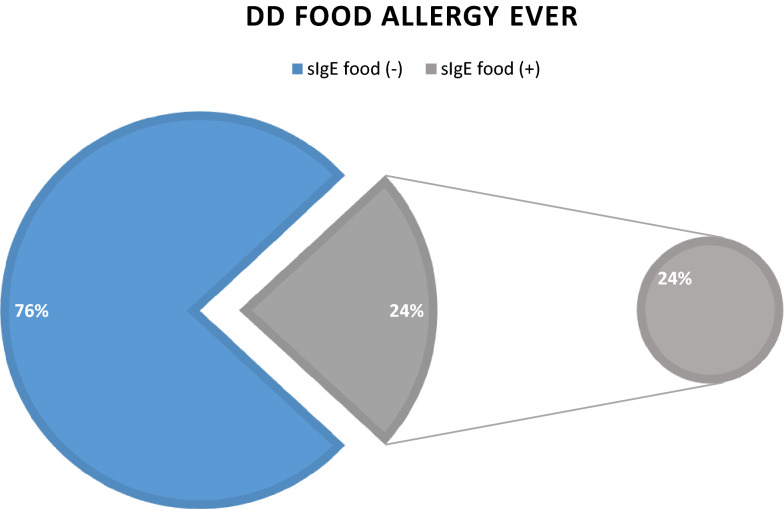
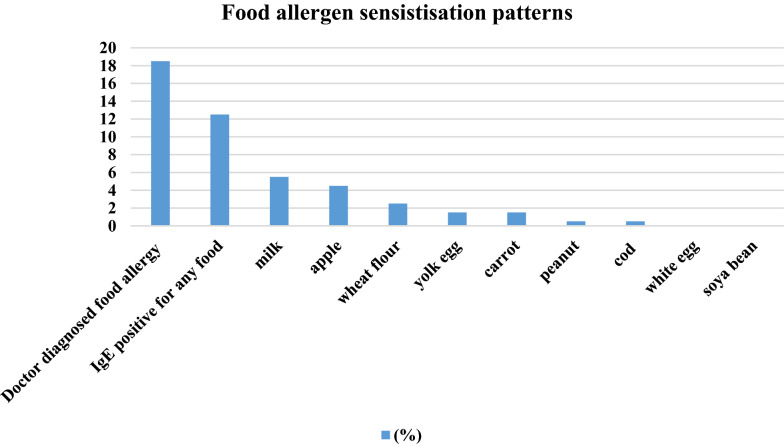
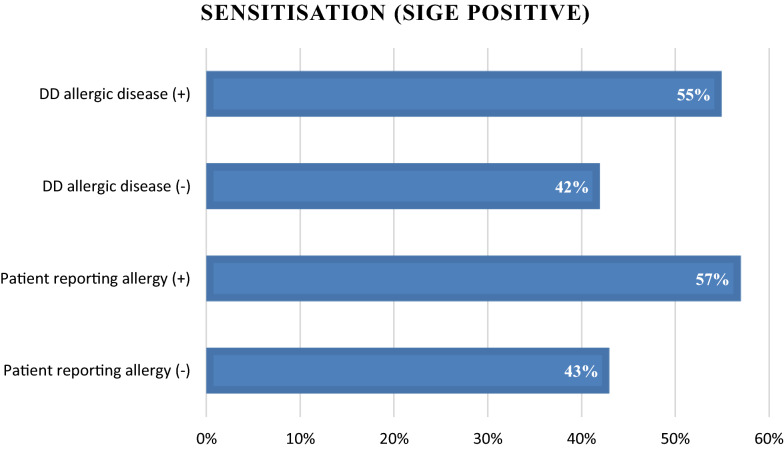
48% of pregnant women were sensitised to at least one allergen, at a cut-off point of 0.35 kU/L and they were assigned as atopic. However 42% in atopic group were not reporting any allergic disease. The most common inhalant allergens were: pollen (24.5%) and animal dander (23.5%). The most common food allergens were: cow's milk (5.5%) and apples (4.5%). 7.5% of women reported asthma, 21.5% allergic rhinitis, 11.5% atopic dermatitis and 18.5% food allergy. 8.5% of were taking medication for asthma or allergies. Atopic dermatitis had the highest tendency to become more severe during pregnancy. Total IgE values were significantly higher in atopic women.
Allergic sensitisation is a common phenomenon in pregnancy. Some sensitisations could be asymptomatic. Further studies should investigate if sensitisation in mothers confers risks for immune alterations in their children.
在全球范围内,过敏影响着超过10亿人,在工业化地区患病率尤其呈上升趋势。具体而言,年轻成年人似乎是过敏诊断的主要对象。孕期的过敏性疾病主要是既往已有的,但也可能新发。孕期免疫变化,伴随着辅助性T2淋巴细胞活性增加,可促进过敏原致敏。
本研究旨在评估孕期对常见吸入性和食物过敏原的特异性IgE(sIgE)致敏模式,并评估其与自我报告的过敏性疾病的关系。
我们评估了200名年龄在20 - 38岁(平均年龄 = 29岁)的孕妇,她们是ELMA(母亲特应性和饮食的表观遗传特征)研究的参与者,居住在大都市地区,无妊娠相关代谢并发症,检测其总IgE以及针对20种过敏原的过敏原特异性IgE。
48%的孕妇对至少一种过敏原致敏,临界值为0.35 kU/L,她们被归类为特应性。然而,特应性组中有42%未报告任何过敏性疾病。最常见的吸入性过敏原是:花粉(24.5%)和动物皮屑(23.5%)。最常见的食物过敏原是:牛奶(5.5%)和苹果(4.5%)。7.5%的女性报告有哮喘,21.5%有过敏性鼻炎,11.5%有特应性皮炎,18.5%有食物过敏。8.5%的人正在服用哮喘或过敏药物。特应性皮炎在孕期加重的倾向最高。特应性女性的总IgE值显著更高。
过敏致敏在孕期是一种常见现象。一些致敏可能无症状。进一步的研究应调查母亲的致敏是否会给其子女的免疫改变带来风险。