Translation and Engineering, Galvani Bioelectronics, Stevenage SG1 2NY, United Kingdom;
Clinical Sciences and Services, The Royal Veterinary College, Hatfield AL9 7TA, United Kingdom.
Proc Natl Acad Sci U S A. 2021 May 18;118(20). doi: 10.1073/pnas.2025428118.
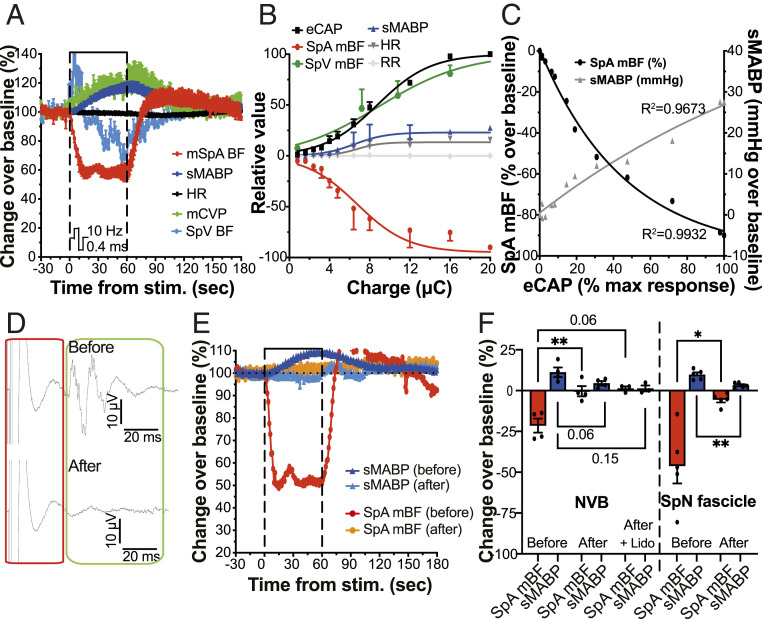
Neuromodulation of immune function by stimulating the autonomic connections to the spleen has been demonstrated in rodent models. Consequently, neuroimmune modulation has been proposed as a new therapeutic strategy for the treatment of inflammatory conditions. However, demonstration of the translation of these immunomodulatory mechanisms in anatomically and physiologically relevant models is still lacking. Additionally, translational models are required to identify stimulation parameters that can be transferred to clinical applications of bioelectronic medicines. Here, we performed neuroanatomical and functional comparison of the mouse, rat, pig, and human splenic nerve using in vivo and ex vivo preparations. The pig was identified as a more suitable model of the human splenic innervation. Using functional electrophysiology, we developed a clinically relevant marker of splenic nerve engagement through stimulation-dependent reversible reduction in local blood flow. Translation of immunomodulatory mechanisms were then assessed using pig splenocytes and two models of acute inflammation in anesthetized pigs. The pig splenic nerve was shown to locally release noradrenaline upon stimulation, which was able to modulate cytokine production by pig splenocytes. Splenic nerve stimulation was found to promote cardiovascular protection as well as cytokine modulation in a high- and a low-dose lipopolysaccharide model, respectively. Importantly, splenic nerve-induced cytokine modulation was reproduced by stimulating the efferent trunk of the cervical vagus nerve. This work demonstrates that immune responses can be modulated by stimulation of spleen-targeted autonomic nerves in translational species and identifies splenic nerve stimulation parameters and biomarkers that are directly applicable to humans due to anatomical and electrophysiological similarities.
刺激与脾脏相连的自主神经已在啮齿动物模型中证明可以调节免疫功能。因此,神经免疫调节已被提议作为治疗炎症性疾病的新治疗策略。然而,这些免疫调节机制在解剖学和生理学相关模型中的转化仍然缺乏证明。此外,需要转化模型来确定可以转移到生物电子药物临床应用的刺激参数。在这里,我们使用体内和离体制剂对小鼠、大鼠、猪和人的脾神经进行了神经解剖和功能比较。猪被确定为更适合人类脾脏神经支配的模型。使用功能电生理学,我们通过刺激依赖性的局部血流可逆减少开发了一种临床相关的脾神经介入标记。然后使用猪脾细胞和麻醉猪的两种急性炎症模型评估免疫调节机制的转化。刺激时猪的脾神经会局部释放去甲肾上腺素,从而调节猪脾细胞的细胞因子产生。脾神经刺激被发现分别在高剂量和低剂量脂多糖模型中促进心血管保护和细胞因子调节。重要的是,刺激颈迷走神经传出干可以再现脾神经引起的细胞因子调节。这项工作表明,刺激靶向脾脏的自主神经可以在转化物种中调节免疫反应,并确定了由于解剖学和电生理学相似性而直接适用于人类的脾神经刺激参数和生物标志物。