Horticulture and Product Physiology, Department of Plant Sciences, Wageningen University & Research, Wageningen, The Netherlands.
Greenhouse Horticulture, Wageningen University & Research, Wageningen, The Netherlands.
PLoS One. 2021 May 11;16(5):e0251405. doi: 10.1371/journal.pone.0251405. eCollection 2021.
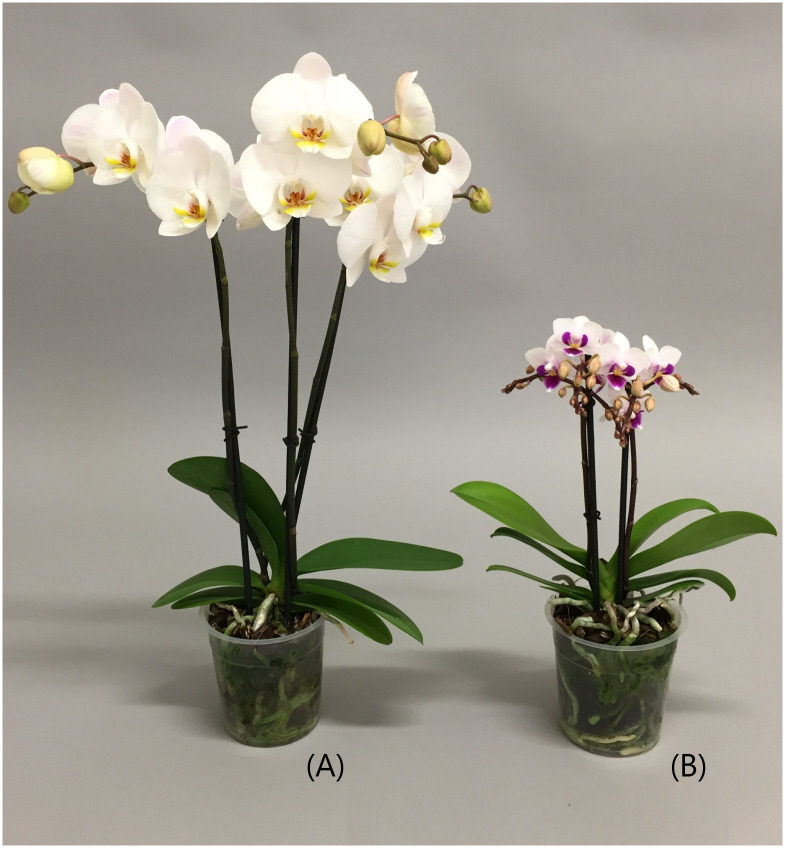
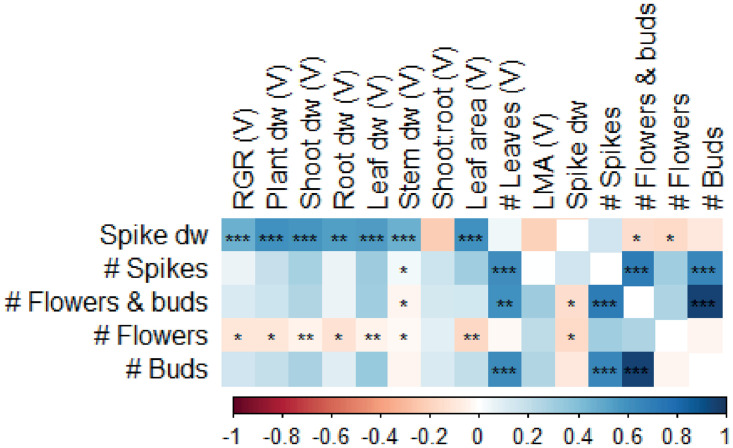
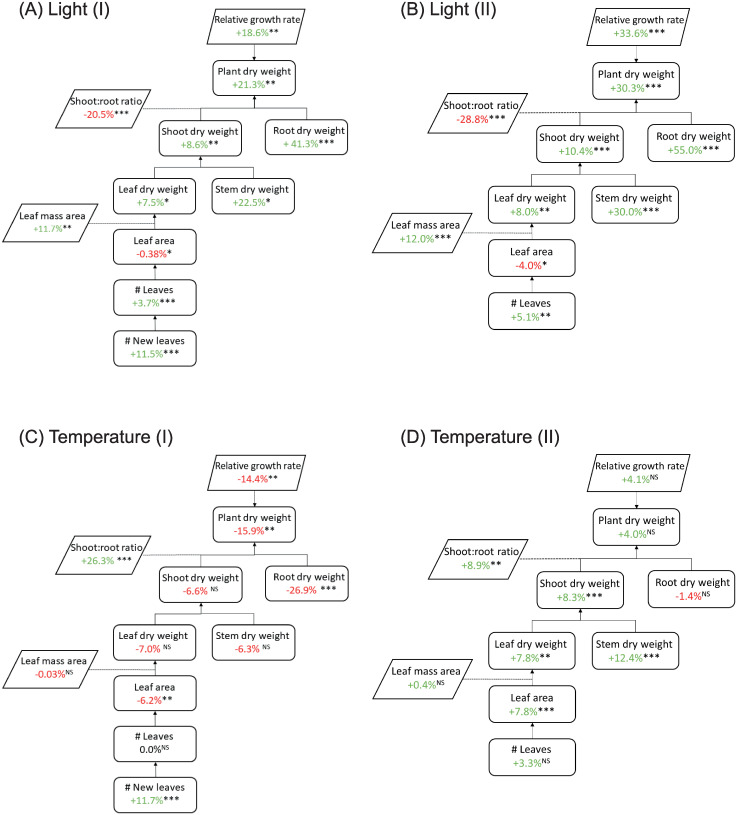
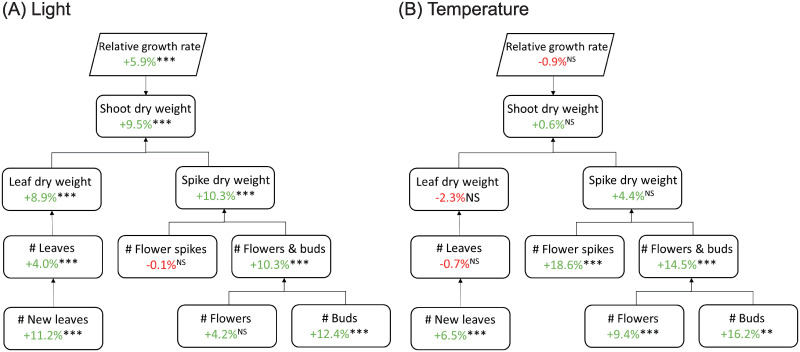
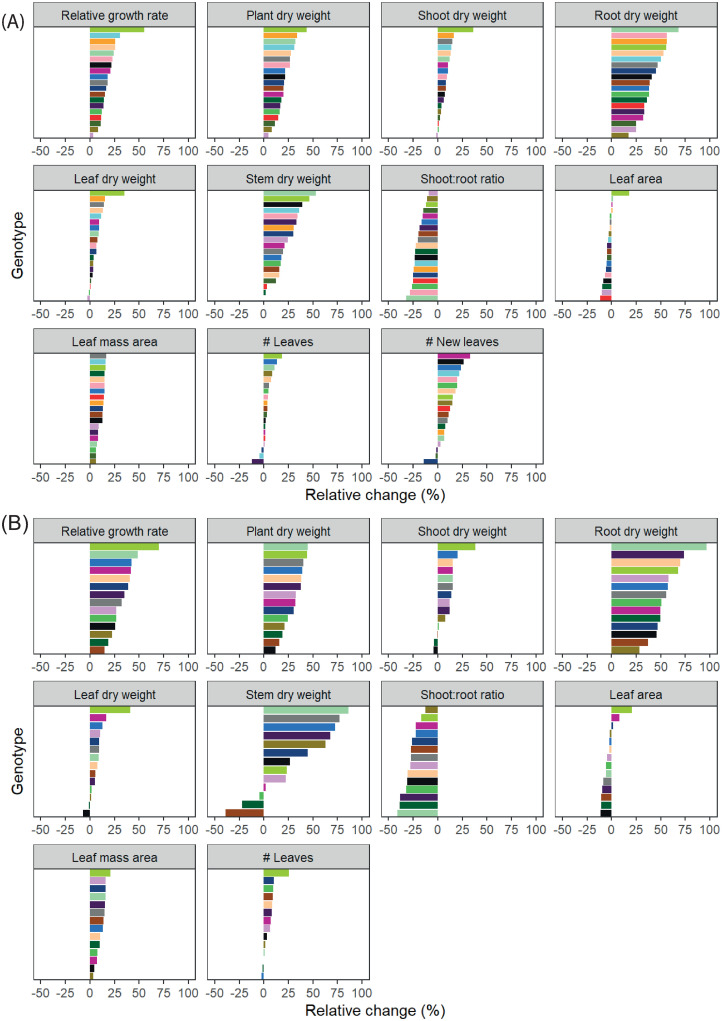
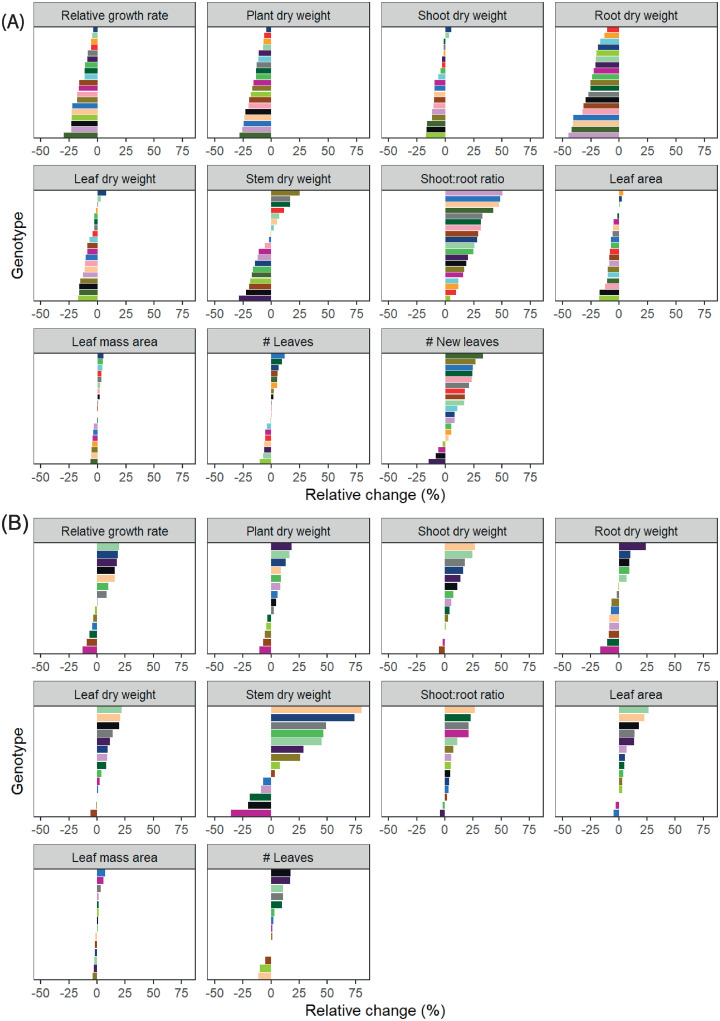
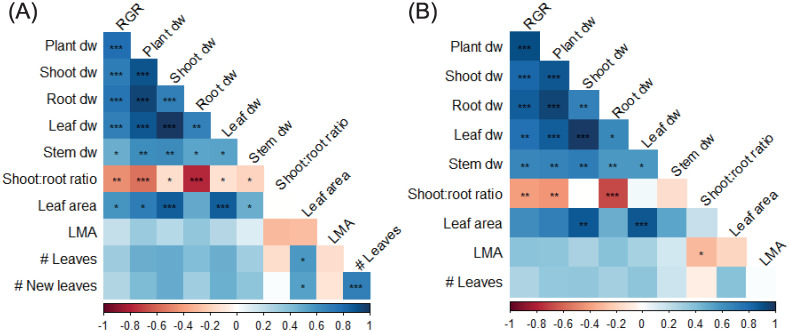
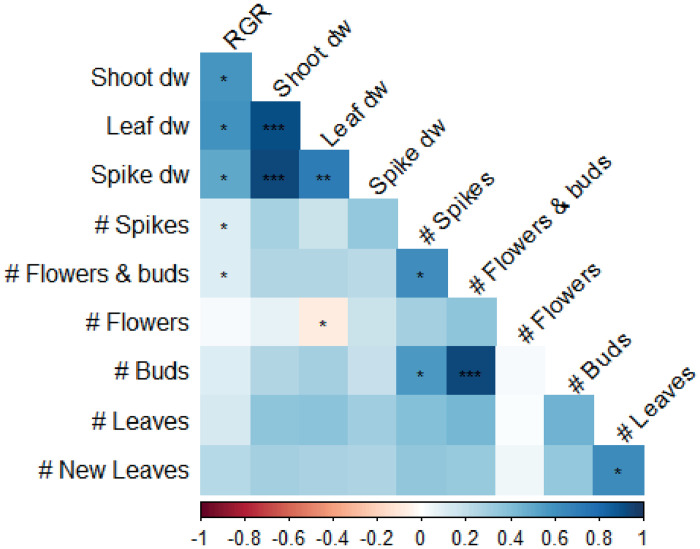
Phalaenopsis is an economically important horticultural ornamental, but its growth is slow and costly. The vegetative cultivation phase is long and required to ensure sufficient plant size. This is needed to develop high quality flowering plants. We studied the effects of temperature (27 or 31 °C) and light intensity (60 or 140 μmol m-2 s-1) on plant growth and development during the vegetative cultivation phase in two experiments, with respectively 19 and 14 genotypes. Furthermore, the after-effects of treatments applied during vegetative growth on flowering traits were determined. Increasing light intensity in the vegetative phase accelerated both vegetative plant growth and development. Increasing temperature accelerated vegetative leaf appearance rate, but strongly reduced plant and root biomass accumulation when temperatures were too high. Flowering was greatly affected by treatments applied during vegetative growth, and increased light and temperature increased number of flower spikes, and number of flowers and buds. Genotypic variation was large in Phalaenopsis, especially in traits related to flowering, thus care is needed when generalising results based on a limited number of cultivars. Plant biomass and number of leaves during vegetative growth were positively correlated with flowering quality. These traits can be used as an early predictor for flowering capacity and quality of the final product. Additionally, this knowledge can be used to improve selection of new cultivars.
蝴蝶兰是一种具有重要经济价值的园艺观赏植物,但生长缓慢且成本高。营养生长阶段时间长,需要确保有足够的植株大小。这对于培育高质量的开花植物是必要的。我们在两个实验中研究了温度(27 或 31°C)和光照强度(60 或 140 μmol m-2 s-1)对营养生长阶段植物生长和发育的影响,分别涉及 19 和 14 个基因型。此外,还确定了营养生长期间处理对开花性状的后续影响。在营养生长阶段增加光照强度可以加速营养生长和发育。提高温度可以加速营养叶片的出现速度,但当温度过高时,会强烈降低植物和根的生物量积累。处理对开花的影响很大,增加光照和温度可以增加花穗数量、花朵和花蕾数量。蝴蝶兰的基因型变异很大,特别是与开花有关的性状,因此,在基于有限数量的品种推广结果时需要谨慎。营养生长期间的植物生物量和叶片数量与开花质量呈正相关。这些性状可以作为开花能力和最终产品质量的早期预测指标。此外,这一知识可用于改进新品种的选择。