Kalesh Karunakaran, Sundriyal Sandeep, Perera Hirunika, Cobb Steven L, Denny Paul W
Department of Chemistry, Durham University, Durham, United Kingdom
Department of Pharmacy, Birla Institute of Technology and Science, Pilani, India.
mSystems. 2021 May 11;6(3):e00089-21. doi: 10.1128/mSystems.00089-21.
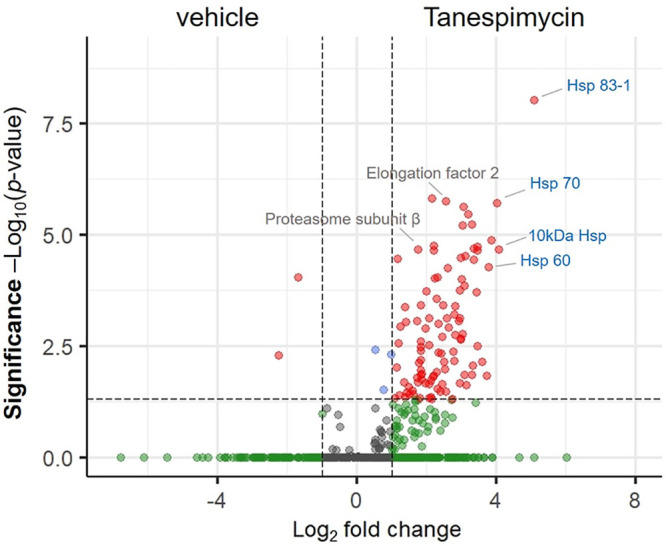
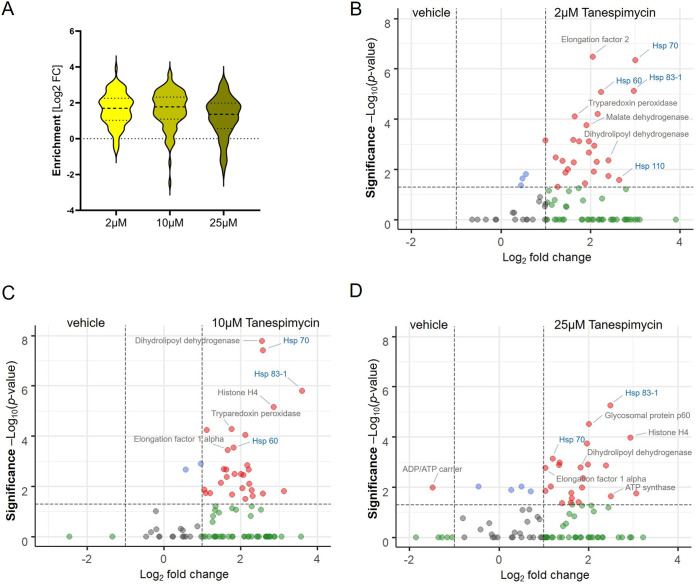
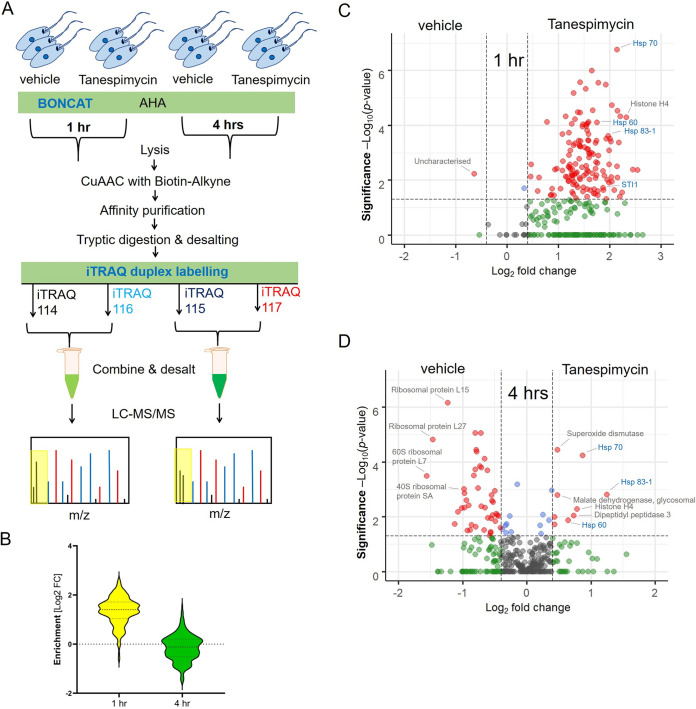
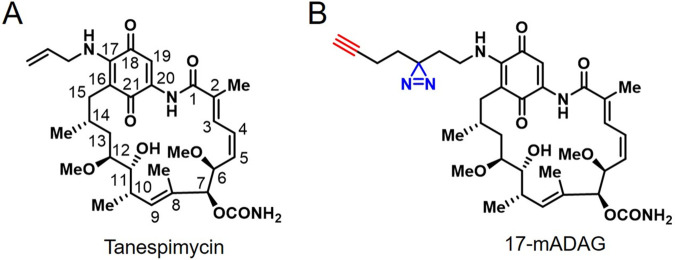
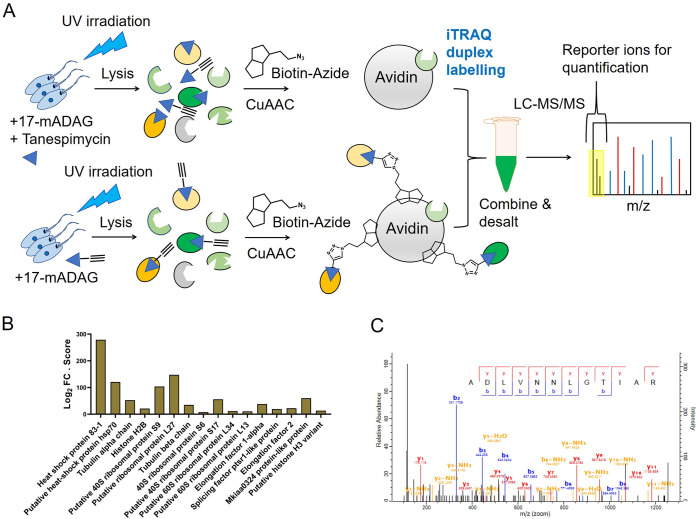
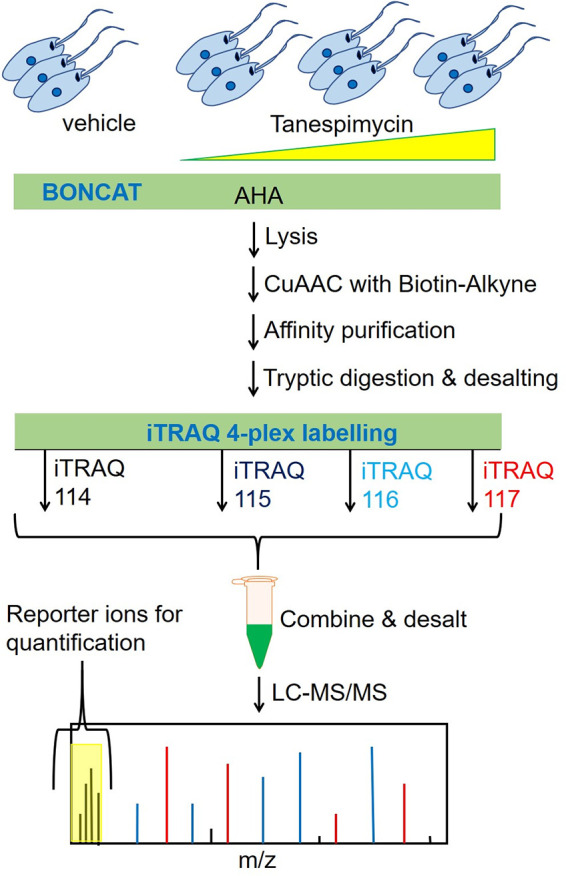
Heat shock protein 90 (Hsp90) is a conserved molecular chaperone responsible for the folding and maturation of nascent proteins. Hsp90 is regarded as a master regulator of protein homeostasis in the cell, and its inhibition affects the functions of a large array of client proteins. The classical Hsp90 inhibitor tanespimycin has shown potent antileishmanial activity. Despite the increasing importance of Hsp90 inhibition in the development of antileishmanial agents, the global effects of these inhibitors on the parasite proteome remain unknown. By combining tanespimycin treatment with bioorthogonal noncanonical amino acid tagging (BONCAT) metabolic labeling and isobaric tags for relative and absolute quantitation (iTRAQ)-based quantitative proteomic mass spectrometry, for the first time, we robustly profiled the relative changes in the synthesis of hundreds of parasite proteins as functions of dose and duration of the inhibitor treatment. We showed that Hsp90 inhibition dynamically regulates nascent protein synthesis in , with many chaperones and virulence factors showing inhibitor concentration- and treatment duration-dependent changes in relative expression. Many ribosomal proteins showed a downregulation upon severe Hsp90 inhibition, providing the first protein-level evidence that Hsp90 inhibition affects the protein synthesis capacity of the ribosome in this organism. We also provide an unbiased target validation of tanespimycin in using live parasite photoaffinity labeling with a novel chemical probe and quantitative proteomic mass spectrometry. We showed that the classical Hsp90 inhibitor not only engages with its presumed target, Hsp83-1, in promastigotes but also affects multiple proteins involved in protein synthesis and quality control in the parasite. This study defines the parasites' response to Hsp90 inhibition at the level of nascent global protein synthesis and provides a rich resource for future studies on spp. biology and antileishmanial drug development. spp. are the causative agents of leishmaniasis, a poverty-related disease, which is endemic in >90 countries worldwide, affecting approximately 12 million people, with an estimated 700,000 to 1 million new cases and around 70,000 deaths annually. Inhibitors of the chaperone protein Hsp90 have shown promising antileishmanial activity. However, further development of the Hsp90 inhibitors as antileishmanials is hampered by a lack of direct information of their downstream effects on the parasite proteome. Using a combination of mass spectrometry-based quantitative proteomics and chemical and metabolic labeling, we provide the first protein-level evidence that Hsp90 inhibition affects global protein synthesis in We also provide the precise relative quantitative changes in the expressions of hundreds of affected proteins as functions of both the concentration and duration of the inhibitor treatment. We find that regulates its ribosomal proteins under Hsp90 inhibition while a set of virulence factors and chaperones are preferentially synthesized.
热休克蛋白90(Hsp90)是一种保守的分子伴侣,负责新生蛋白质的折叠和成熟。Hsp90被视为细胞内蛋白质稳态的主要调节因子,其抑制作用会影响大量客户蛋白的功能。经典的Hsp90抑制剂坦螺旋霉素已显示出强大的抗利什曼原虫活性。尽管Hsp90抑制在抗利什曼原虫药物开发中的重要性日益增加,但这些抑制剂对寄生虫蛋白质组的整体影响仍不清楚。通过将坦螺旋霉素处理与生物正交非经典氨基酸标记(BONCAT)代谢标记以及基于相对和绝对定量(iTRAQ)的定量蛋白质组质谱相结合,我们首次强有力地分析了数百种寄生虫蛋白合成的相对变化,这些变化是抑制剂处理剂量和持续时间的函数。我们表明,Hsp90抑制动态调节利什曼原虫中的新生蛋白质合成,许多分子伴侣和毒力因子的相对表达呈现出抑制剂浓度和处理持续时间依赖性变化。许多核糖体蛋白在Hsp90受到严重抑制时表现出下调,这首次从蛋白质水平证明Hsp90抑制会影响该生物体中核糖体的蛋白质合成能力。我们还使用一种新型化学探针和定量蛋白质组质谱对活寄生虫进行光亲和标记,从而在利什曼原虫中对坦螺旋霉素进行了无偏见的靶点验证。我们表明,这种经典的Hsp90抑制剂不仅与前鞭毛体中其假定的靶点Hsp83-1结合,还会影响寄生虫中参与蛋白质合成和质量控制的多种蛋白质。这项研究在新生蛋白质合成的整体水平上定义了利什曼原虫对Hsp90抑制的反应,并为未来关于利什曼原虫生物学和抗利什曼原虫药物开发的研究提供了丰富的资源。利什曼原虫是利什曼病的病原体,利什曼病是一种与贫困相关的疾病,在全球90多个国家流行,影响约1200万人,估计每年有70万至100万新病例和约7万人死亡。伴侣蛋白Hsp90的抑制剂已显示出有前景的抗利什曼原虫活性。然而,Hsp90抑制剂作为抗利什曼原虫药物的进一步开发受到其对寄生虫蛋白质组下游影响的直接信息缺乏的阻碍。通过结合基于质谱的定量蛋白质组学以及化学和代谢标记,我们首次从蛋白质水平证明Hsp90抑制会影响利什曼原虫中的整体蛋白质合成。我们还提供了数百种受影响蛋白质表达的精确相对定量变化,这些变化是抑制剂处理浓度和持续时间的函数。我们发现,利什曼原虫在Hsp90抑制下会调节其核糖体蛋白,同时一组毒力因子和分子伴侣会优先合成。