Department of Chemical and Pharmaceutical Sciences, University of Trieste, 34127, Trieste, Italy.
Department of Chemistry, University of Padova, 35151, Padova, Italy.
Nat Commun. 2021 May 11;12(1):2640. doi: 10.1038/s41467-021-22902-w.
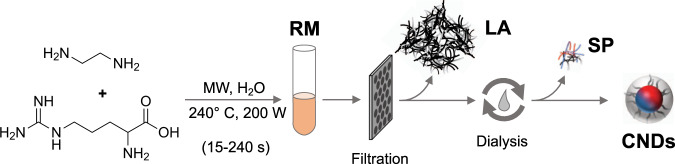
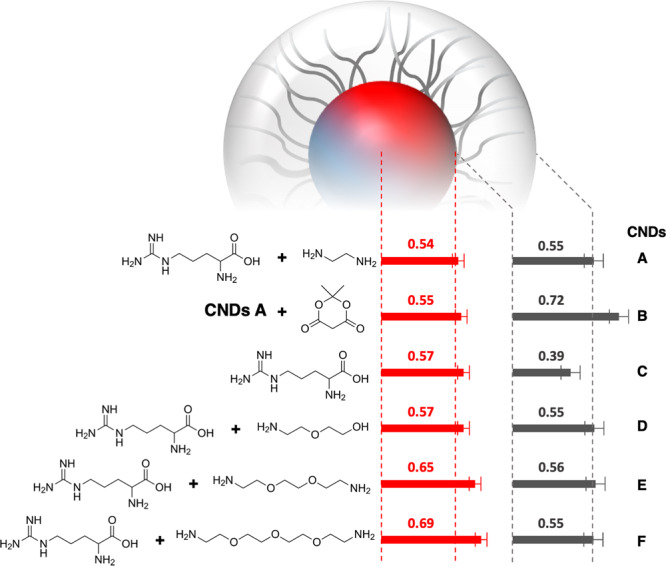
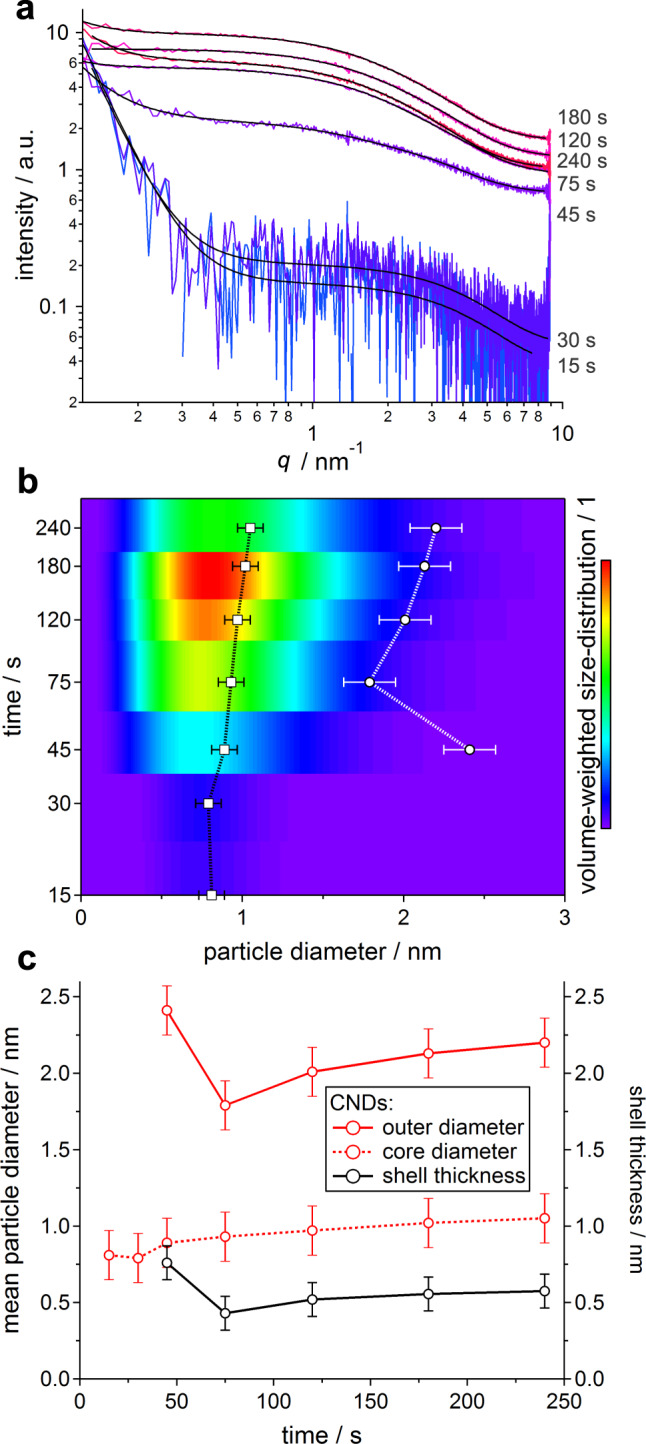
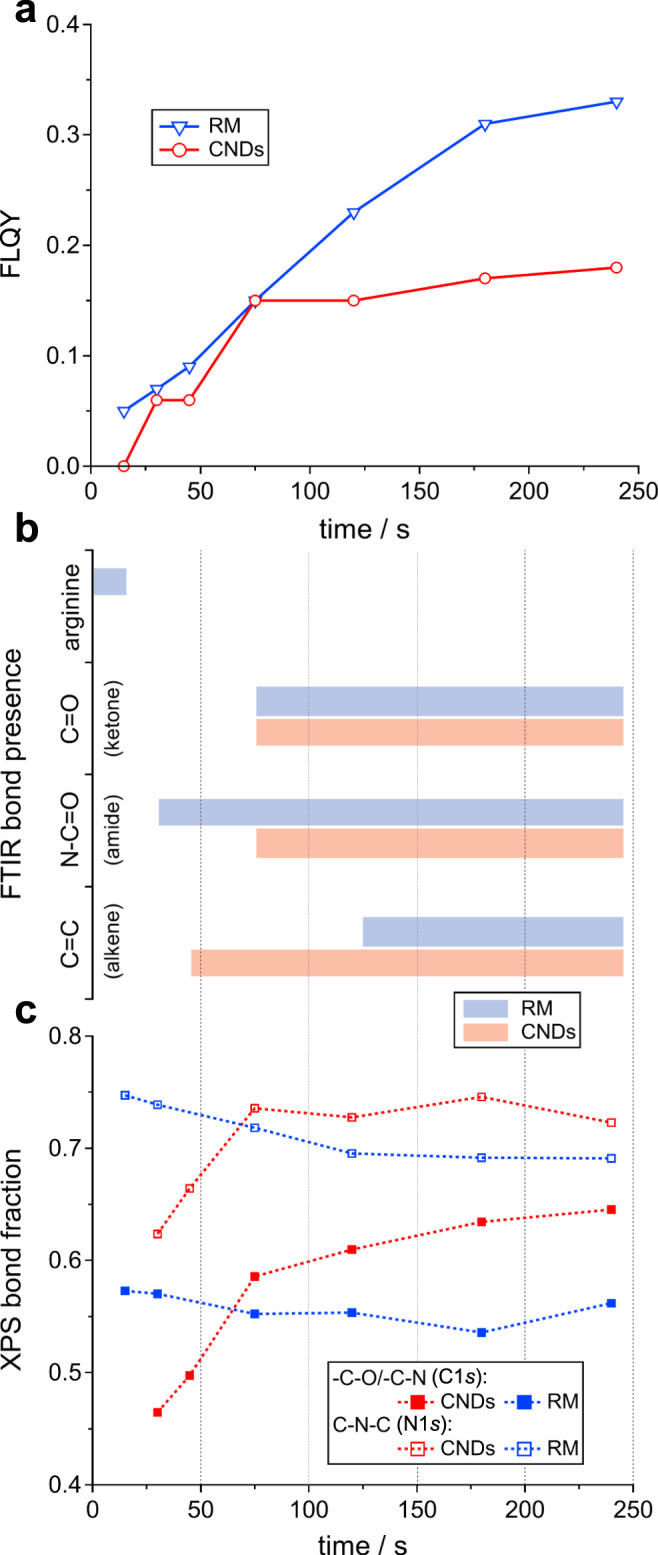
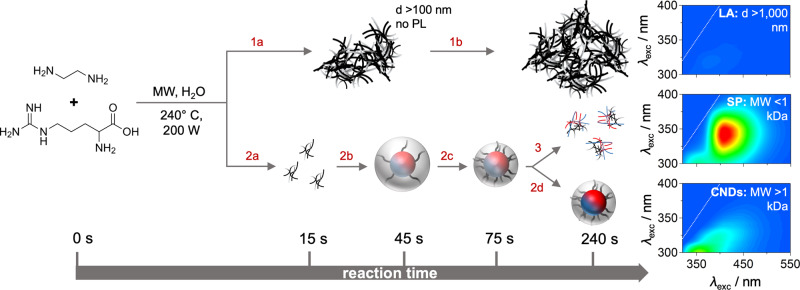
The design of novel carbon dots with ad hoc properties requires a comprehensive understanding of their formation mechanism, which is a complex task considering the number of variables involved, such as reaction time, structure of precursors or synthetic protocol employed. Herein, we systematically investigated the formation of carbon nanodots by tracking structural, chemical and photophysical features during the hydrothermal synthesis. We demonstrate that the formation of carbon nanodots consists of 4 consecutive steps: (i) aggregation of small organic molecules, (ii) formation of a dense core with an extended shell, (iii) collapse of the shell and (iv) aromatization of the core. In addition, we provide examples of routes towards tuning the core-shell design, synthesizing five novel carbon dots that all consist of an electron-dense core covered by an amine rich ligand shell.
新型碳点的设计具有特定的性质,需要全面了解其形成机制,考虑到所涉及的变量众多,如反应时间、前体结构或采用的合成方案,这是一项复杂的任务。在此,我们通过在水热合成过程中跟踪结构、化学和光物理特征,系统地研究了碳纳米点的形成。我们证明了碳纳米点的形成包括 4 个连续的步骤:(i)小分子的聚集;(ii)具有扩展壳层的致密核的形成;(iii)壳层的坍塌;(iv)核的芳构化。此外,我们还提供了一些调节核壳设计的途径的实例,合成了 5 种新型碳点,它们都由电子致密核组成,核表面覆盖有富含胺的配体壳。