Department of Fisheries, Wildlife and Conservation Sciences, Oregon State University, 104 Nash Hall, Corvallis, OR, 97331, USA.
Department of Botany and Plant Pathology, Oregon State University, 2082 Cordley Hall, Corvallis, OR, 97331, USA.
Sci Rep. 2021 May 11;11(1):10045. doi: 10.1038/s41598-021-89496-7.
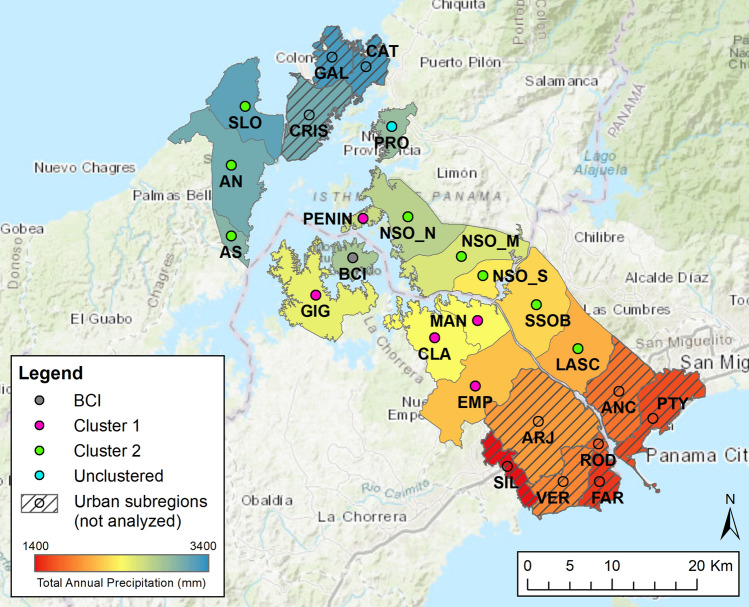
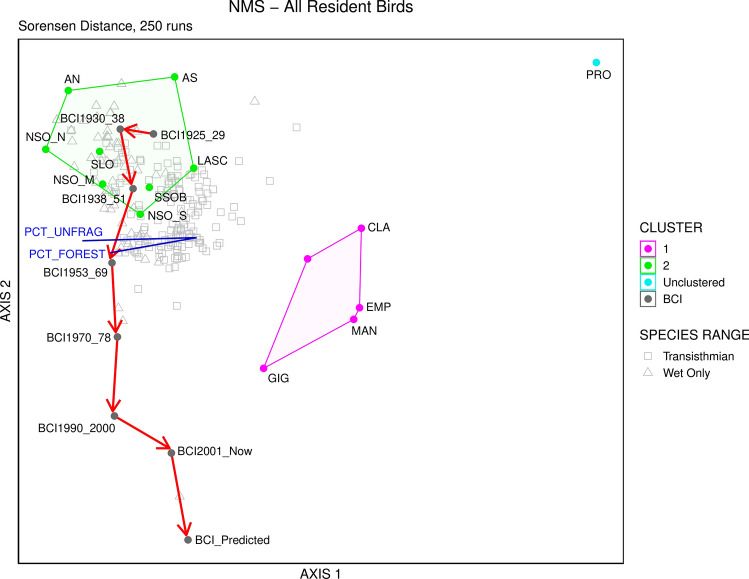
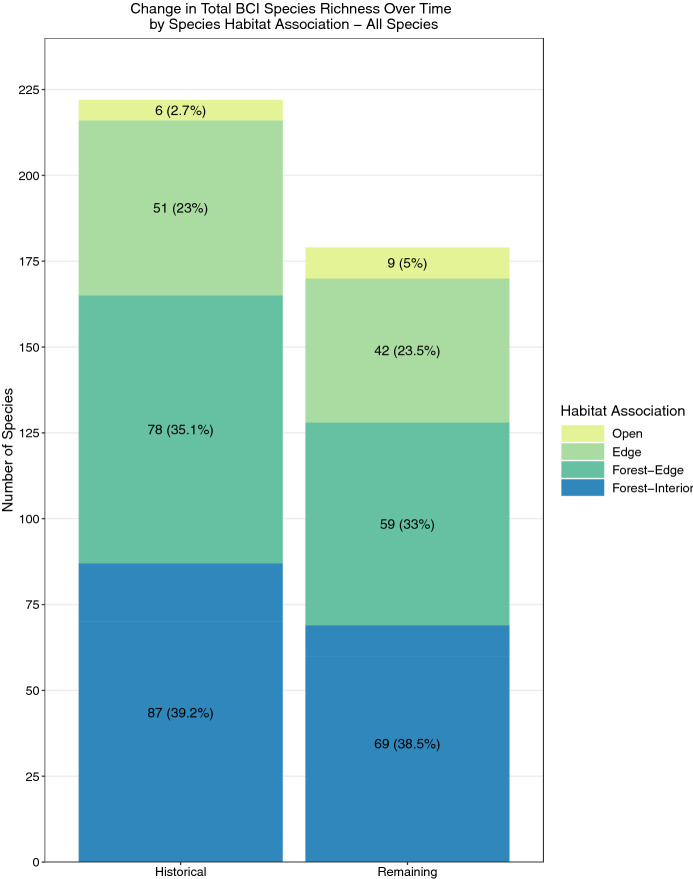
Human alteration of landscapes leads to attrition of biodiversity. Recommendations for maximizing retention of species richness typically focus on protection and preservation of large habitat patches. Despite a century of protection from human disturbance, 27% of the 228 bird species initially detected on Barro Colorado Island (BCI), Panama, a large hilltop forest fragment isolated by waters of Gatun Lake, are now absent. Lost species were more likely to be initially uncommon and terrestrial insectivores. Analyses of the regional avifauna, exhaustively inventoried and mapped across 24 subregions, identified strong geographical discontinuities in species distributions associated with a steep transisthmian rainfall gradient. Having lost mostly species preferring humid forests, the BCI species assemblage continues to shift from one originally typical of wetter forests toward one now resembling bird communities in drier forests. Even when habitat remnants are large and protected for 100 years, altered habitat characteristics resulting from isolation produce non-random loss of species linked with their commonness, dietary preferences and subtle climatic sensitivities.
人类对景观的改变导致生物多样性的损耗。为了最大限度地保持物种丰富度,人们通常建议重点保护和保存大面积的栖息地斑块。尽管巴罗科罗拉多岛(BCI)受到了一个多世纪免受人类干扰的保护,但最初在巴拿马这个被加通湖水隔开的山顶森林碎片上检测到的 228 种鸟类中,有 27%的鸟类已经消失。消失的物种最初更可能是不常见的和以陆地昆虫为食的物种。对该地区鸟类的分析表明,在 24 个分区进行了全面的清查和绘图,在与陡峭的地峡降雨梯度相关的物种分布中存在强烈的地理不连续性。BCI 的物种组合继续从最初典型的湿润森林物种向现在类似于干燥森林鸟类群落的物种转变,因为它失去了大多数喜欢潮湿森林的物种。即使栖息地残余物很大且受到 100 年的保护,隔离产生的栖息地特征的改变也会导致与其常见性、饮食偏好和微妙的气候敏感性相关的非随机物种丧失。