GI Research Unit, Mayo Clinic, Rochester, MN, USA.
Nat Rev Gastroenterol Hepatol. 2021 Sep;18(9):630-647. doi: 10.1038/s41575-021-00444-2. Epub 2021 May 11.
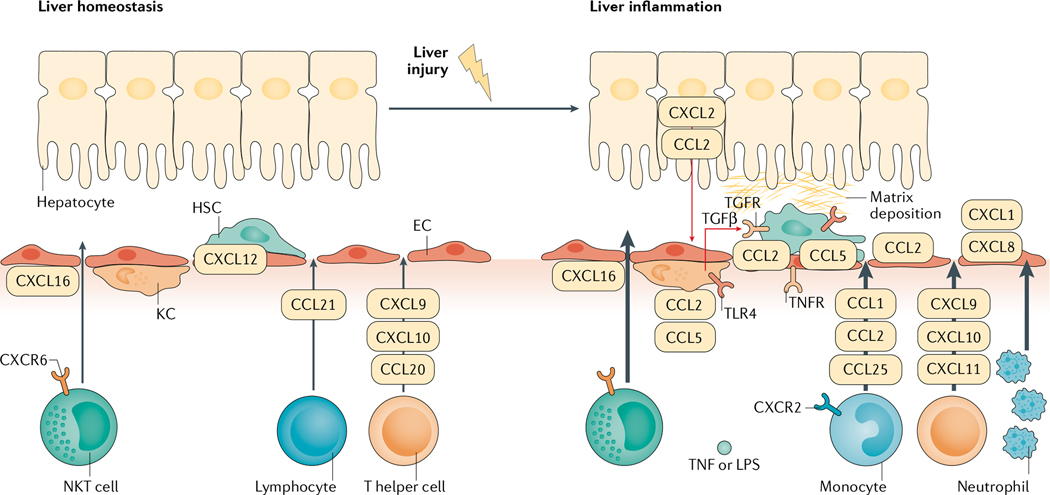
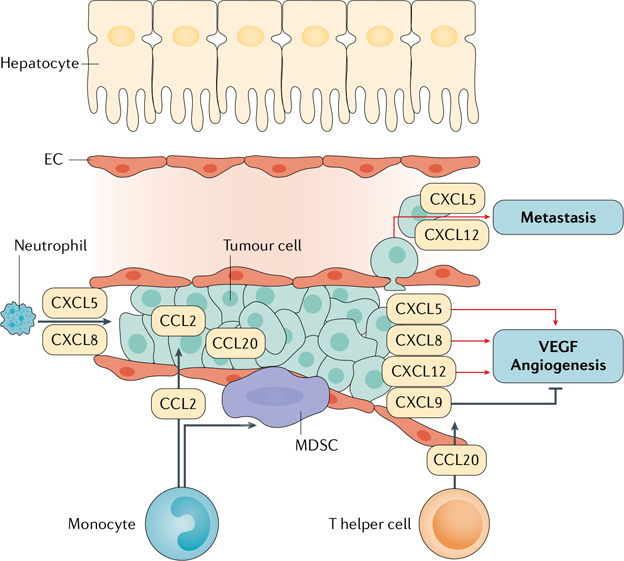
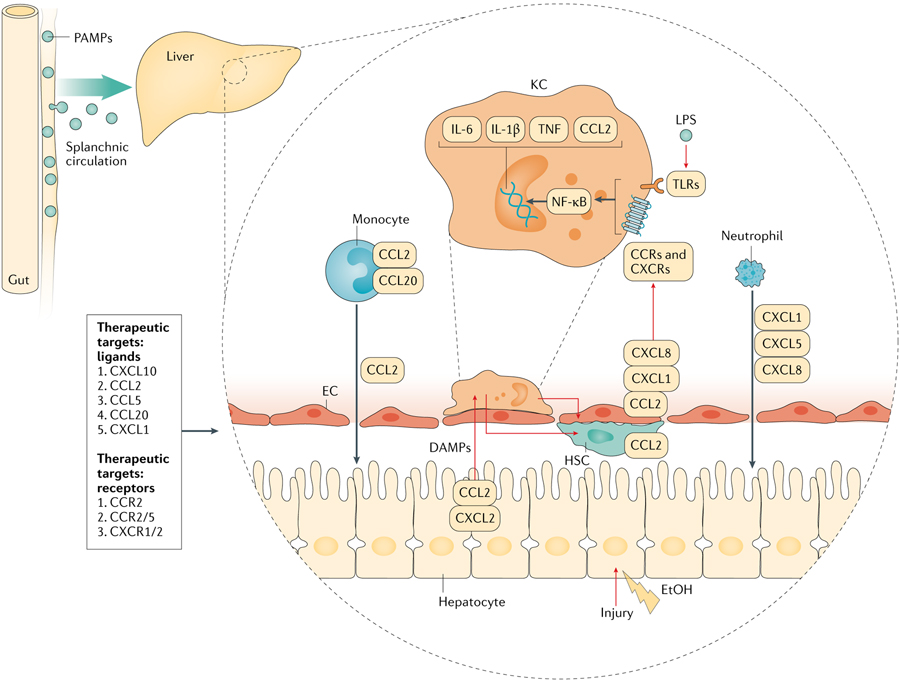
Inflammation is a major contributor to the pathogenesis of almost all liver diseases. Low-molecular-weight proteins called chemokines are the main drivers of liver infiltration by immune cells such as macrophages, neutrophils and others during an inflammatory response. During the past 25 years, tremendous progress has been made in understanding the regulation and functions of chemokines in the liver. This Review summarizes three main aspects of the latest advances in the study of chemokine function in liver diseases. First, we provide an overview of chemokine biology, with a particular focus on the genetic and epigenetic regulation of chemokine transcription as well as on the cell type-specific production of chemokines by liver cells and liver-associated immune cells. Second, we highlight the functional roles of chemokines in liver homeostasis and their involvement in progression to disease in both human and animal models. Third, we discuss the therapeutic opportunities targeting chemokine production and signalling in the treatment of liver diseases, such as alcohol-associated liver disease and nonalcoholic steatohepatitis, including the relevant preclinical studies and ongoing clinical trials.
炎症是几乎所有肝病发病机制的主要因素。在炎症反应过程中,低分子量蛋白(称为趋化因子)是免疫细胞(如巨噬细胞、中性粒细胞等)浸润肝脏的主要驱动因素。在过去的 25 年中,人们在理解趋化因子在肝脏中的调节和功能方面取得了巨大进展。这篇综述总结了趋化因子功能在肝脏疾病研究中的三个主要进展方面。首先,我们提供了趋化因子生物学的概述,特别关注趋化因子转录的遗传和表观遗传调控,以及肝细胞和肝相关免疫细胞中趋化因子的细胞类型特异性产生。其次,我们强调了趋化因子在肝脏稳态中的功能作用及其在人类和动物模型中疾病进展中的作用。第三,我们讨论了针对趋化因子产生和信号转导的治疗机会,以治疗肝脏疾病,如酒精相关性肝病和非酒精性脂肪性肝炎,包括相关的临床前研究和正在进行的临床试验。