Takamura Kenzi, Ueno Ryuhei, Kondo Natsuko Ito, Ohbayashi Kako
Center for Environmental Biology and Ecosystem National Institute for Environmental Studies Tsukuba Japan.
Graduate School of Arts and Sciences The University of Tokyo Komaba Japan.
Ecol Evol. 2021 Mar 23;11(9):4193-4204. doi: 10.1002/ece3.7315. eCollection 2021 May.
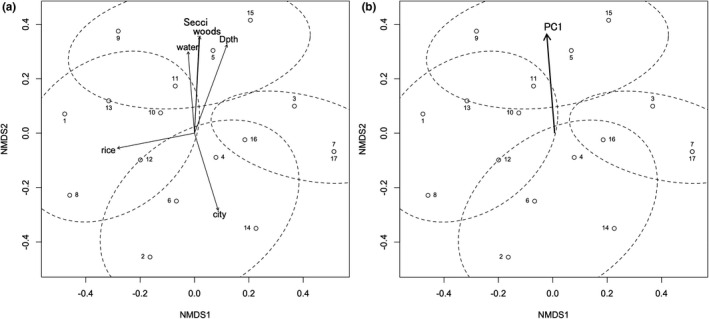
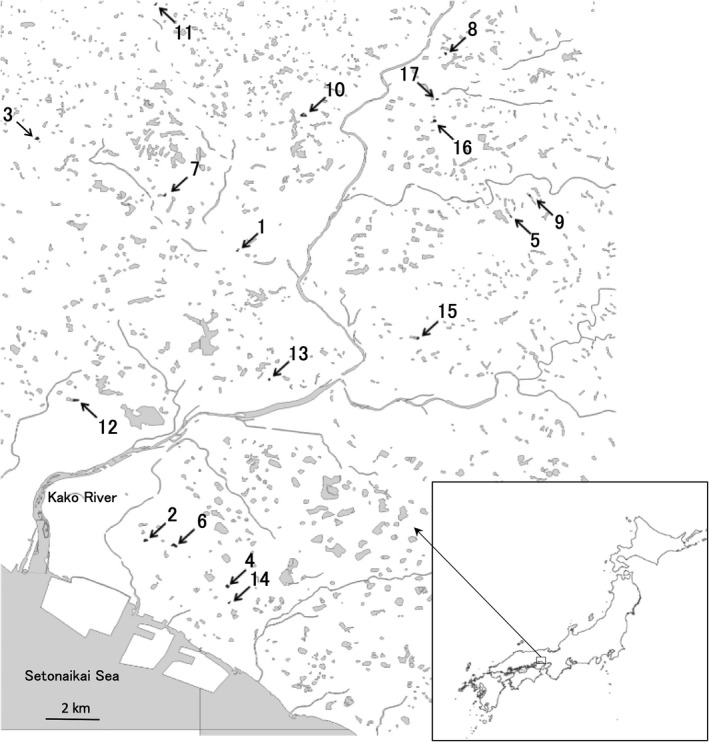
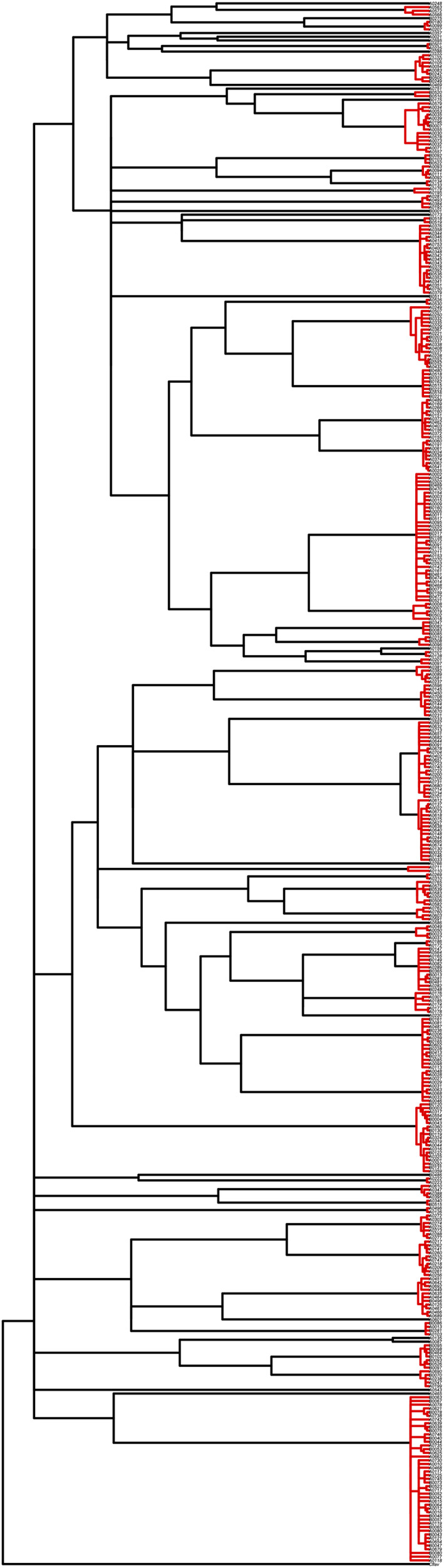
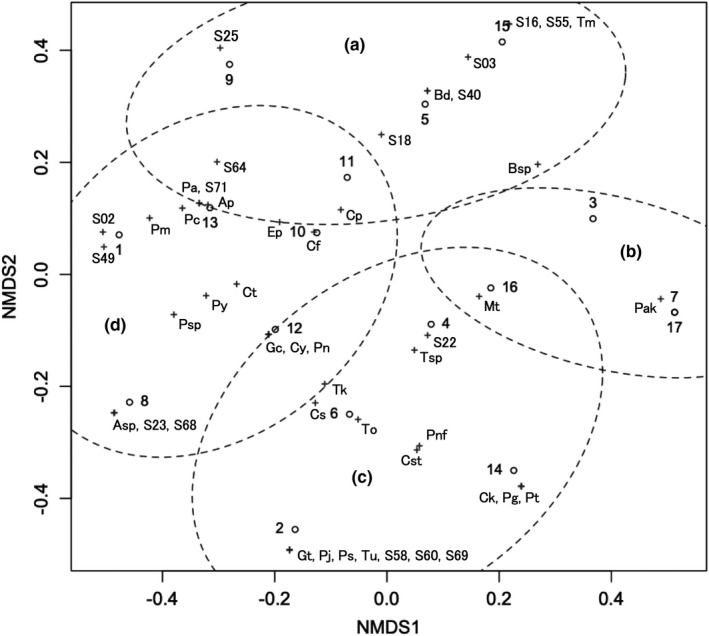
Farm ponds, a valued habitat for freshwater organisms, are being negatively affected by the recent changes in the environment as well as anthropological activities. In these ponds, biodiversity researchers have tended to focus on species that prefer natural habitats and/or can be identified based on morphological characters. In contrast, this study focused on the insect family Chironomidae, which is widely distributed from clear to polluted waters of ponds, but is hard to identify morphologically as an aquatic larva. We adopted DNA barcoding and molecular species delimitation to identify every single specimen of quantitative collections. From bottom sediments of 17 ponds in summer in the Banshu Plain of Japan, a total of 62 species were delimited based on the DNA sequences of the mitochondrial COI region. Chironomid communities from these ponds were classified into four groups in a two-dimensional ordination of multivariate analysis (NMDS). One of the dimensions was well correlated with the gradient of eutrophication, while another dimension was not clearly assigned to any general feature of the environmental gradient, but rice cultivation could possibly be involved.
农田池塘是淡水生物的重要栖息地,但近期受到环境变化和人类活动的负面影响。在这些池塘中,生物多样性研究人员倾向于关注那些偏好自然栖息地和/或可以根据形态特征识别的物种。相比之下,本研究聚焦于摇蚊科昆虫,该科昆虫广泛分布于池塘从清澈到污染的水域,但作为水生幼虫在形态上很难识别。我们采用DNA条形码和分子物种界定方法来识别定量样本中的每一个标本。从日本坂祝平原夏季17个池塘的底部沉积物中,基于线粒体COI区域的DNA序列共界定出62个物种。在多变量分析(NMDS)的二维排序中,这些池塘的摇蚊群落被分为四组。其中一个维度与富营养化梯度高度相关,而另一个维度没有明确与任何环境梯度的一般特征相关,但可能涉及水稻种植。