Division of Genetics and Genomics, Boston Children's Hospital, Boston, Massachusetts 02115, USA; email:
Department of Pediatrics, Harvard Medical School, Boston, Massachusetts 02115, USA.
Annu Rev Genomics Hum Genet. 2021 Aug 31;22:239-256. doi: 10.1146/annurev-genom-121520-081242. Epub 2021 May 12.
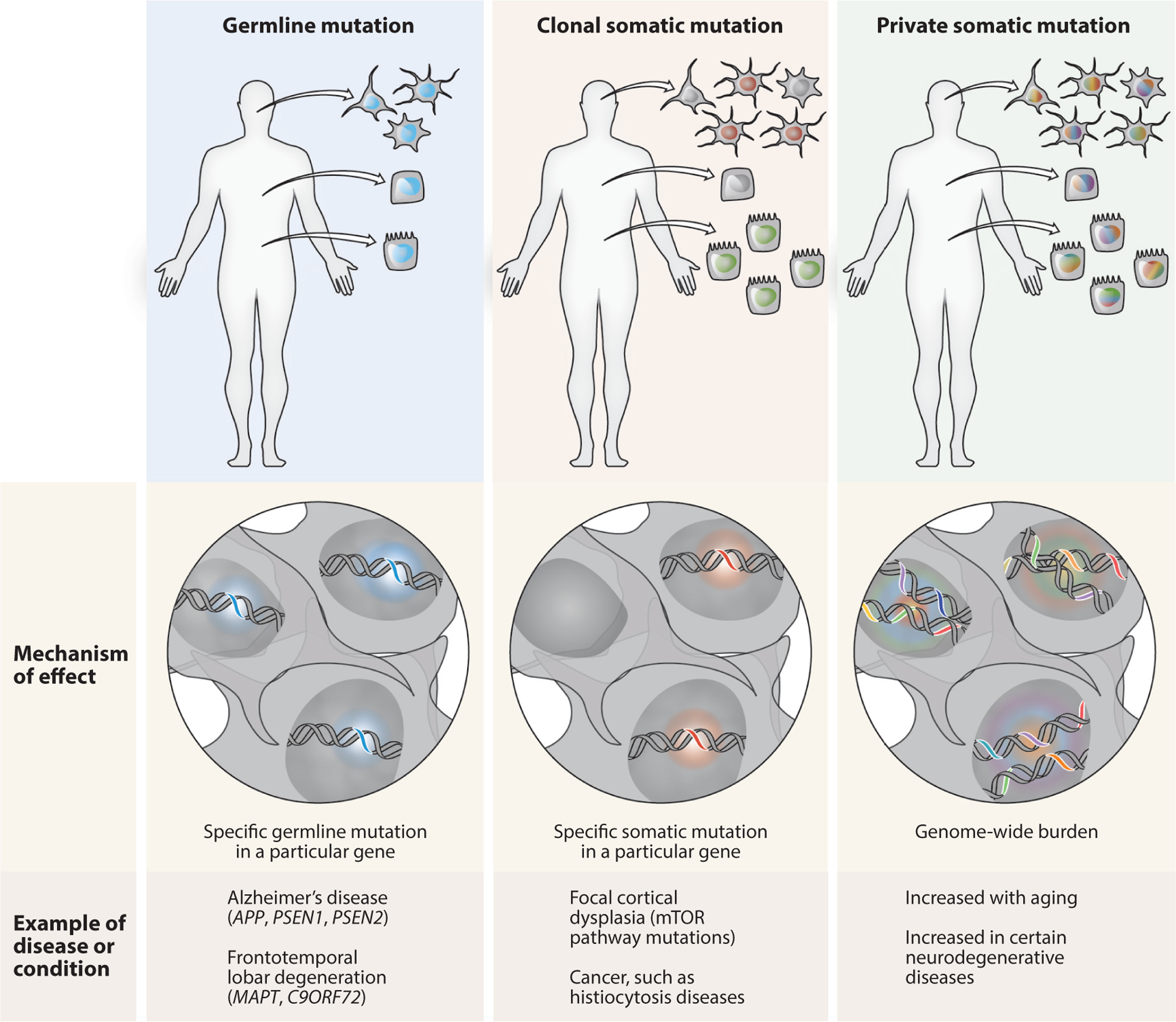
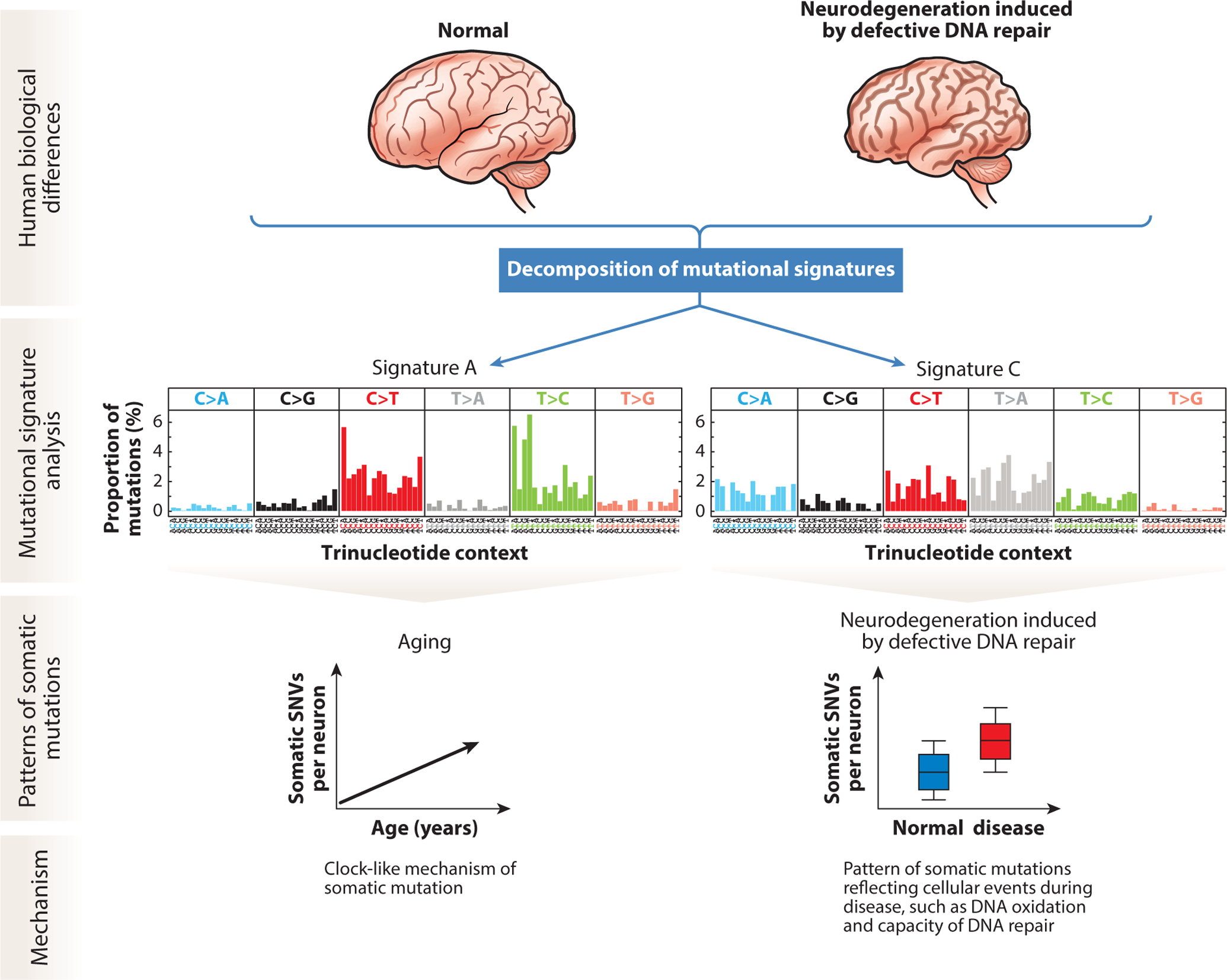
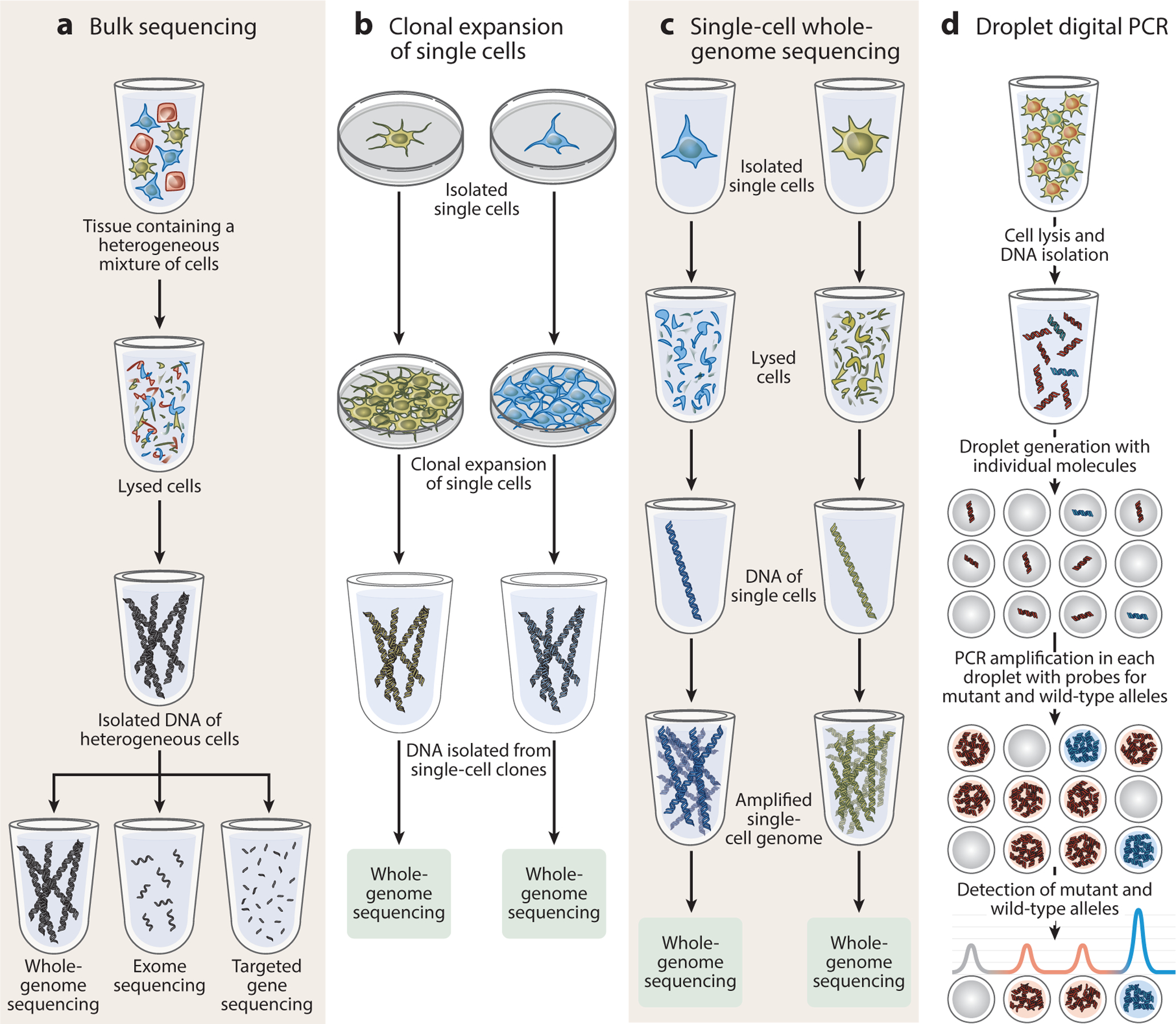
Somatic mutations arise postzygotically, producing genetic differences between cells in an organism. Well established as a driver of cancer, somatic mutations also exist in nonneoplastic cells, including in the brain. Technological advances in nucleic acid sequencing have enabled recent breakthroughs that illuminate the roles of somatic mutations in aging and degenerative diseases of the brain. Somatic mutations accumulate during aging in human neurons, a process termed genosenium. A number of recent studies have examined somatic mutations in Alzheimer's disease (AD), primarily from the perspective of genes causing familial AD. We have also gained new information on genome-wide mutations, providing insights into the cellular events driving somatic mutation and cellular dysfunction. This review highlights recent concepts, methods, and findings in the progress to understand the role of brain somatic mutation in aging and AD.
体细胞突变是合子后产生的,导致生物体中细胞之间存在遗传差异。体细胞突变已被确定为癌症的驱动因素,也存在于非肿瘤细胞中,包括大脑。核酸测序技术的进步带来了最近的突破,阐明了体细胞突变在大脑衰老和退行性疾病中的作用。体细胞突变在人类神经元衰老过程中积累,这一过程称为基因衰老。最近的一些研究主要从导致家族性 AD 的基因的角度研究了阿尔茨海默病 (AD) 中的体细胞突变。我们还获得了关于全基因组突变的新信息,深入了解了驱动体细胞突变和细胞功能障碍的细胞事件。这篇综述强调了在理解大脑体细胞突变在衰老和 AD 中的作用方面的最新概念、方法和发现。