Department of Pathology, Immunology and Laboratory Medicine, College of Medicine, University of Florida, Gainesville, FL, United States.
Department of Medical Science and Institute of Biotechnology, National Tsing Hua University, Hsinchu, Taiwan.
Front Endocrinol (Lausanne). 2021 Apr 26;12:644826. doi: 10.3389/fendo.2021.644826. eCollection 2021.
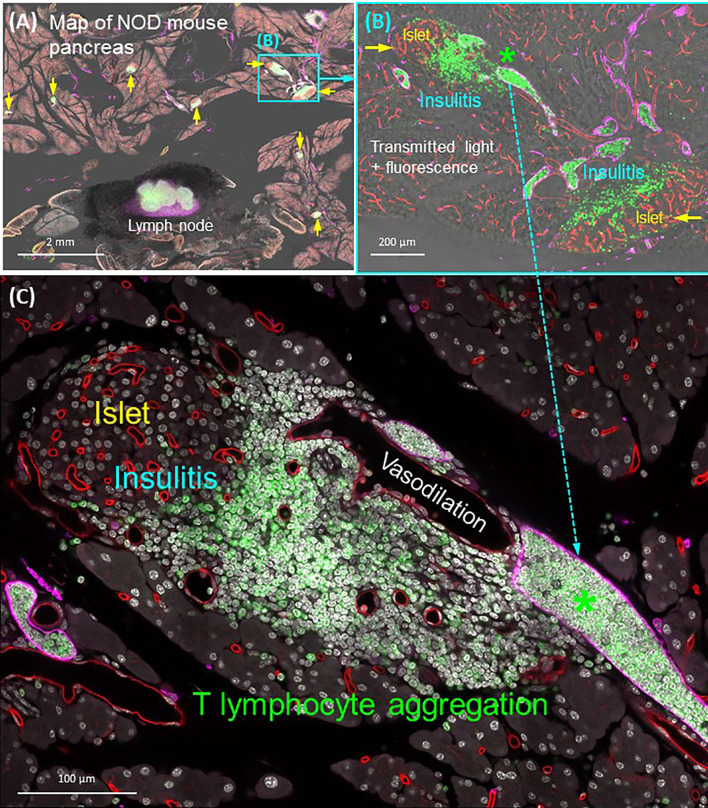
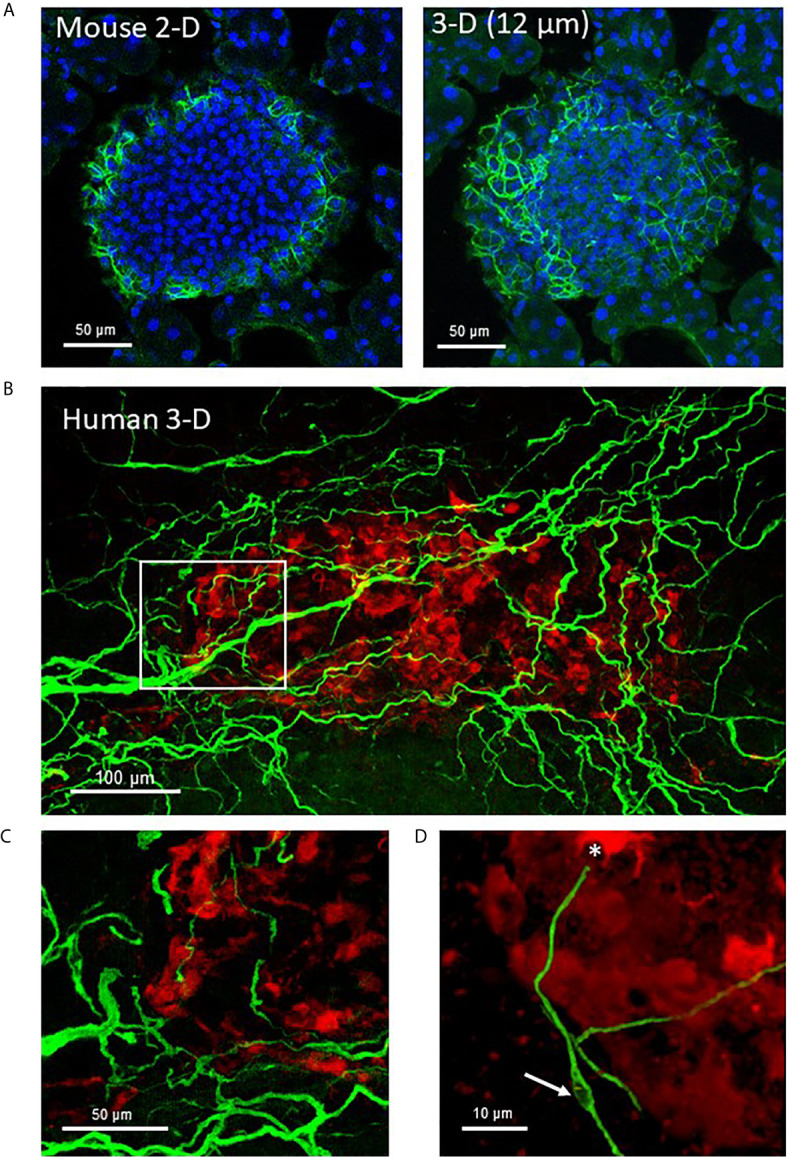
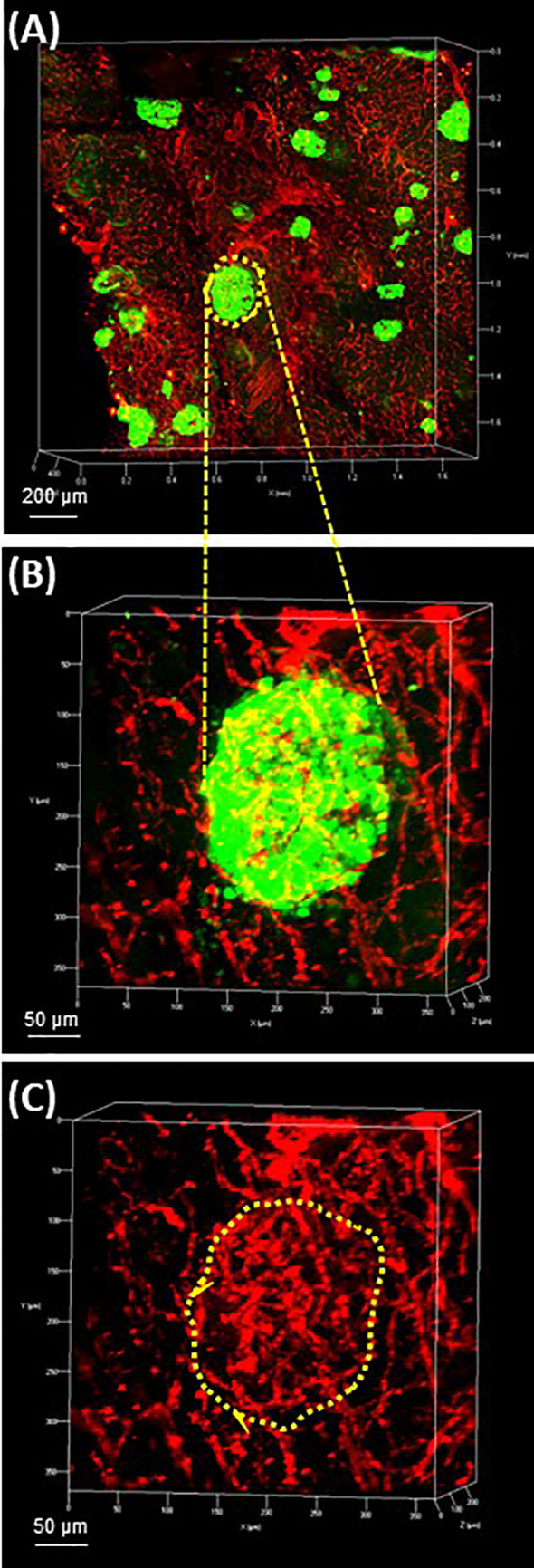
Although first described over a hundred years ago, tissue optical clearing is undergoing renewed interest due to numerous advances in optical clearing methods, microscopy systems, and three-dimensional (3-D) image analysis programs. These advances are advantageous for intact mouse tissues or pieces of human tissues because samples sized several millimeters can be studied. Optical clearing methods are particularly useful for studies of the neuroanatomy of the central and peripheral nervous systems and tissue vasculature or lymphatic system. Using examples from solvent- and aqueous-based optical clearing methods, the mouse and human pancreatic structures and networks will be reviewed in 3-D for neuro-insular complexes, parasympathetic ganglia, and adipocyte infiltration as well as lymphatics in diabetes. Optical clearing with multiplex immunofluorescence microscopy provides new opportunities to examine the role of the nervous and circulatory systems in pancreatic and islet functions by defining their neurovascular anatomy in health and diabetes.
尽管组织光学透明化在一百多年前就已经被首次描述,但由于光学透明化方法、显微镜系统和三维(3-D)图像分析程序的众多进展,它正在重新引起人们的兴趣。这些进展对于完整的小鼠组织或人体组织的研究是有利的,因为可以研究几毫米大小的样本。光学透明化方法对于中枢和周围神经系统以及组织脉管系统或淋巴系统的神经解剖学研究特别有用。本文使用溶剂和水基光学透明化方法的例子,从 3-D 角度综述了小鼠和人胰腺结构和网络,包括神经胰岛复合体、副交感神经节、糖尿病中的脂肪细胞浸润以及淋巴系统。通过在健康和糖尿病状态下定义其神经血管解剖结构,利用多重免疫荧光显微镜进行光学透明化提供了新的机会来研究神经系统和循环系统在胰腺和胰岛功能中的作用。