Maxillofacial Prosthetic Service, Prosthodontic Unit, School of Dental Sciences, UniversitiSains Malaysia, Health Campus, Kelantan 16150, Malaysia.
Division of Clinical Dentistry (Prosthodontics), School of Dentistry, International Medical University, Kuala Lumpur 57000, Malaysia.
Pain Res Manag. 2021 Apr 24;2021:6659133. doi: 10.1155/2021/6659133. eCollection 2021.
The study explored the clinical influence, effectiveness, limitations, and human comparison outcomes of machine learning in diagnosing (1) dental diseases, (2) periodontal diseases, (3) trauma and neuralgias, (4) cysts and tumors, (5) glandular disorders, and (6) bone and temporomandibular joint as possible causes of dental and orofacial pain.
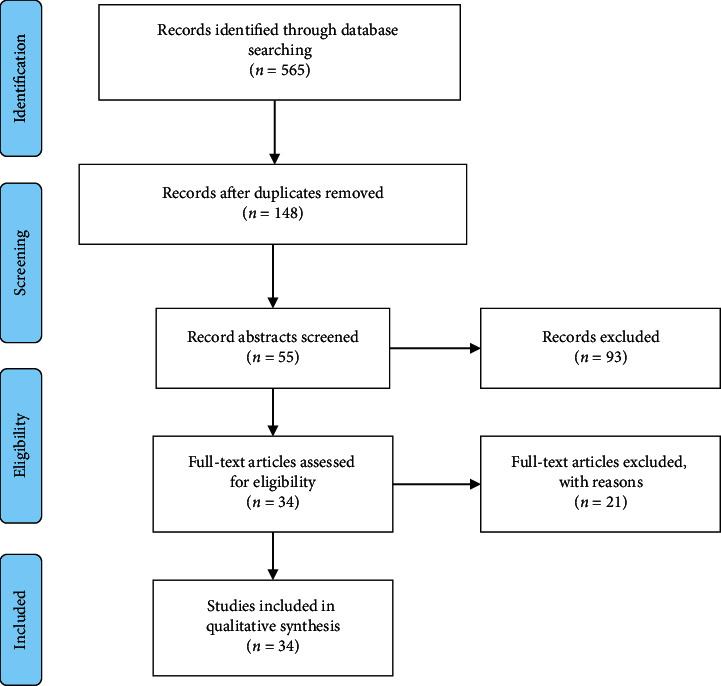
Scopus, PubMed, and Web of Science (all databases) were searched by 2 reviewers until 29 October 2020. Articles were screened and narratively synthesized according to PRISMA-DTA guidelines based on predefined eligibility criteria. Articles that made direct reference test comparisons to human clinicians were evaluated using the MI-CLAIM checklist. The risk of bias was assessed by JBI-DTA critical appraisal, and certainty of the evidence was evaluated using the GRADE approach. Information regarding the quantification method of dental pain and disease, the conditional characteristics of both training and test data cohort in the machine learning, diagnostic outcomes, and diagnostic test comparisons with clinicians, where applicable, were extracted.
34 eligible articles were found for data synthesis, of which 8 articles made direct reference comparisons to human clinicians. 7 papers scored over 13 (out of the evaluated 15 points) in the MI-CLAIM approach with all papers scoring 5+ (out of 7) in JBI-DTA appraisals. GRADE approach revealed serious risks of bias and inconsistencies with most studies containing more positive cases than their true prevalence in order to facilitate machine learning. Patient-perceived symptoms and clinical history were generally found to be less reliable than radiographs or histology for training accurate machine learning models. A low agreement level between clinicians training the models was suggested to have a negative impact on the prediction accuracy. Reference comparisons found nonspecialized clinicians with less than 3 years of experience to be disadvantaged against trained models.
Machine learning in dental and orofacial healthcare has shown respectable results in diagnosing diseases with symptomatic pain and with improved future iterations and can be used as a diagnostic aid in the clinics. The current review did not internally analyze the machine learning models and their respective algorithms, nor consider the confounding variables and factors responsible for shaping the orofacial disorders responsible for eliciting pain.
本研究探讨了机器学习在诊断(1)牙科疾病、(2)牙周疾病、(3)创伤和神经痛、(4)囊肿和肿瘤、(5)腺体疾病以及(6)骨和颞下颌关节方面的临床影响、有效性、局限性和与人类比较的结果,这些疾病或口腔颌面部疼痛可能是由牙齿引起的。
两名审查员通过 Scopus、PubMed 和 Web of Science(所有数据库)进行搜索,检索时间截至 2020 年 10 月 29 日。根据预设的纳入标准,对文章进行筛选,并根据 PRISMA-DTA 指南进行叙述性综合。使用 MI-CLAIM 清单评估直接参考人类临床医生进行参考测试比较的文章。使用 JBI-DTA 批判性评估评估偏倚风险,并使用 GRADE 方法评估证据的确定性。提取有关牙科疼痛和疾病量化方法、机器学习中训练和测试数据队列的条件特征、诊断结果以及与临床医生进行的诊断测试比较的信息,在适用的情况下。
共发现 34 篇符合数据综合条件的文章,其中 8 篇文章直接参考了人类临床医生的比较。在 MI-CLAIM 方法中,有 7 篇文章得分超过 13 分(满分 15 分),所有文章在 JBI-DTA 评估中均得分为 5 分(满分 7 分)。GRADE 方法显示,由于为了促进机器学习,大多数研究中阳性病例多于真实患病率,因此存在严重的偏倚风险和不一致性。一般认为,患者感知的症状和临床病史不如 X 光或组织学可靠,不适合训练准确的机器学习模型。研究表明,模型培训的临床医生之间的低一致性水平可能对预测准确性产生负面影响。参考比较发现,经验不足 3 年的非专业临床医生处于劣势,不如经过培训的模型。
在牙科和口腔颌面医疗保健领域,机器学习在诊断有症状疼痛的疾病方面取得了令人瞩目的结果,并且随着未来的迭代,可以在诊所中用作诊断辅助工具。本综述没有对内部分析机器学习模型及其各自的算法,也没有考虑负责塑造引起疼痛的口腔颌面部疾病的混杂变量和因素。