Department of Bone and Skeletal Research, Institute of Musculoskeletal Medicine, Medical Faculty of the Westphalian Wilhelm University, 48149, Münster, Germany.
Department of Orthopedic Surgery, Otto-von-Guericke University Magdeburg, 39120, Magdeburg, Germany.
Cell Death Dis. 2021 May 15;12(5):494. doi: 10.1038/s41419-021-03786-6.
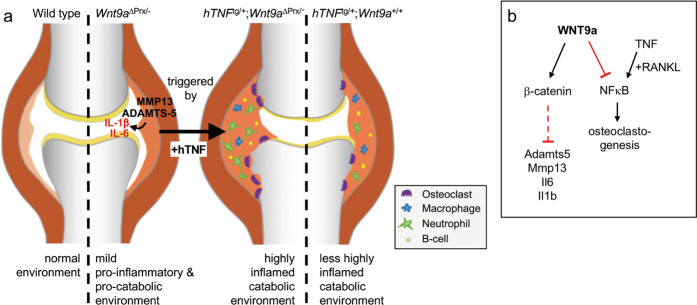
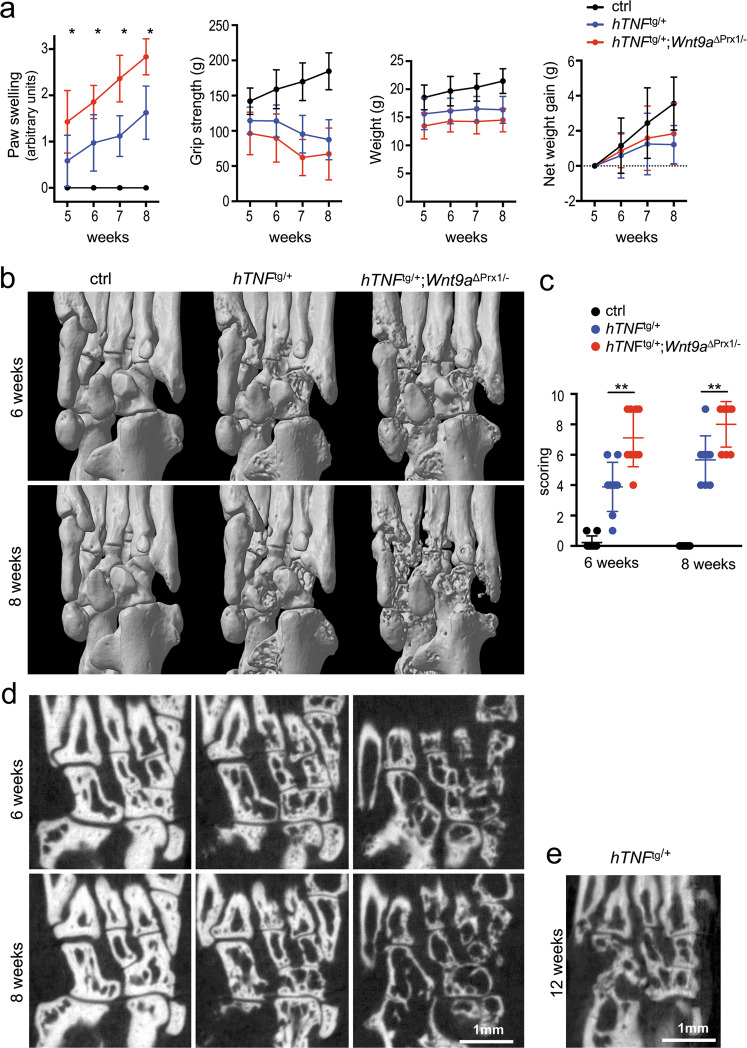
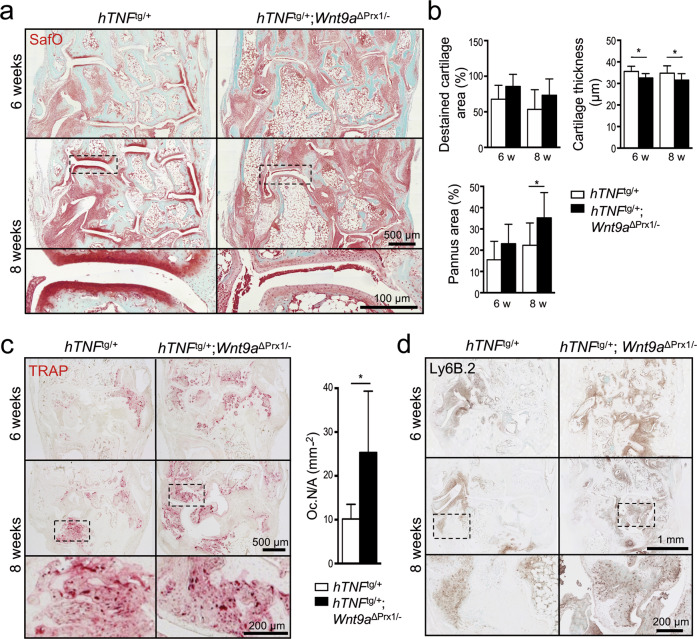
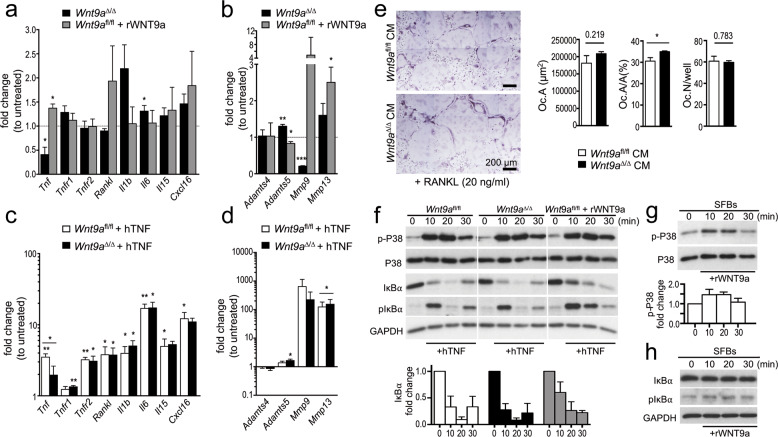
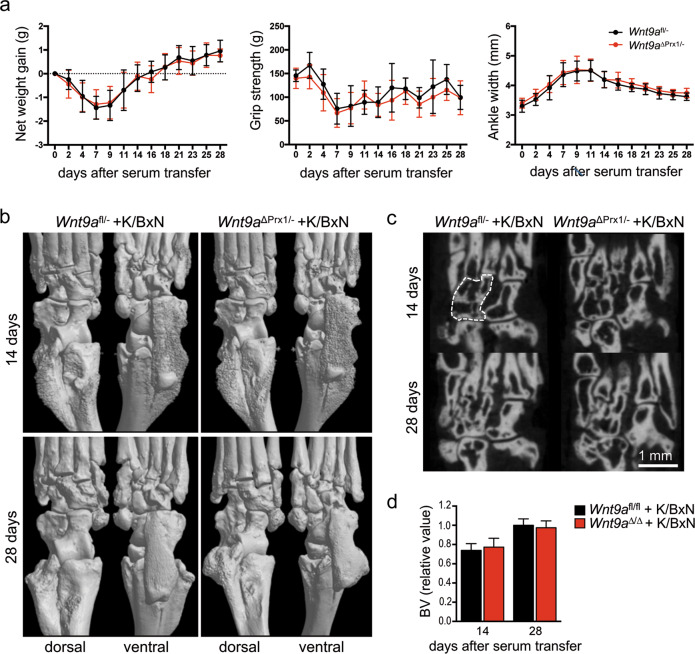
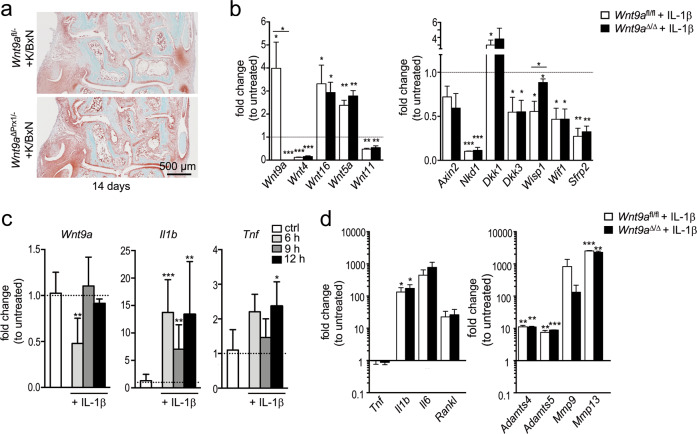
Agonists and antagonists of the canonical Wnt signaling pathway are modulators of pathological aspects of rheumatoid arthritis (RA). Their activity is primarily modifying bone loss and bone formation, as shown in animal models of RA. More recently, modulation of Wnt signaling by the antagonist Sclerostin has also been shown to influence soft-tissue-associated inflammatory aspects of the disease pointing towards a role of Wnt signaling in soft-tissue inflammation as well. Yet, nothing is known experimentally about the role of Wnt ligands in RA. Here we provide evidence that altering Wnt signaling at the level of a ligand affects all aspects of the rheumatoid arthritic disease. WNT9a levels are increased in the pannus tissue of RA patients, and stimulation of synovial fibroblasts (SFB) with tumor necrosis factor (TNF) leads to increased transcription of Wnt9a. Loss of Wnt9a in a chronic TNF-dependent RA mouse model results in an aggravation of disease progression with enhanced pannus formation and joint destruction. Yet, loss of its activity in the acute K/BxN serum-transfer induced arthritis (STIA) mouse model, which is independent of TNF signaling, has no effect on disease severity or progression. Thus, suggesting a specific role for WNT9a in TNF-triggered RA. In synovial fibroblasts, WNT9a can activate the canonical Wnt/β-catenin pathway, but it can also activate P38- and downregulate NFκB signaling. Based on in vitro data, we propose that loss of Wnt9a creates a slight proinflammatory and procatabolic environment that boosts the TNF-mediated inflammatory response.
经典 Wnt 信号通路的激动剂和拮抗剂是类风湿关节炎(RA)病理方面的调节剂。它们的活性主要是调节骨丢失和骨形成,这在 RA 的动物模型中得到了证明。最近,拮抗剂 Sclerostin 对 Wnt 信号的调节也被证明会影响疾病的软组织相关炎症方面,这表明 Wnt 信号在软组织炎症中也有作用。然而,实验中尚不清楚 Wnt 配体在 RA 中的作用。在这里,我们提供了证据表明,改变配体水平的 Wnt 信号会影响 RA 的所有方面。WNT9a 水平在 RA 患者的滑膜组织中增加,肿瘤坏死因子(TNF)刺激滑膜成纤维细胞(SFB)会导致 Wnt9a 的转录增加。在慢性 TNF 依赖性 RA 小鼠模型中丢失 Wnt9a 会导致疾病进展加剧,伴有更多的血管翳形成和关节破坏。然而,在急性 K/BxN 血清转移诱导关节炎(STIA)小鼠模型中,其活性丧失不影响疾病严重程度或进展,该模型不依赖于 TNF 信号。这表明 WNT9a 在 TNF 触发的 RA 中具有特定作用。在滑膜成纤维细胞中,WNT9a 可以激活经典的 Wnt/β-catenin 通路,但也可以激活 P38 并下调 NFκB 信号。基于体外数据,我们提出丢失 Wnt9a 会产生轻微的促炎和促分解代谢环境,从而增强 TNF 介导的炎症反应。