Department of Medical Biochemistry, Tohoku University Graduate School of Medicine, Sendai, Japan.
Department of Surgery, Tohoku University Graduate School of Medicine, Sendai, Japan.
Commun Biol. 2021 May 14;4(1):576. doi: 10.1038/s42003-021-02100-6.
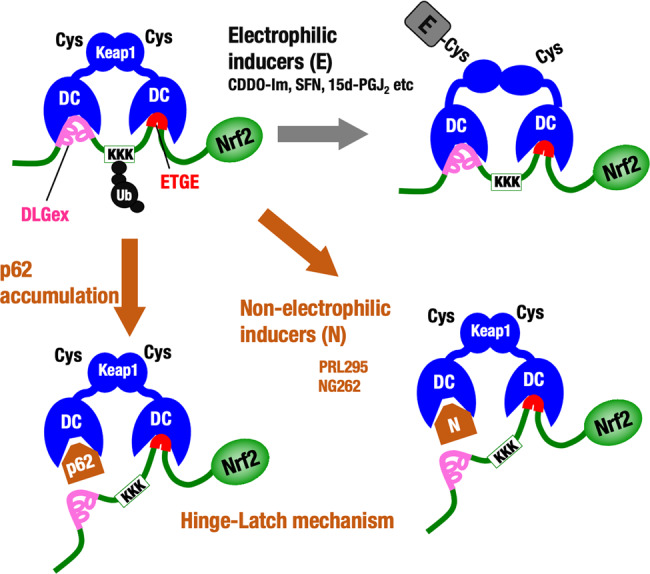
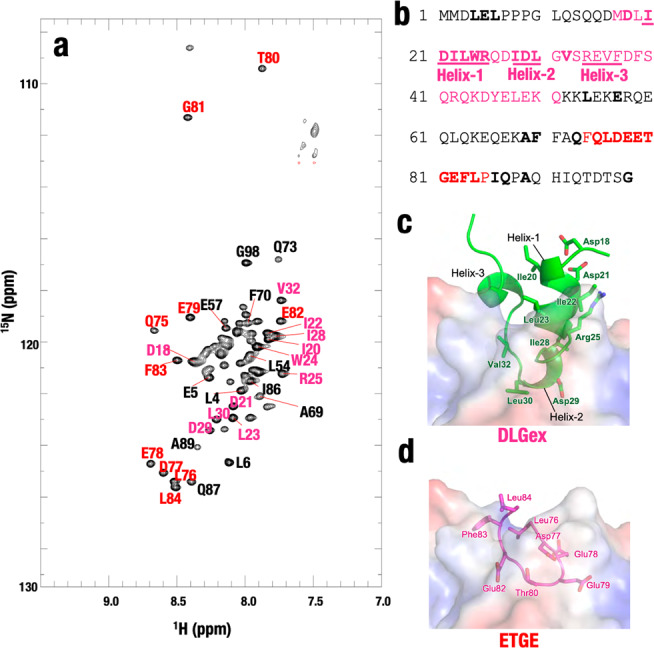
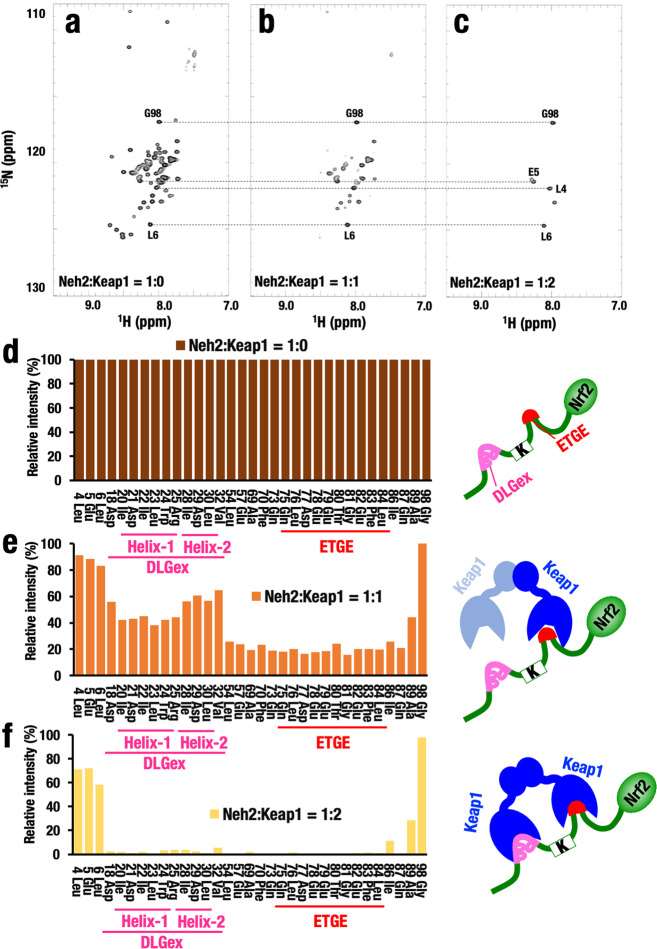
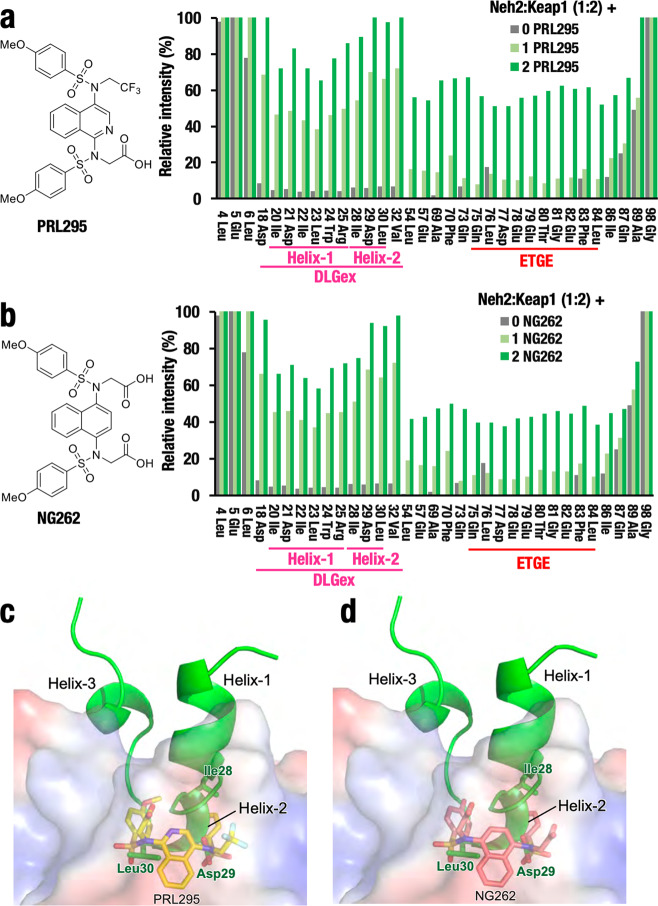
The Keap1-Nrf2 system is central for mammalian cytoprotection against various stresses and a drug target for disease prevention and treatment. One model for the molecular mechanisms leading to Nrf2 activation is the Hinge-Latch model, where the DLGex-binding motif of Nrf2 dissociates from Keap1 as a latch, while the ETGE motif remains attached to Keap1 as a hinge. To overcome the technical difficulties in examining the binding status of the two motifs during protein-protein interaction (PPI) simultaneously, we utilized NMR spectroscopy titration experiments. Our results revealed that latch dissociation is triggered by low-molecular-weight Keap1-Nrf2 PPI inhibitors and occurs during p62-mediated Nrf2 activation, but not by electrophilic Nrf2 inducers This study demonstrates that Keap1 utilizes a unique Hinge-Latch mechanism for Nrf2 activation upon challenge by non-electrophilic PPI-inhibiting stimuli, and provides critical insight for the pharmacological development of next-generation Nrf2 activators targeting the Keap1-Nrf2 PPI.
Keap1-Nrf2 系统是哺乳动物对抗各种应激的细胞保护的核心,也是疾病预防和治疗的药物靶点。导致 Nrf2 激活的分子机制的一个模型是铰链-闩锁模型,其中 Nrf2 的 DLGex 结合基序与 Keap1 分离作为闩锁,而 ETGE 基序仍然与 Keap1 作为铰链相连。为了克服在研究蛋白质-蛋白质相互作用(PPI)过程中同时检查两个基序结合状态的技术困难,我们利用了 NMR 光谱滴定实验。我们的结果表明,闩锁的解离是由低分子量的 Keap1-Nrf2 PPI 抑制剂引发的,并且发生在 p62 介导的 Nrf2 激活过程中,但不是由亲电 Nrf2 诱导物引发的。这项研究表明,Keap1 在受到非亲电 PPI 抑制性刺激的挑战时,利用独特的铰链-闩锁机制来激活 Nrf2,并为针对 Keap1-Nrf2 PPI 的下一代 Nrf2 激活剂的药理学开发提供了关键的见解。