Institute of Metabolism and Systems Research and Centre for Endocrinology, Diabetes and Metabolism, University of Birmingham, Birmingham, B15 2TT, UK.
Centre of Membrane Proteins and Receptors (COMPARE), Universities of Birmingham and Nottingham, Birmingham, B15 2TT, UK.
Pediatr Nephrol. 2022 Feb;37(2):289-301. doi: 10.1007/s00467-021-05082-z. Epub 2021 May 14.
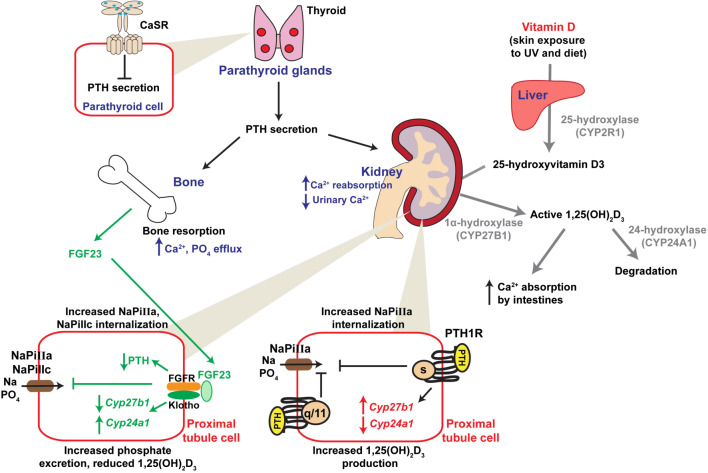
The causes of hypercalcaemia in the neonate and infant are varied, and often distinct from those in older children and adults. Hypercalcaemia presents clinically with a range of symptoms including failure to thrive, poor feeding, constipation, polyuria, irritability, lethargy, seizures and hypotonia. When hypercalcaemia is suspected, an accurate diagnosis will require an evaluation of potential causes (e.g. family history) and assessment for physical features (such as dysmorphology, or subcutaneous fat deposits), as well as biochemical measurements, including total and ionised serum calcium, serum phosphate, creatinine and albumin, intact parathyroid hormone (PTH), vitamin D metabolites and urinary calcium, phosphate and creatinine. The causes of neonatal hypercalcaemia can be classified into high or low PTH disorders. Disorders associated with high serum PTH include neonatal severe hyperparathyroidism, familial hypocalciuric hypercalcaemia and Jansen's metaphyseal chondrodysplasia. Conditions associated with low serum PTH include idiopathic infantile hypercalcaemia, Williams-Beuren syndrome and inborn errors of metabolism, including hypophosphatasia. Maternal hypocalcaemia and dietary factors and several rare endocrine disorders can also influence neonatal serum calcium levels. This review will focus on the common causes of hypercalcaemia in neonates and young infants, considering maternal, dietary, and genetic causes of calcium dysregulation. The clinical presentation and treatment of patients with these disorders will be discussed.
新生儿和婴儿高钙血症的病因多种多样,且通常与年长儿童和成人的病因不同。高钙血症临床上表现为一系列症状,包括生长不良、喂养不良、便秘、多尿、烦躁、昏睡、癫痫发作和低张力。当怀疑高钙血症时,准确的诊断需要评估潜在的病因(例如家族史)和评估身体特征(如畸形或皮下脂肪沉积),以及生化测量,包括总血清钙和离子化血清钙、血清磷酸盐、肌酐和白蛋白、完整甲状旁腺激素 (PTH)、维生素 D 代谢物和尿钙、磷酸盐和肌酐。新生儿高钙血症的病因可分为高 PTH 或低 PTH 疾病。与高血清 PTH 相关的疾病包括新生儿严重甲状旁腺功能亢进症、家族性低钙尿性高钙血症和 Jansen 干骺端软骨发育不良。与低血清 PTH 相关的疾病包括特发性婴儿高钙血症、威廉姆斯-贝伦综合征和代谢性疾病,包括低磷酸酶血症。母体低钙血症和饮食因素以及几种罕见的内分泌疾病也会影响新生儿血清钙水平。这篇综述将重点介绍新生儿和婴儿高钙血症的常见病因,包括钙调节的母体、饮食和遗传原因。将讨论这些疾病患者的临床表现和治疗。