Research Centre for Modeling and Simulation - RCMS, National University of Sciences and Technology (NUST), Islamabad, Pakistan.
The Jackson Laboratory for Genomic Medicine, Connecticut, USA.
IET Syst Biol. 2021 Jul;15(5):137-147. doi: 10.1049/syb2.12020. Epub 2021 May 15.
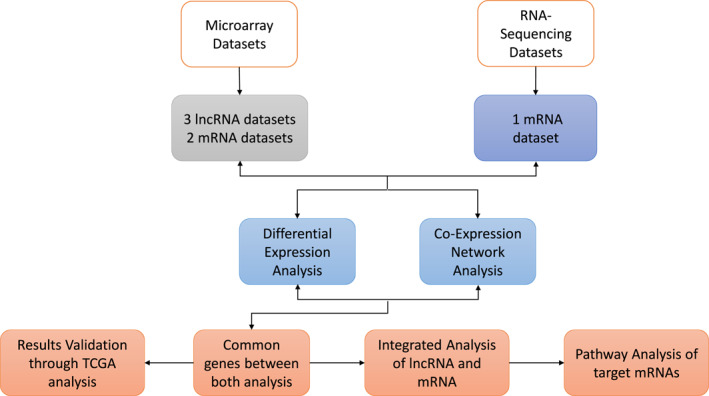
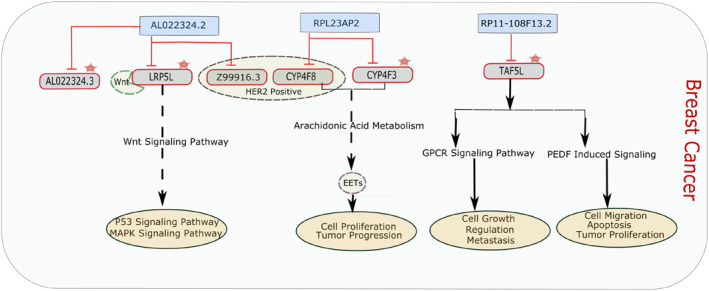
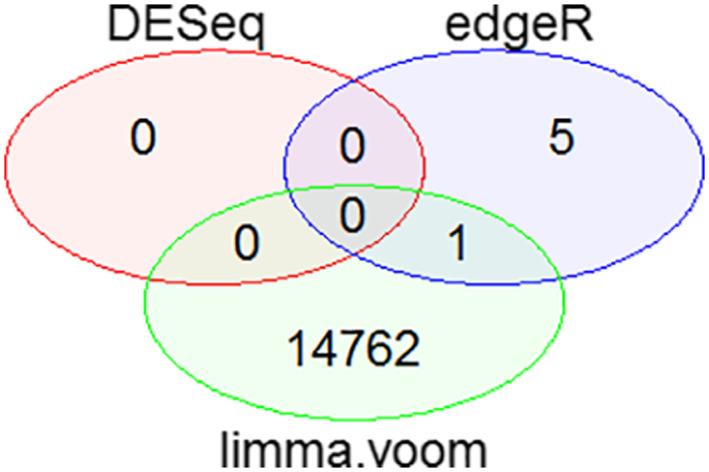
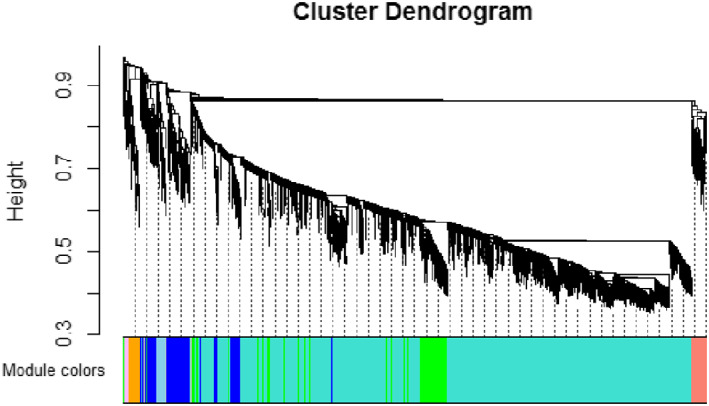
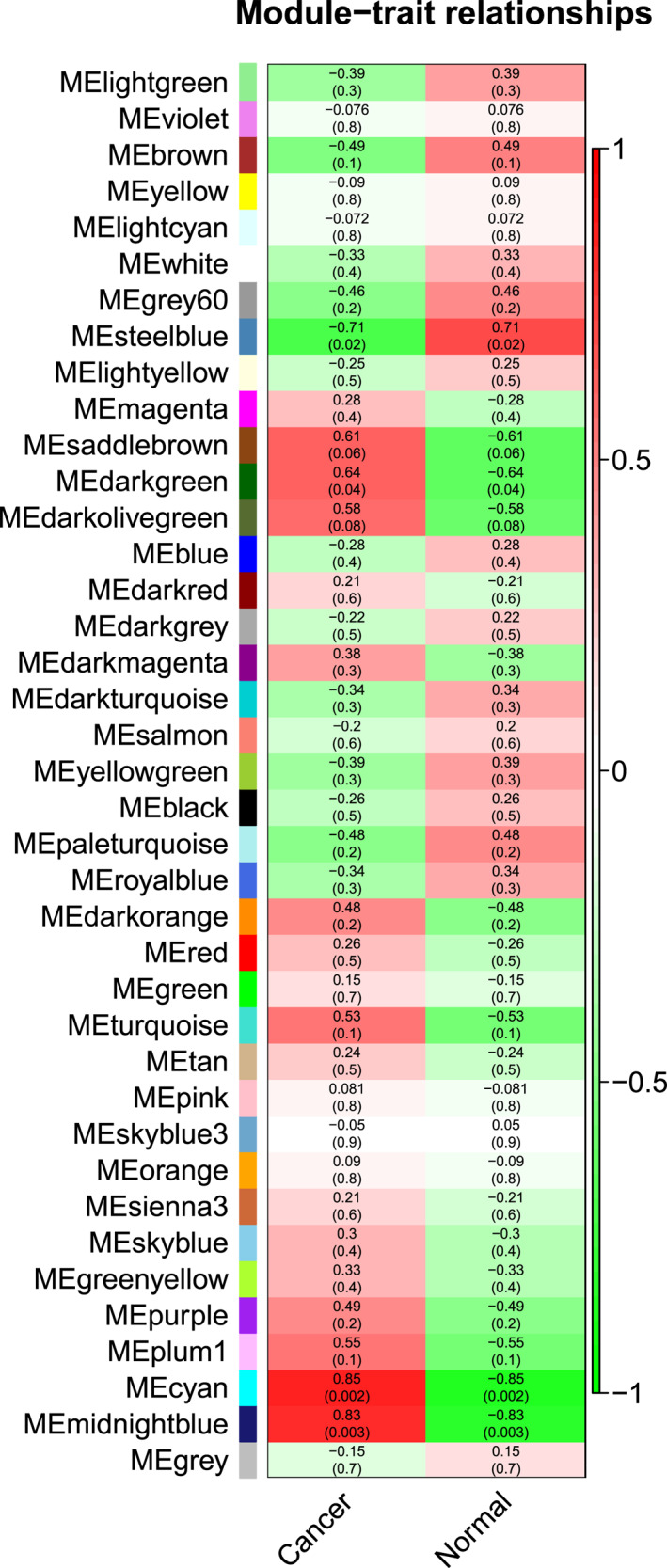
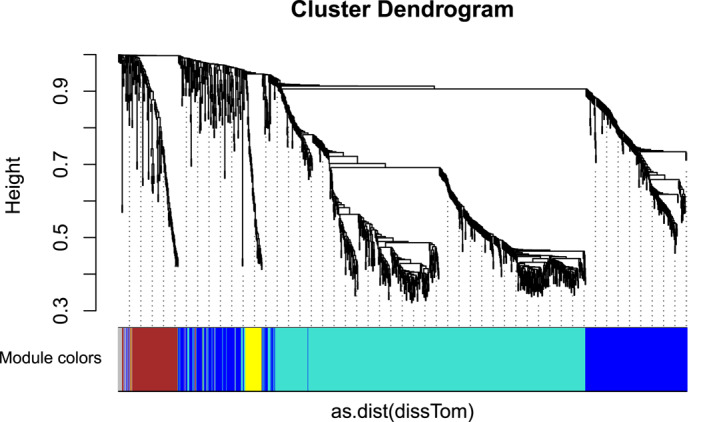
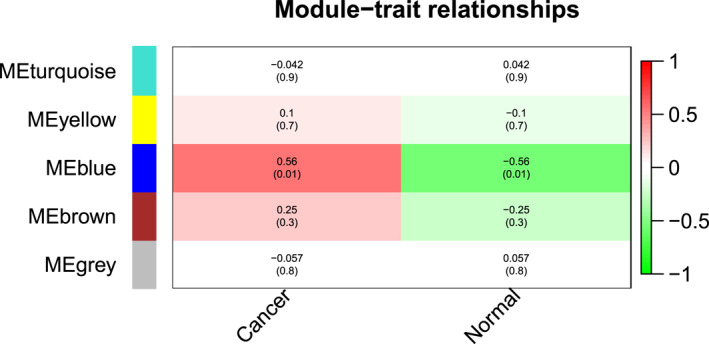
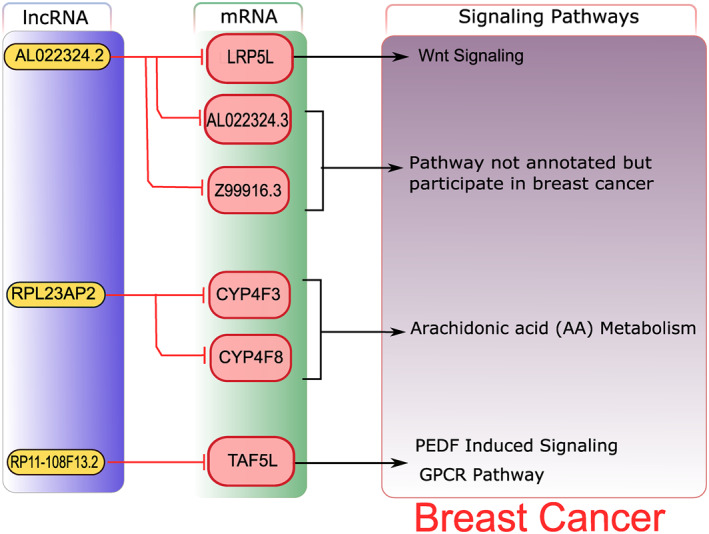
Breast cancer is among the lethal types of cancer with a high mortality rate, globally. Its high prevalence can be controlled through improved analysis and identification of disease-specific biomarkers. Recently, long non-coding RNAs (lncRNAs) have been reported as key contributors of carcinogenesis and regulate various cellular pathways through post-transcriptional regulatory mechanisms. The specific aim of this study was to identify the novel interactions of aberrantly expressed genetic components in breast cancer by applying integrative analysis of publicly available expression profiles of both lncRNAs and mRNAs. Differential expression patterns were identified by comparing the breast cancer expression profiles of samples with controls. Significant co-expression networks were identified through WGCNA analysis. WGCNA is a systems biology approach used to elucidate the pattern of correlation between genes across microarray samples. It is also used to identify the highly correlated modules. The results obtained from this study revealed significantly differentially expressed and co-expressed lncRNAs and their cis- and trans-regulating mRNA targets which include RP11-108F13.2 targeting TAF5L, RPL23AP2 targeting CYP4F3, CYP4F8 and AL022324.2 targeting LRP5L, AL022324.3, and Z99916.3, respectively. Moreover, pathway analysis revealed the involvement of identified mRNAs and lncRNAs in major cell signalling pathways, and target mRNAs expression is also validated through cohort data. Thus, the identified lncRNAs and their target mRNAs represent novel biomarkers that could serve as potential therapeutics for breast cancer and their roles could also be further validated through wet labs to employ them as potential therapeutic targets in future.
乳腺癌是全球致死率较高的癌症类型之一。通过改进对疾病特异性生物标志物的分析和鉴定,可以控制其高发病率。最近,长链非编码 RNA(lncRNA)已被报道为致癌作用的关键贡献者,并通过转录后调控机制调节各种细胞途径。本研究的具体目的是通过整合分析 lncRNA 和 mRNA 的公开表达谱,鉴定乳腺癌中异常表达遗传成分的新相互作用。通过比较对照样本的乳腺癌表达谱,确定差异表达模式。通过 WGCNA 分析确定显著的共表达网络。WGCNA 是一种系统生物学方法,用于阐明微阵列样本中基因之间相关性的模式。它还用于识别高度相关的模块。本研究的结果揭示了显著差异表达和共表达的 lncRNA 及其 cis 和 trans 调节的 mRNA 靶标,包括靶向 TAF5L 的 RP11-108F13.2、靶向 CYP4F3、CYP4F8 和 AL022324.2 的 RPL23AP2、靶向 LRP5L、AL022324.3 和 Z99916.3 的分别。此外,途径分析显示鉴定的 mRNA 和 lncRNA 参与主要的细胞信号通路,并且通过队列数据验证了靶标 mRNA 的表达。因此,鉴定的 lncRNA 及其靶标 mRNA 代表新的生物标志物,可作为乳腺癌潜在的治疗方法,其作用也可以通过湿实验室进一步验证,以便在未来将其作为潜在的治疗靶点。