Duke University, Nicholas School of the Environment, Integrated Toxicology and Environmental Health Program, Durham, NC, USA.
Duke University Department of Biology and University Program in Genetics and Genomics, Durham, NC, USA.
Redox Biol. 2021 Jul;43:102000. doi: 10.1016/j.redox.2021.102000. Epub 2021 May 5.
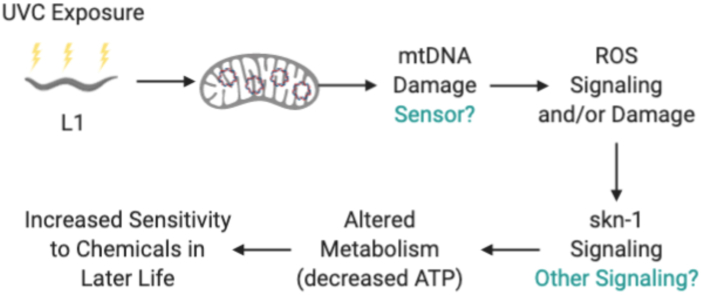
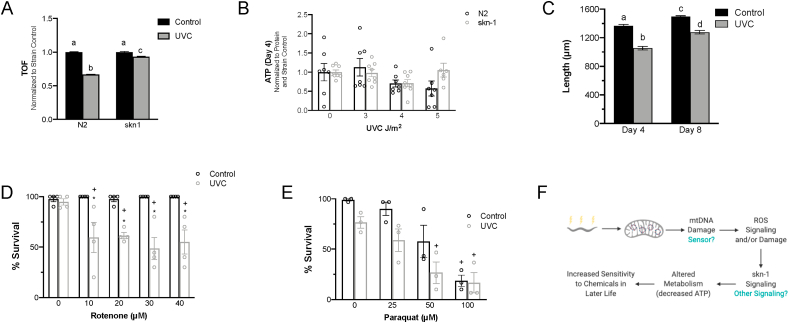
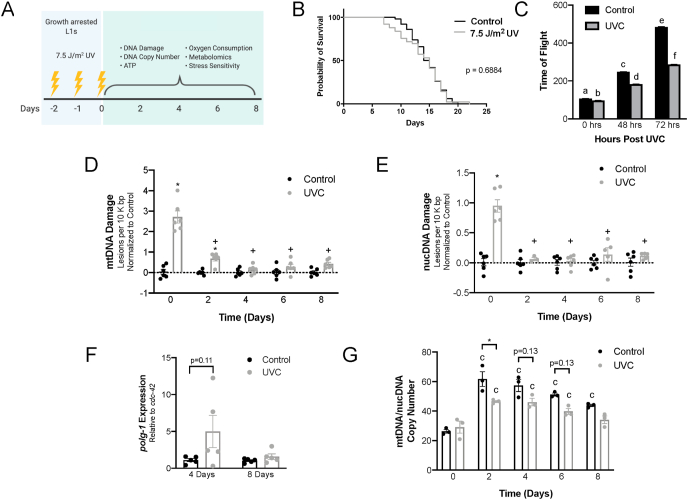
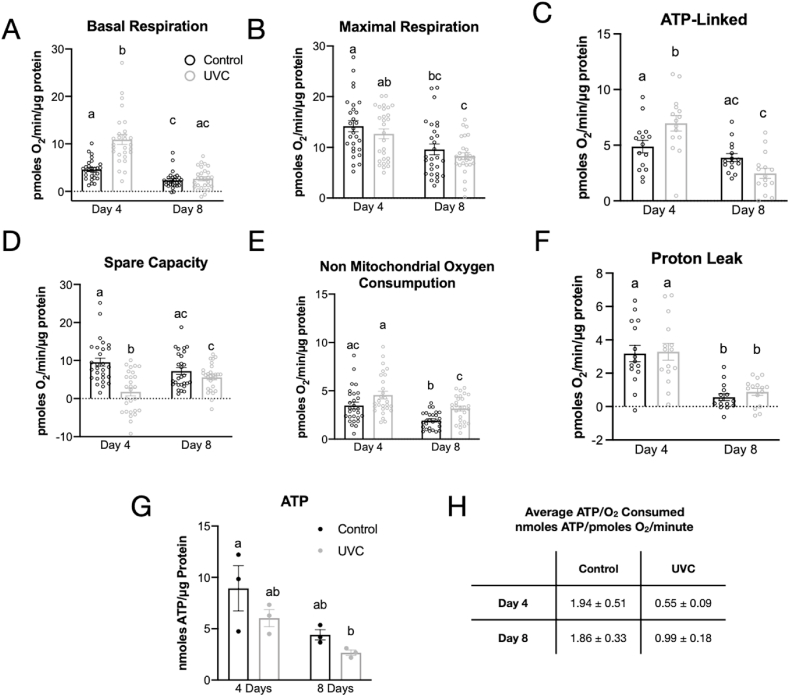
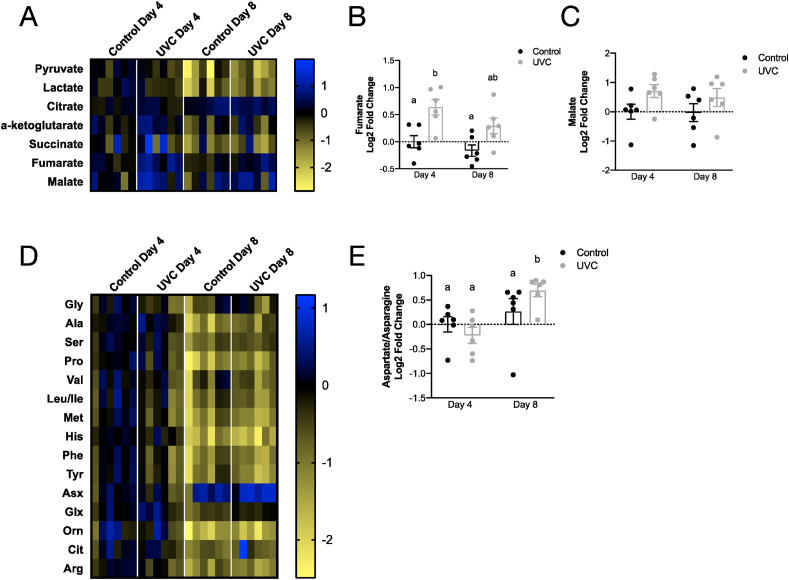
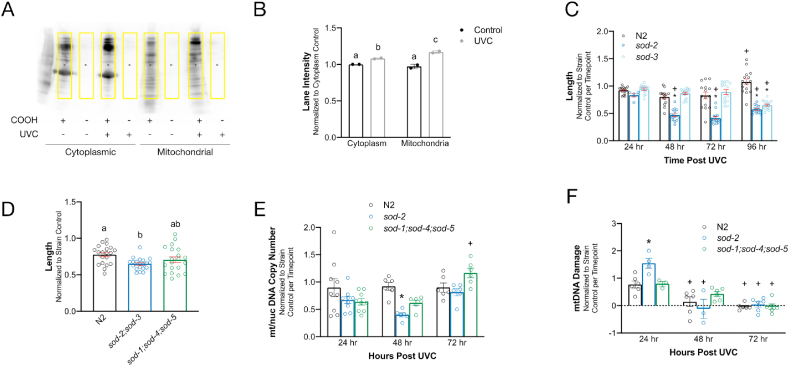
The consequences of damage to the mitochondrial genome (mtDNA) are poorly understood, although mtDNA is more susceptible to damage resulting from some genotoxicants than nuclear DNA (nucDNA), and many environmental toxicants target the mitochondria. Reports from the toxicological literature suggest that exposure to early-life mitochondrial damage could lead to deleterious consequences later in life (the "Developmental Origins of Health and Disease" paradigm), but reports from other fields often report beneficial ("mitohormetic") responses to such damage. Here, we tested the effects of low (causing no change in lifespan) levels of ultraviolet C (UVC)-induced, irreparable mtDNA damage during early development in Caenorhabditis elegans. This exposure led to life-long reductions in mtDNA copy number and steady-state ATP levels, accompanied by increased oxygen consumption and altered metabolite profiles, suggesting inefficient mitochondrial function. Exposed nematodes were also developmentally delayed, reached smaller adult size, and were rendered more susceptible to subsequent exposure to chemical mitotoxicants. Metabolomic and genetic analysis of key signaling and metabolic pathways supported redox and mitochondrial stress-response signaling during early development as a mechanism for establishing these persistent alterations. Our results highlight the importance of early-life exposures to environmental pollutants, especially in the context of exposure to chemicals that target mitochondria.
线粒体基因组 (mtDNA) 损伤的后果尚不清楚,尽管与核 DNA (nucDNA) 相比,mtDNA 更容易受到某些遗传毒性物质的损伤,而且许多环境毒物都以线粒体为靶标。来自毒理学文献的报告表明,早期接触线粒体损伤可能会导致生命后期产生有害后果(“健康与疾病的发育起源”范式),但来自其他领域的报告通常报告了对此类损伤的有益(“mitohormetic”)反应。在这里,我们测试了低水平(不会改变寿命)紫外线 C(UVC)诱导的不可修复的 mtDNA 损伤在秀丽隐杆线虫早期发育过程中的影响。这种暴露导致 mtDNA 拷贝数和稳态 ATP 水平终生降低,伴随着耗氧量增加和代谢物谱改变,表明线粒体功能效率低下。暴露的线虫也发育延迟,成年体型较小,并且更容易受到随后接触化学 mitotoxicants 的影响。对关键信号转导和代谢途径的代谢组学和遗传分析支持氧化还原和线粒体应激反应信号转导在早期发育过程中作为建立这些持久改变的机制。我们的研究结果强调了早期接触环境污染物的重要性,特别是在接触以线粒体为靶标的化学物质的情况下。