Nicholas School of the Environment, Duke University, Durham, NC, USA.
BMC Pharmacol Toxicol. 2013 Feb 4;14:9. doi: 10.1186/2050-6511-14-9.
Mitochondrial DNA (mtDNA) is present in multiple copies per cell and undergoes dramatic amplification during development. The impacts of mtDNA damage incurred early in development are not well understood, especially in the case of types of mtDNA damage that are irreparable, such as ultraviolet C radiation (UVC)-induced photodimers.
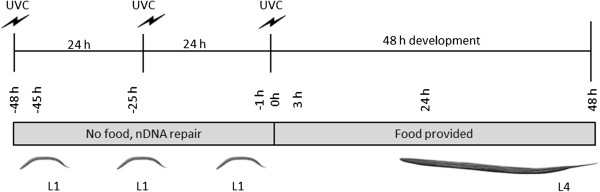
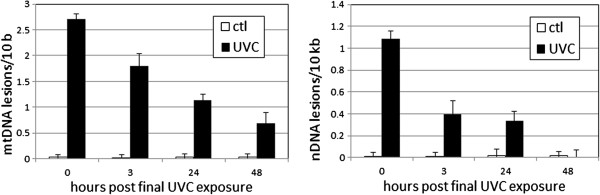
We exposed first larval stage nematodes to UVC using a protocol that results in accumulated mtDNA damage but permits nuclear DNA (nDNA) repair. We then measured the transcriptional response, as well as oxygen consumption, ATP levels, and mtDNA copy number through adulthood.
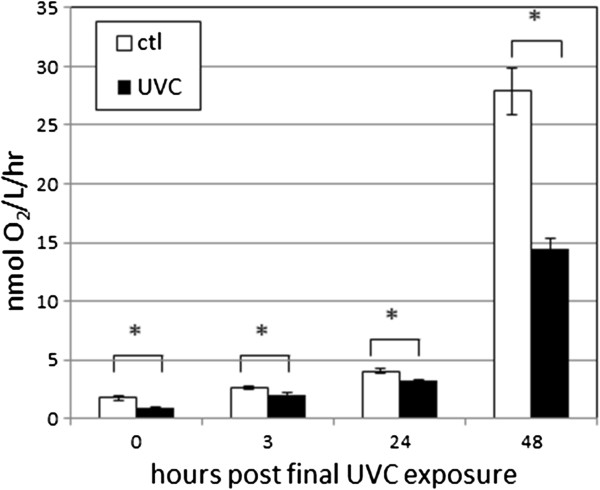
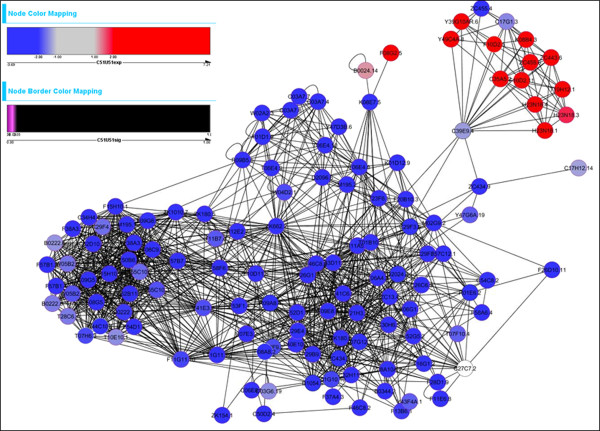
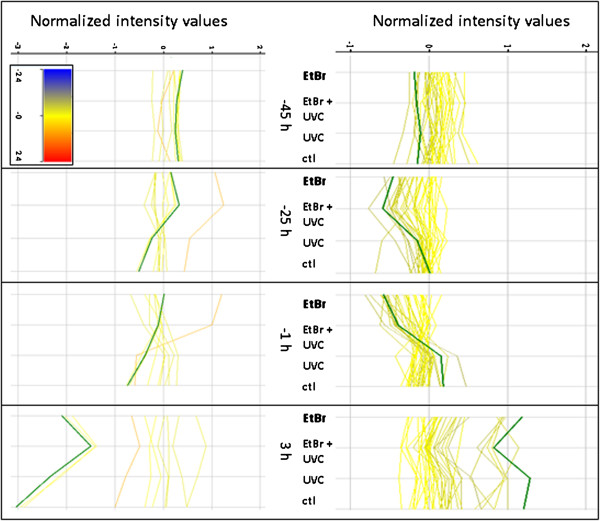
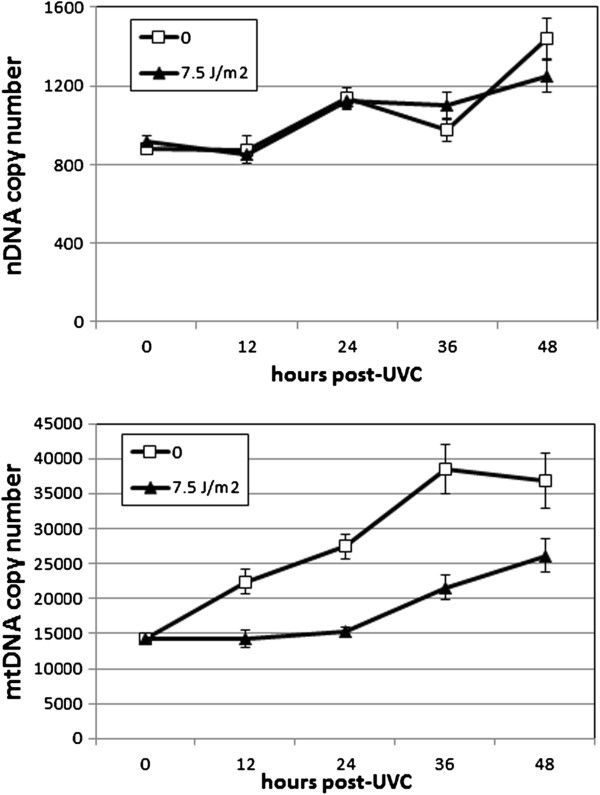
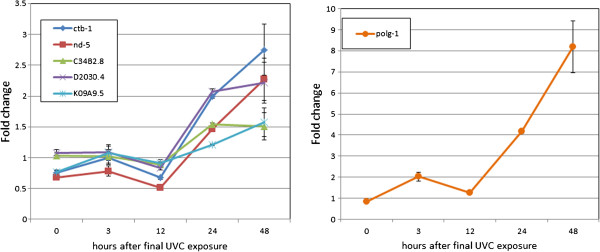
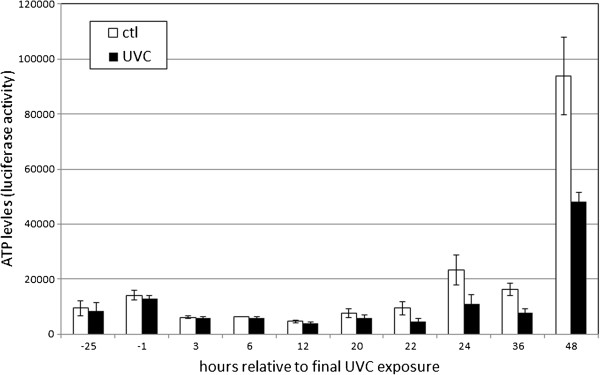
Although the mtDNA damage persisted to the fourth larval stage, we observed only a relatively minor ~40% decrease in mtDNA copy number. Transcriptomic analysis suggested an inhibition of aerobic metabolism and developmental processes; mRNA levels for mtDNA-encoded genes were reduced ~50% at 3 hours post-treatment, but recovered and, in some cases, were upregulated at 24 and 48 hours post-exposure. The mtDNA polymerase γ was also induced ~8-fold at 48 hours post-exposure. Moreover, ATP levels and oxygen consumption were reduced in response to UVC exposure, with marked reductions of ~50% at the later larval stages.
These results support the hypothesis that early life exposure to mitochondrial genotoxicants could result in mitochondrial dysfunction at later stages of life, thereby highlighting the potential health hazards of time-delayed effects of these genotoxicants in the environment.
线粒体 DNA(mtDNA)在每个细胞中存在多个副本,并在发育过程中经历剧烈扩增。在发育早期发生的 mtDNA 损伤的影响尚不清楚,尤其是对于不可修复的 mtDNA 损伤类型,如紫外线 C 辐射(UVC)诱导的光二聚体。
我们使用一种方案使第一代幼虫线虫暴露于 UVC 下,该方案导致 mtDNA 损伤累积,但允许核 DNA(nDNA)修复。然后,我们通过成虫期测量转录反应以及耗氧量、ATP 水平和 mtDNA 拷贝数。
尽管 mtDNA 损伤持续到第四幼虫期,但我们仅观察到 mtDNA 拷贝数相对较小的约 40%下降。转录组分析表明有氧代谢和发育过程受到抑制;mtDNA 编码基因的 mRNA 水平在处理后 3 小时降低约 50%,但在 24 和 48 小时后恢复,在某些情况下上调。mtDNA 聚合酶 γ 在暴露后 48 小时也被诱导约 8 倍。此外,ATP 水平和耗氧量因 UVC 暴露而降低,在后期幼虫阶段降低约 50%。
这些结果支持这样一种假设,即早期生命暴露于线粒体遗传毒性物质可能导致生命后期的线粒体功能障碍,从而突出了这些遗传毒性物质在环境中延迟效应的潜在健康危害。