Duke University, Nicholas School of Environment, Integrated Toxicology and Environmental Health Program, LSRC, PO Box 90328, Durham, NC 27708, USA.
Nucleic Acids Res. 2012 Sep;40(16):7916-31. doi: 10.1093/nar/gks532. Epub 2012 Jun 20.
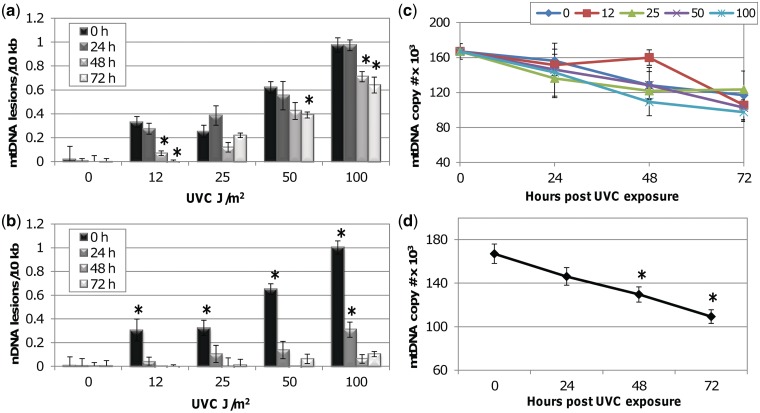
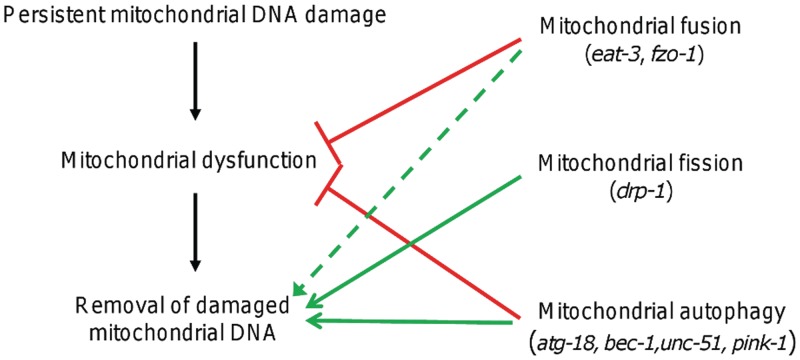
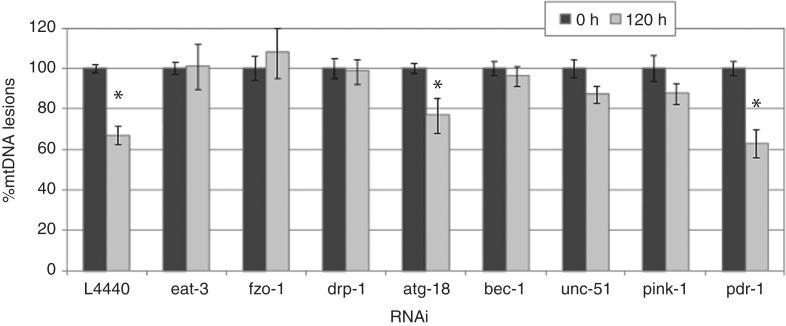
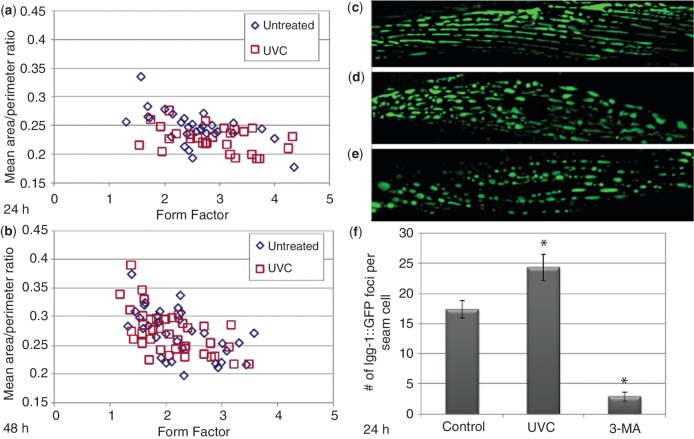
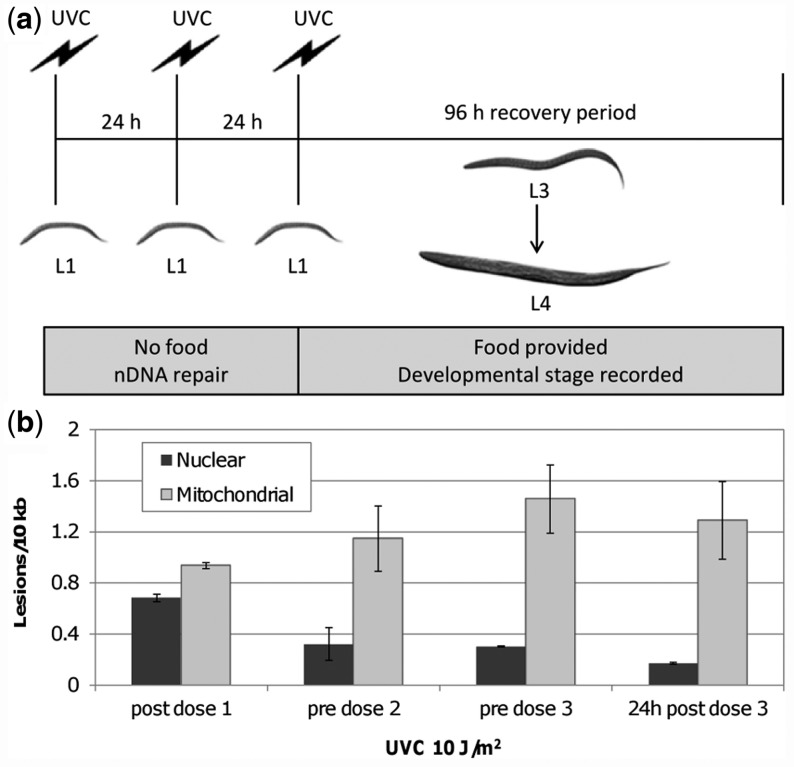
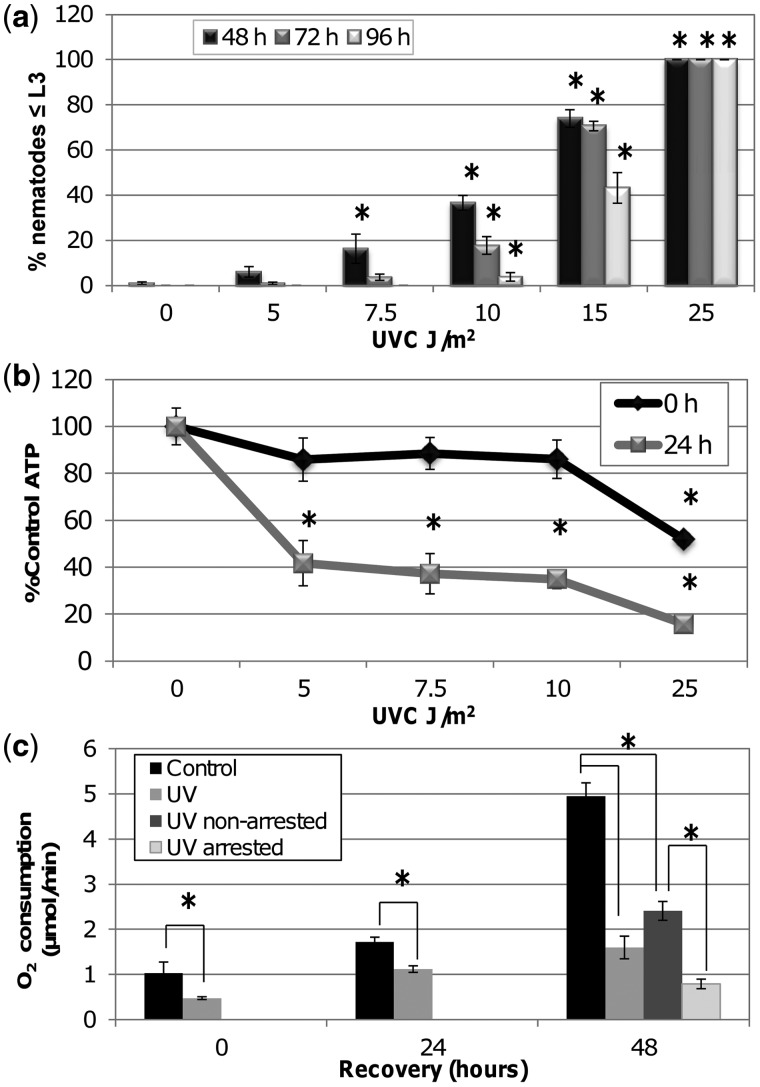
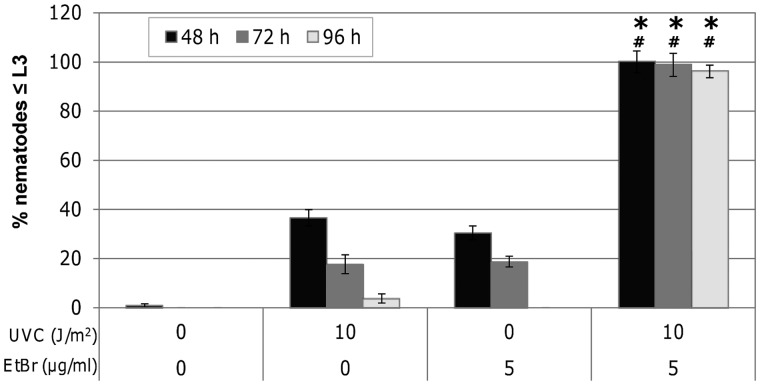
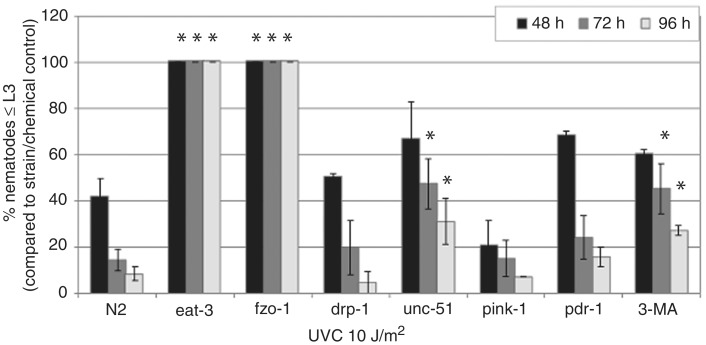
Mitochondria lack the ability to repair certain helix-distorting lesions that are induced at high levels in mitochondrial DNA (mtDNA) by important environmental genotoxins and endogenous metabolites. These lesions are irreparable and persistent in the short term, but their long-term fate is unknown. We report that removal of such mtDNA damage is detectable by 48 h in Caenorhabditis elegans, and requires mitochondrial fusion, fission and autophagy, providing genetic evidence for a novel mtDNA damage removal pathway. Furthermore, mutations in genes involved in these processes as well as pharmacological inhibition of autophagy exacerbated mtDNA damage-mediated larval arrest, illustrating the in vivo relevance of removal of persistent mtDNA damage. Mutations in genes in these pathways exist in the human population, demonstrating the potential for important gene-environment interactions affecting mitochondrial health after genotoxin exposure.
线粒体缺乏修复某些螺旋扭曲损伤的能力,这些损伤是由重要的环境遗传毒素和内源性代谢物在 mtDNA(线粒体 DNA)中高水平诱导产生的。这些损伤在短期内是无法修复且持续存在的,但它们的长期命运尚不清楚。我们报告称,在秀丽隐杆线虫中,在 48 小时内可检测到这种 mtDNA 损伤的清除,并且需要线粒体融合、裂变和自噬,为一种新的 mtDNA 损伤清除途径提供了遗传证据。此外,这些过程中涉及的基因的突变以及自噬的药理学抑制加剧了 mtDNA 损伤介导的幼虫停滞,说明了清除持久 mtDNA 损伤的体内相关性。这些途径中的基因的突变存在于人类群体中,表明在遗传毒素暴露后,影响线粒体健康的重要基因-环境相互作用具有潜在可能性。