Department of Cardiovascular and Thoracic Sciences, Fondazione Policlinico Universitario A. Gemelli IRCCS, Catholic University of the Sacred Heart, Rome, Italy.
Division of Cardiology, University of Florida College of Medicine, Jacksonville, Florida, United States.
Expert Rev Clin Pharmacol. 2021 Aug;14(8):963-978. doi: 10.1080/17512433.2021.1927709. Epub 2021 May 26.
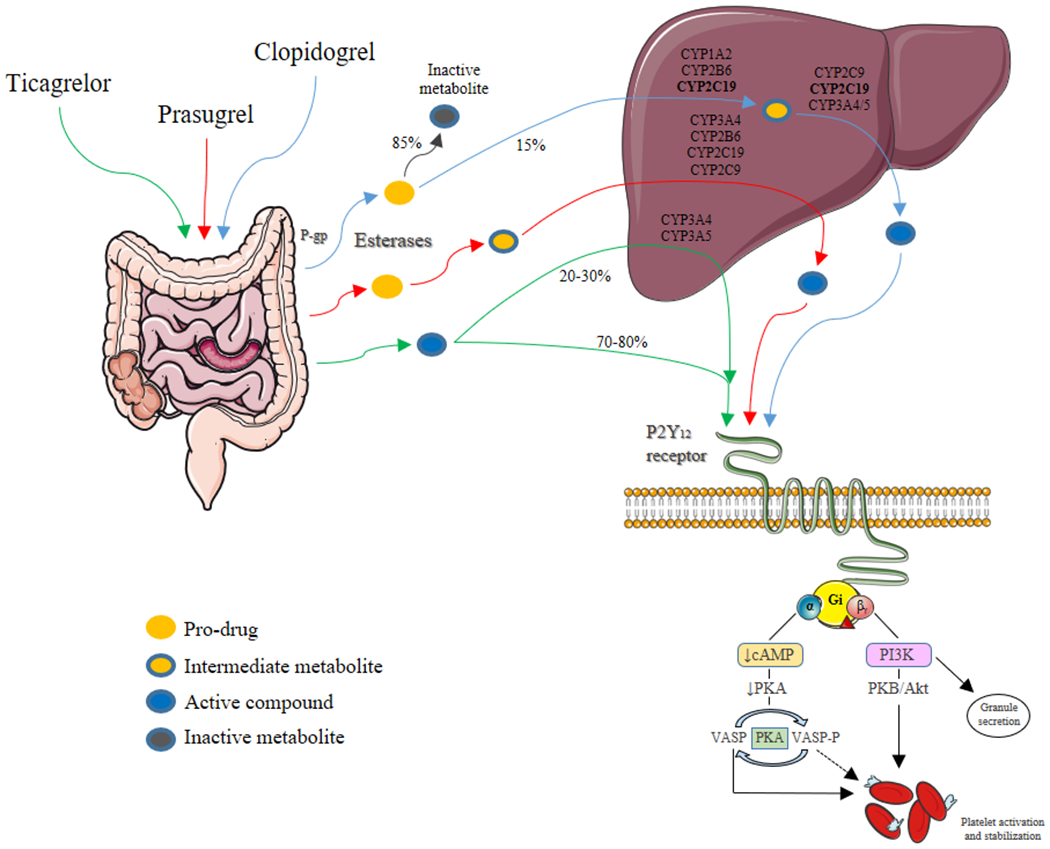
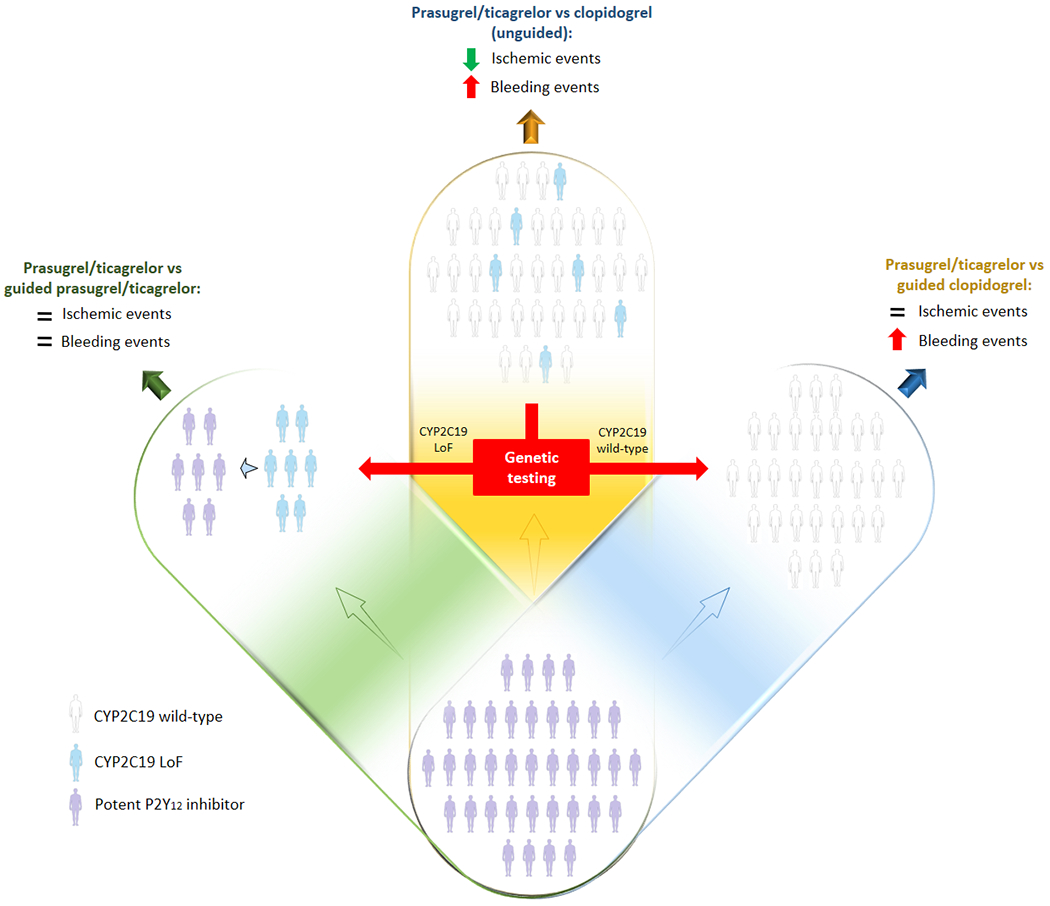
Clopidogrel is the most frequently utilized P2Y inhibitor and is characterized by broad interindividual response variability resulting in impaired platelet inhibition and increased risk of thrombotic complications in a considerable number of patients. The potent P2Y inhibitors, prasugrel and ticagrelor, can overcome this limitation but at the expense of an increased risk of bleeding. Genetic variations of the cytochrome P450 (CYP) 2 C19 enzyme, a key determinant in clopidogrel metabolism, have been strongly associated with clopidogrel response profiles prompting investigations of genetic-guided selection of antiplatelet therapy.
The present manuscript focuses on the rationale for the use of genetic testing to guide the selection of platelet P2Y inhibitors among patients undergoing percutaneous coronary intervention (PCI). Moreover, a comprehensive appraisal of the available evidence and practical recommendations is provided.
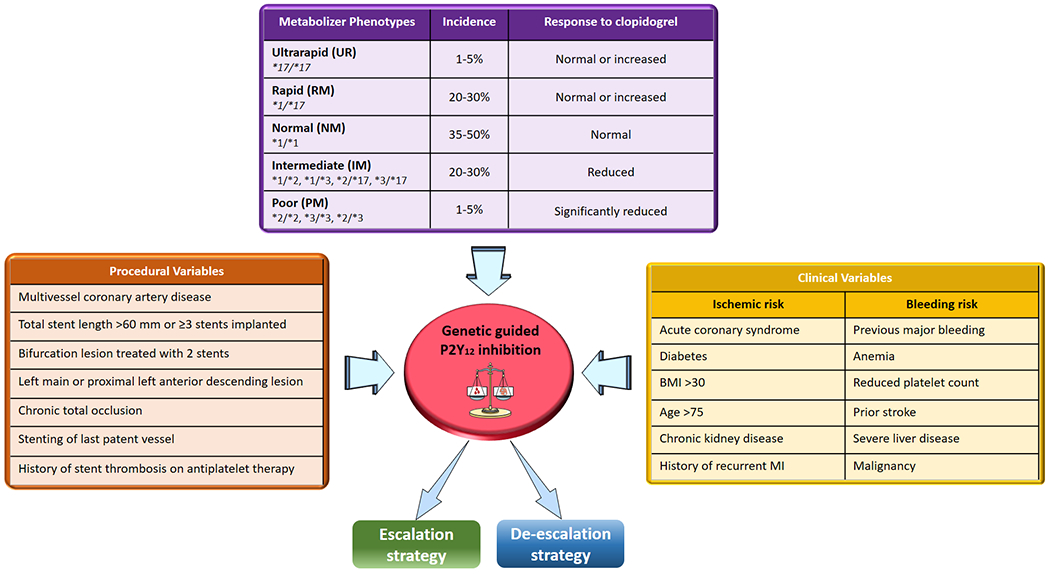
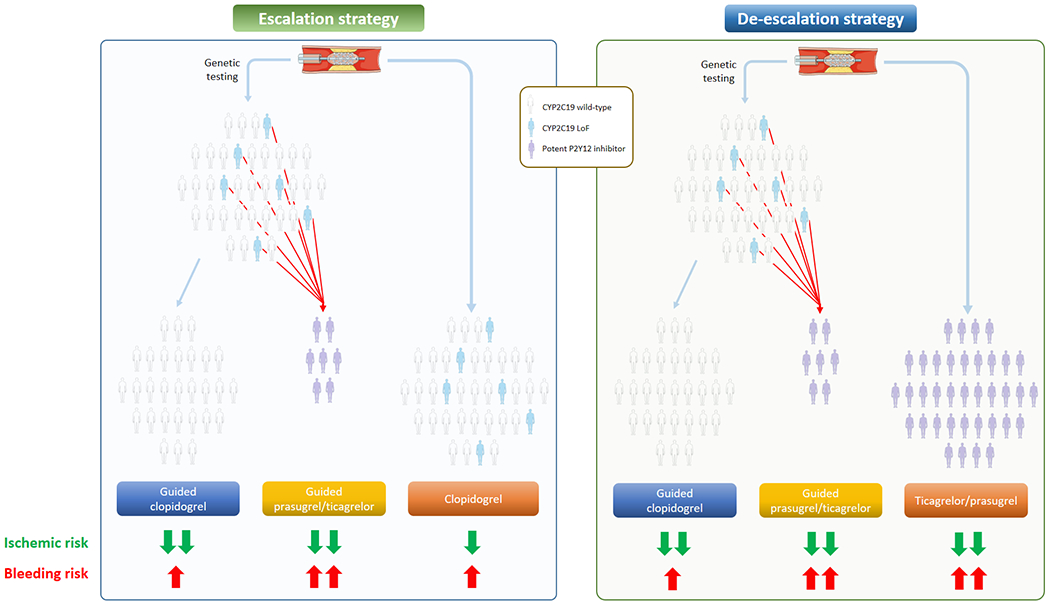
Implementation of genetic testing as a strategy to guide the selection of therapy can result in escalation (i.e. switching to prasugrel or ticagrelor) or de-escalation (i.e. switching to clopidogrel) of P2Y inhibiting therapy. Most recent investigations support the clinical benefit of a genetic guided selection of antiplatelet therapy in patients undergo PCI. Integrating the results of genetic testing with clinical and procedural variables represents a promising strategy for a precision medicine approach for the selection of antiplatelet therapy among patients undergoing PCI.
氯吡格雷是最常使用的 P2Y 抑制剂,其特点是个体间反应差异较大,导致血小板抑制作用受损,相当数量的患者发生血栓并发症的风险增加。强效的 P2Y 抑制剂普拉格雷和替格瑞洛可以克服这一限制,但出血风险增加。细胞色素 P450(CYP)2C19 酶的遗传变异是氯吡格雷代谢的关键决定因素,与氯吡格雷的反应谱密切相关,促使人们研究基于遗传的抗血小板治疗选择。
本文重点介绍了使用基因检测来指导行经皮冠状动脉介入治疗(PCI)的患者选择血小板 P2Y 抑制剂的原理。此外,还提供了对现有证据和实用建议的全面评估。
将基因检测作为指导治疗选择的策略,可以导致 P2Y 抑制治疗的升级(即改用普拉格雷或替格瑞洛)或降级(即改用氯吡格雷)。最近的研究支持在接受 PCI 的患者中,基于遗传指导的抗血小板治疗选择具有临床获益。将基因检测结果与临床和程序变量相结合,代表了一种有前途的精准医学策略,可用于选择接受 PCI 的患者的抗血小板治疗。