Department of Genitourinary Oncology, H Lee Moffitt Cancer Center and Research Institute, Tampa, FL, USA; Integrated Mathematical Oncology Department, H Lee Moffitt Cancer Center and Research Institute, Tampa, FL, USA.
Department of Genitourinary Oncology, H Lee Moffitt Cancer Center and Research Institute, Tampa, FL, USA; Integrated Mathematical Oncology Department, H Lee Moffitt Cancer Center and Research Institute, Tampa, FL, USA.
Eur Urol Focus. 2022 May;8(3):784-793. doi: 10.1016/j.euf.2021.04.014. Epub 2021 May 11.
Clear cell renal cell carcinoma (ccRCC) tumors have low frequencies of genetic alterations compared with other malignancies, but very high levels of immune cell infiltration and favorable response rates to immunotherapy. Currently, the interplay between specific ccRCC somatic mutations and immune infiltration pattern is unclear.
To analyze the associations between common ccRCC somatic mutations and immune cell infiltration patterns within the tumor immune microenvironment (TIME).
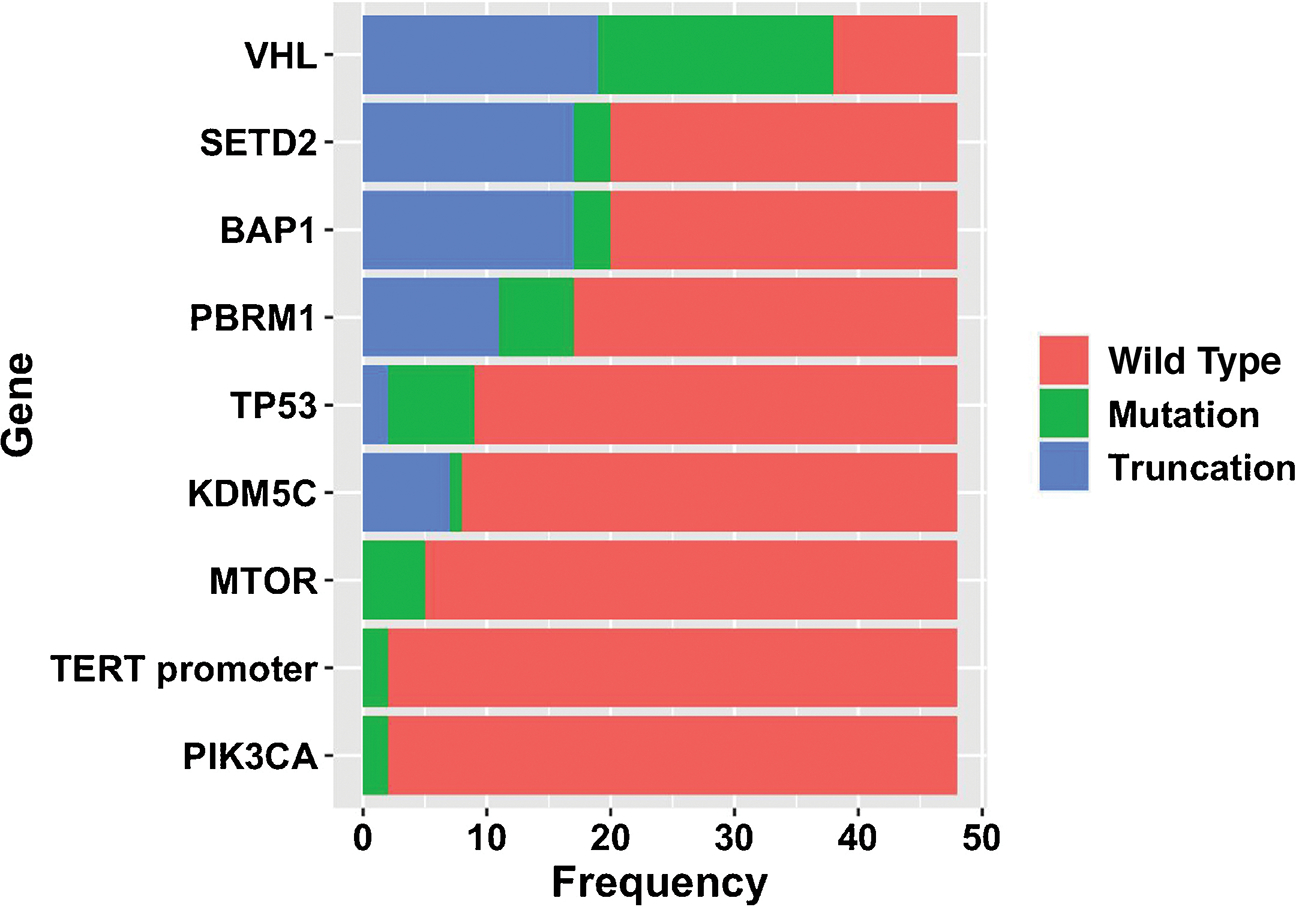
DESIGN, SETTING, AND PARTICIPANTS: The study included tumor samples (24 primary and 24 metastatic) from 48 patients with stage IV ccRCC. Targeted sequencing was performed for well-characterized recurrent somatic mutations in ccRCC, with the analysis focusing on the six most common ones: VHL, BAP1, PBRM1, SETD2, TP53, and KDM5C. For each sample, multiplex immunofluorescence (IF) was performed in lymphoid and myeloid panels, for seven regions of interest in three zones (tumor core, stroma, and tumor-stroma interface). IF-derived cellular densities were compared across patients, stratified by their somatic mutation status, using a linear mixed-model analysis. External validation was pursued using RNA-seq enrichment scoring from three large external data sources.
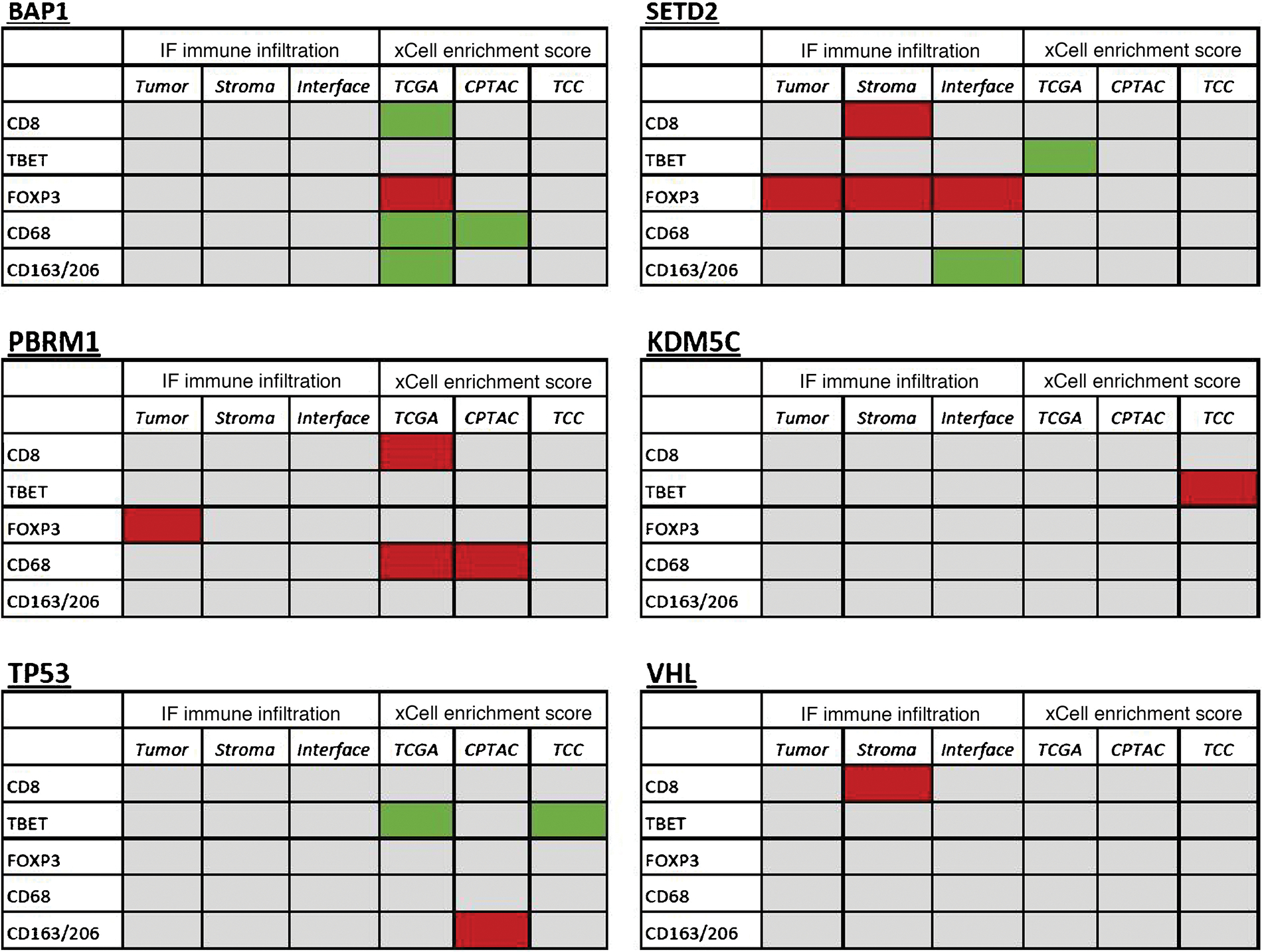
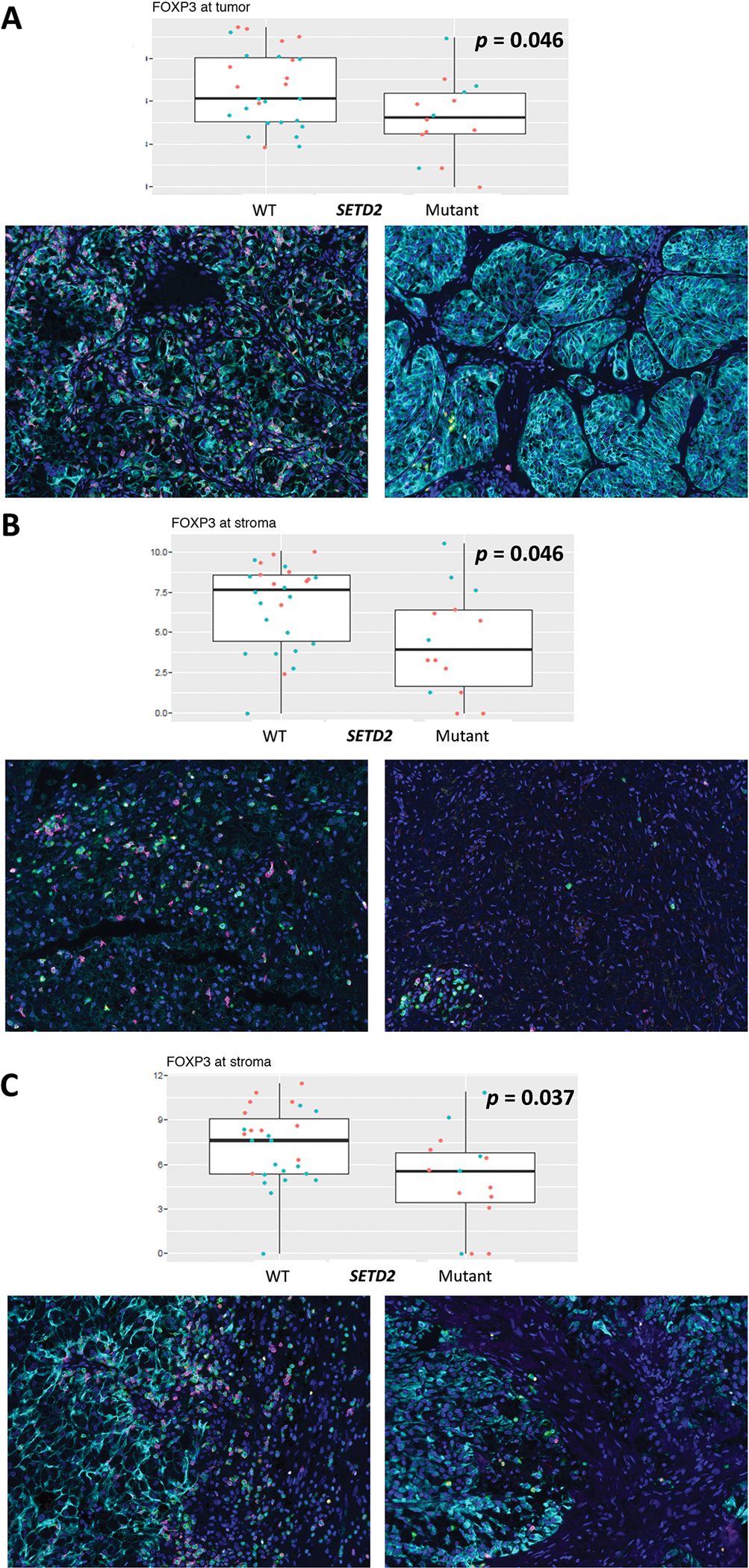
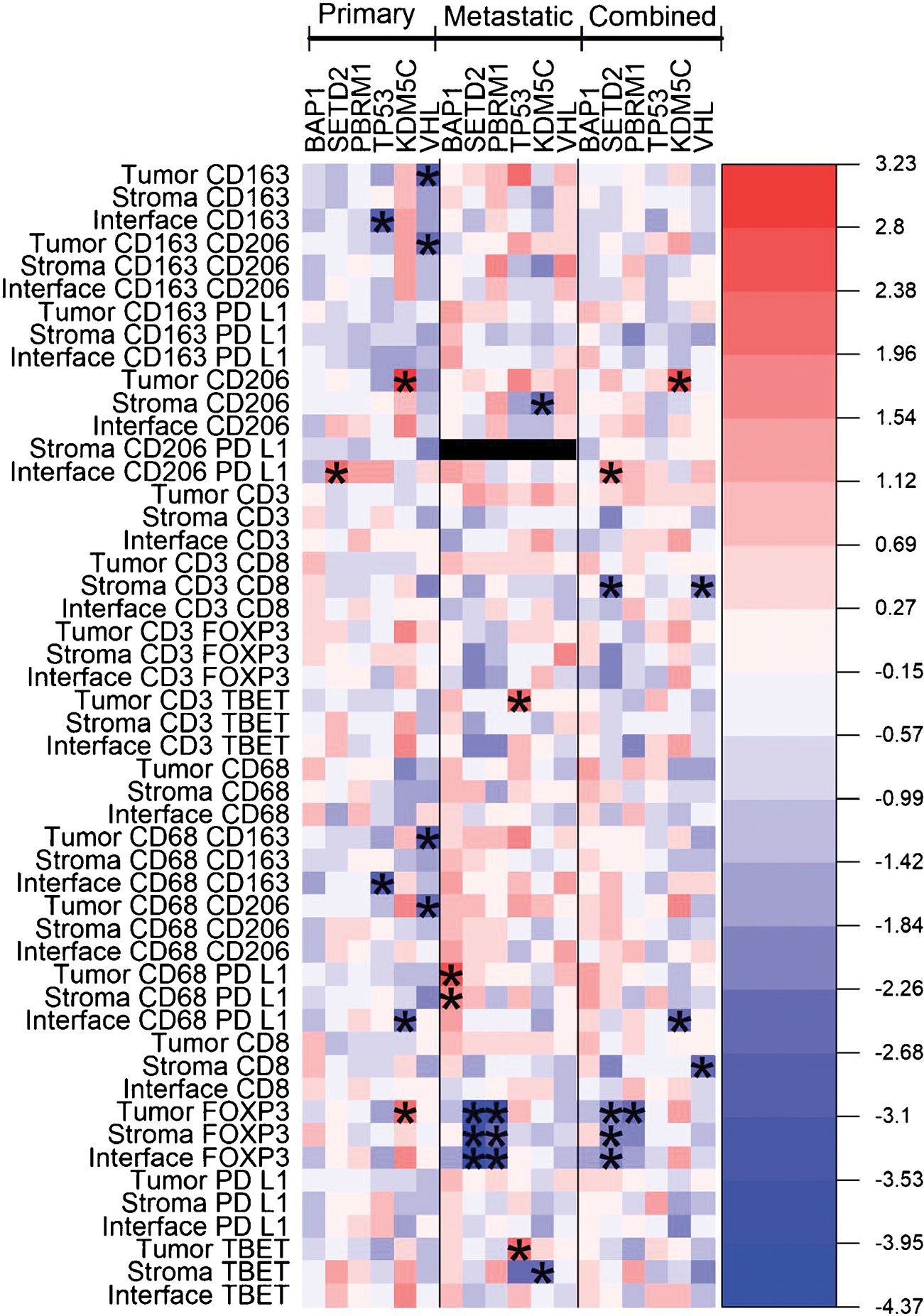
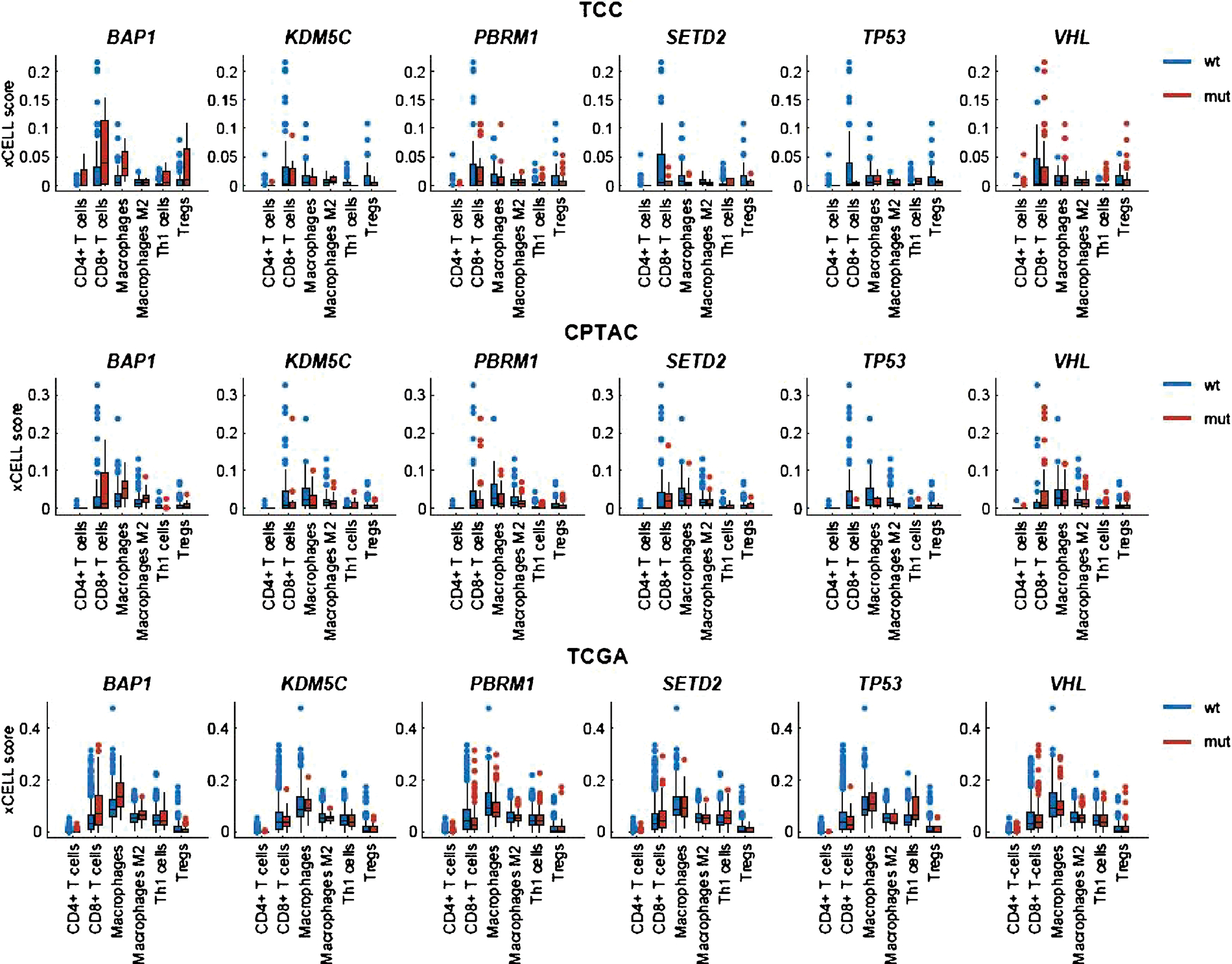
Tumors with SETD2 mutations demonstrated significantly decreased levels of FOXP3+ T cells in the tumor core, stroma, and tumor-stroma interface. PBRM1 mutations were associated with decreased FOXP3+ T cells in the tumor core. Primary KDM5C mutations were associated with significantly increased CD206+ macrophage tumor infiltration in the tumor core. A computational method estimating immune cell types in the TIME using bulk RNA-seq data, xCell scoring, failed to validate associations from the IF analysis in large external data sets. A major limitation of the study is the relatively small patient population studied.
This study provides evidence that common somatic mutations in ccRCC, such as SETD2, PBRM1, and KDM5C, are associated with distinct immune infiltration patterns within the TIME.
In this study, we analyzed tumor samples from patients with metastatic kidney cancer to determine whether common genetic mutations that arise from the cancer cells are associated with the density of immune cells found within those tumors. We found several distinct immune cell patterns that were associated with specific genetic mutations. These findings provide insight into the interaction between cancer genetics and the immune system in kidney cancer.
与其他恶性肿瘤相比,透明细胞肾细胞癌(ccRCC)肿瘤的遗传改变频率较低,但免疫细胞浸润水平很高,对免疫治疗的反应率也很高。目前,特定的 ccRCC 体细胞突变与肿瘤免疫微环境(TIME)中免疫浸润模式之间的相互作用尚不清楚。
分析 ccRCC 常见体细胞突变与肿瘤免疫微环境(TIME)内免疫细胞浸润模式之间的关联。
设计、设置和参与者:该研究纳入了 48 例 IV 期 ccRCC 患者的 24 例原发和 24 例转移肿瘤样本。对 ccRCC 中明确的常见体细胞突变进行了靶向测序,并对六个最常见的突变(VHL、BAP1、PBRM1、SETD2、TP53 和 KDM5C)进行了分析。对于每个样本,在淋巴和髓系面板中进行了多重免疫荧光(IF),在三个区域(肿瘤核心、基质和肿瘤-基质界面)的七个感兴趣区域进行了分析。使用线性混合模型分析,根据体细胞突变状态对患者进行分层,比较患者之间 IF 衍生的细胞密度。通过来自三个大型外部数据源的 RNA-seq 富集评分进行了外部验证。
SET2 突变的肿瘤在肿瘤核心、基质和肿瘤-基质界面的 FOXP3+T 细胞水平显著降低。PBRM1 突变与肿瘤核心中 FOXP3+T 细胞减少有关。原发性 KDM5C 突变与肿瘤核心中 CD206+巨噬细胞肿瘤浸润显著增加有关。一种使用批量 RNA-seq 数据估计 TIME 中免疫细胞类型的计算方法,xCell 评分,未能在大型外部数据集的 IF 分析中验证关联。该研究的一个主要局限性是研究的患者人群相对较小。
本研究提供的证据表明,ccRCC 中的常见体细胞突变,如 SETD2、PBRM1 和 KDM5C,与 TIME 内的不同免疫浸润模式相关。
在这项研究中,我们分析了转移性肾癌患者的肿瘤样本,以确定源自癌细胞的常见基因突变是否与这些肿瘤内发现的免疫细胞密度有关。我们发现了几种与特定基因突变相关的不同免疫细胞模式。这些发现为肾癌中癌症遗传学与免疫系统之间的相互作用提供了新的见解。