Li Chun-Yan, Chen Chun-Ya, An Jian-Hong, Wu Jian-Bin, Shen Hong
South China University of Technology School of Medicine, Guangzhou Higher Education Mega Center, Guangzhou, 510006, Guangdong, People's Republic of China.
Department of Oncology, The First Affiliated Hospital of Guangzhou University of Chinese Medicine, Guangzhou, 510407, People's Republic of China.
Cancer Manag Res. 2021 May 7;13:3685-3697. doi: 10.2147/CMAR.S303122. eCollection 2021.
Basal epithelial cells are absent in distant prostate cancer. This study aimed to investigate whether basal epithelial cells could suppress migration and invasion of prostate cancer cells to become a new treatment strategy for prostate cancer.
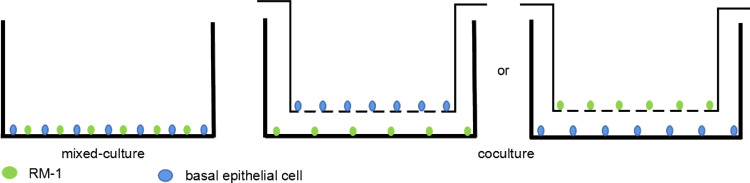
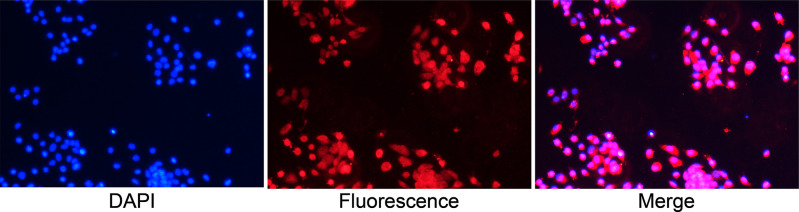
Basal epithelial cells were identified by immunofluorescence with anti-p63. Wound healing assays or transwell assays were used to explore the effects of basal epithelial cells, TGF-β1, SB431542 (inhibitor of TGF-β type I receptor) or stattic (inhibitor of phosphorylated STAT3) on migration or invasion of mouse prostate cancer cell (RM-1). Concentration of TGF-β1 was measured by ELISA assay. HE staining was used to investigate cell morphology. Immunocytochemistry with anti-p63 was used to identify basal epithelial cells. Levels of STAT3, p-STAT3 (Ser727) and proteins associated with EMT were measured with Western blot assay. Cell proliferation was measured with MTT or CCK8 assay.
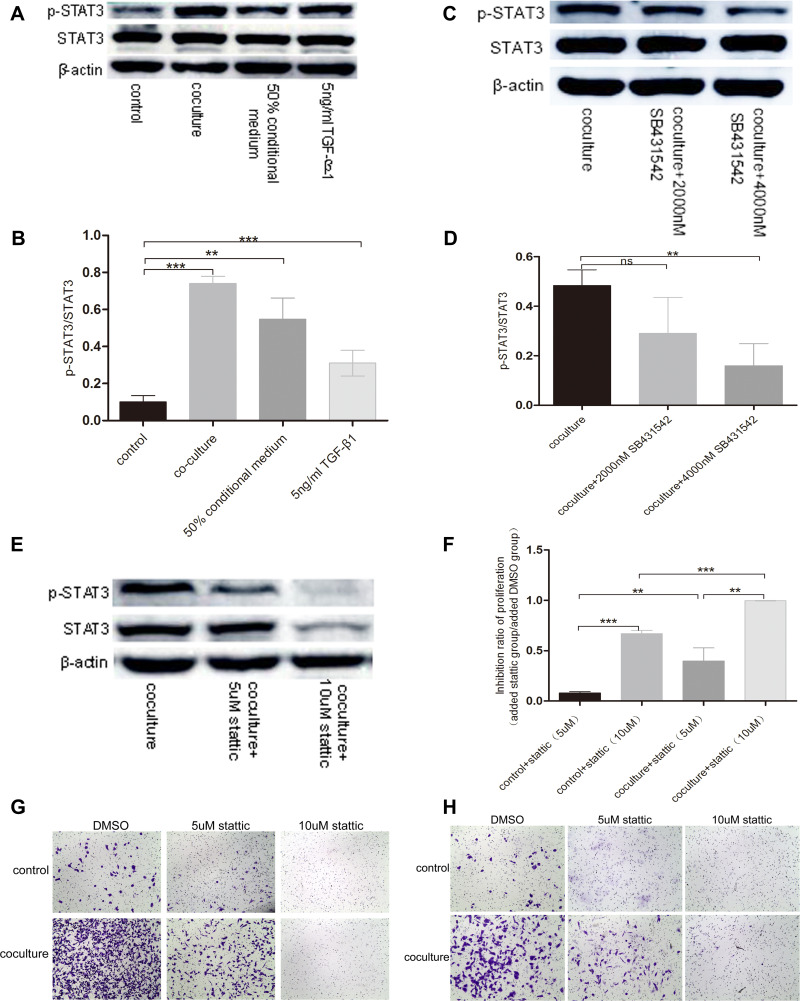
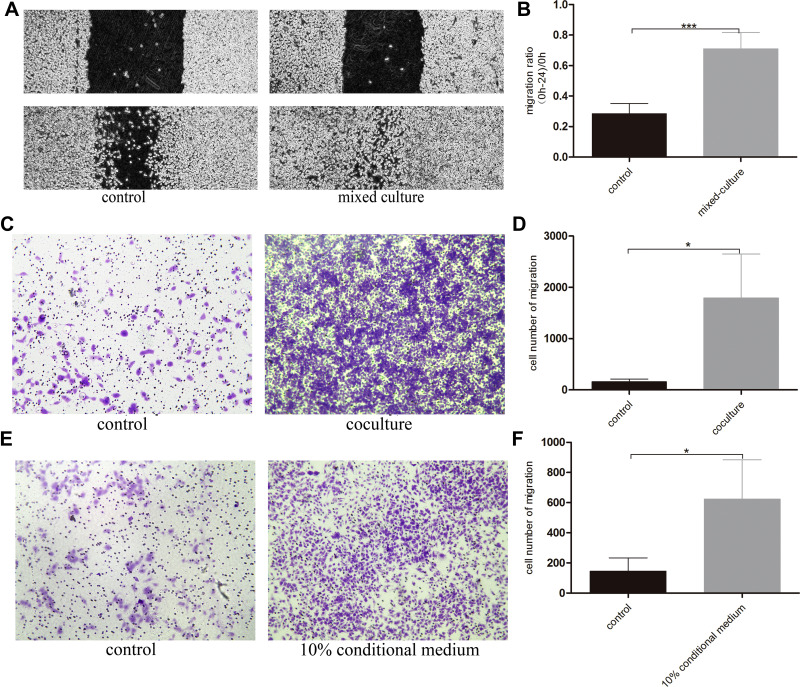
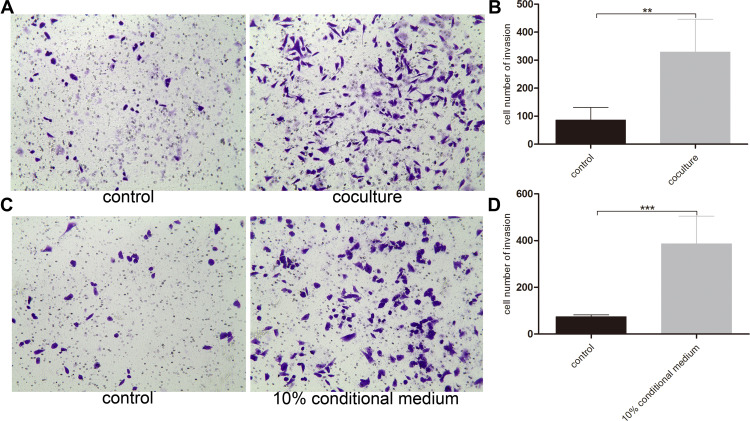
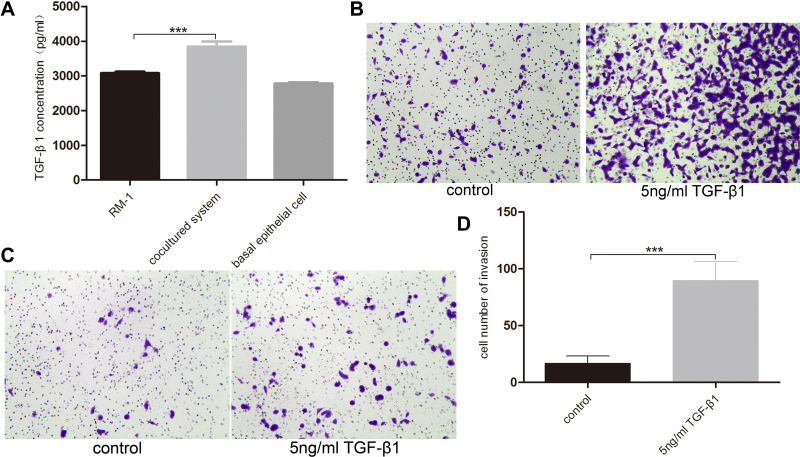
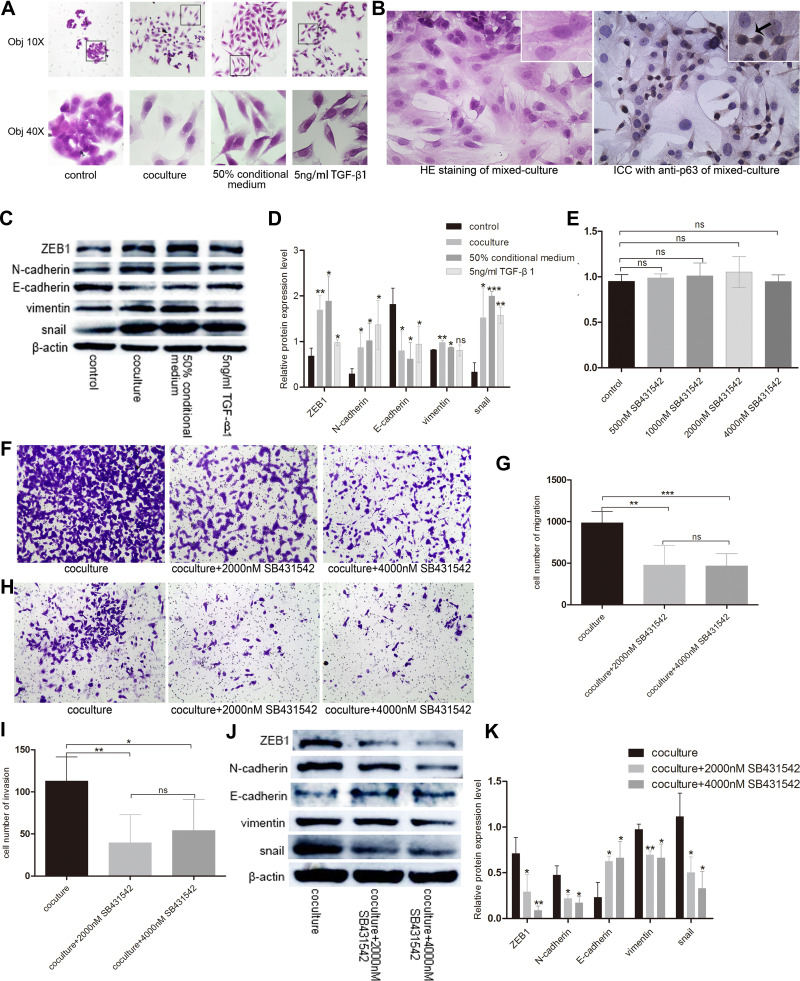
Normal basal epithelial cells acquired from mouse prostate were specific to anti-p63 and more than 90%. Basal epithelial cells and RM-1 could both secrete TGF-β1. Basal epithelial cells and TGF-β1 promoted the migration and invasion of RM-1 through changing the cell morphology and up-regulating expression of ZEB1, N-cadherin, vimentin, snail and p-STAT3 (Ser727), at the same time down-regulating E-cadherin of RM-1. SB431542 strongly suppressed migration, invasion as well as the expressions of EMT relevant proteins and p-STAT3 (Ser727) of co-cultured RM-1. In addition, stattic suppressed proliferation, migration and invasion of non-treated RM-1 and co-cultured RM-1.
Our study suggests that normal basal epithelial cells might stimulate the migration and invasion of RM-1 by TGF-β1/STAT3 axis which could be suppressed by inhibitor of TGF-β receptor and inhibitor of p-STAT3. So, basal epithelial cells might not become a treatment strategy for prostate cancer, but our results could provide some researching references for other diseases which include basal epithelial cells such as prostatic intraepithelial neoplasia, prostatic hyperplasia, cervical cancer, or urinary bladder cancer.
远处前列腺癌中不存在基底上皮细胞。本研究旨在探讨基底上皮细胞是否能够抑制前列腺癌细胞的迁移和侵袭,从而成为前列腺癌的一种新的治疗策略。
用抗p63免疫荧光法鉴定基底上皮细胞。采用伤口愈合试验或Transwell试验,探讨基底上皮细胞、转化生长因子-β1(TGF-β1)、SB431542(TGF-βⅠ型受体抑制剂)或Stattic(磷酸化信号转导和转录激活因子3(STAT3)抑制剂)对小鼠前列腺癌细胞(RM-1)迁移或侵袭的影响。用酶联免疫吸附测定法(ELISA)检测TGF-β1浓度。采用苏木精-伊红(HE)染色观察细胞形态。用抗p63免疫细胞化学法鉴定基底上皮细胞。用蛋白质免疫印迹法检测STAT3、磷酸化STAT3(Ser727)及上皮-间质转化(EMT)相关蛋白水平。用噻唑蓝(MTT)法或细胞计数试剂盒-8(CCK8)法检测细胞增殖。
从小鼠前列腺获取的正常基底上皮细胞对抗p63呈特异性,阳性率超过90%。基底上皮细胞和RM-1均可分泌TGF-β1。基底上皮细胞和TGF-β1通过改变细胞形态,上调锌指蛋白E盒结合因子1(ZEB1)、N-钙黏蛋白、波形蛋白、蜗牛蛋白及磷酸化STAT3(Ser727)的表达,同时下调RM-1的E-钙黏蛋白,促进RM-1的迁移和侵袭。SB431542强烈抑制共培养的RM-1的迁移、侵袭以及EMT相关蛋白和磷酸化STAT3(Ser727)的表达。此外,Stattic抑制未处理的RM-1和共培养的RM-1的增殖、迁移和侵袭。
我们的研究表明,正常基底上皮细胞可能通过TGF-β1/STAT3轴刺激RM-1的迁移和侵袭,而TGF-β受体抑制剂和磷酸化STAT3抑制剂可抑制这一过程。因此,基底上皮细胞可能无法成为前列腺癌的治疗策略,但我们的结果可为其他包含基底上皮细胞的疾病,如前列腺上皮内瘤变、前列腺增生、宫颈癌或膀胱癌等的研究提供一些参考。