Jin Yang, Cui Zilian, Li Xudong, Jin Xunbo, Peng Jian
Department of Hepatobiliary Surgery, Xiangya Hospital, Central South University, Changsha, Hunan, China.
Minimally Invasive Urology Center, Shandong Provincial Hospital affiliated to Shandong University, Jinan, Shandong, China.
Oncotarget. 2017 Apr 18;8(16):26090-26099. doi: 10.18632/oncotarget.15318.
To confirm that PlncRNA-1 regulates the cell cycle in prostate cancer cells and induces epithelial-mesenchymal transition (EMT) in prostate cancer through the TGF-β1 pathway.
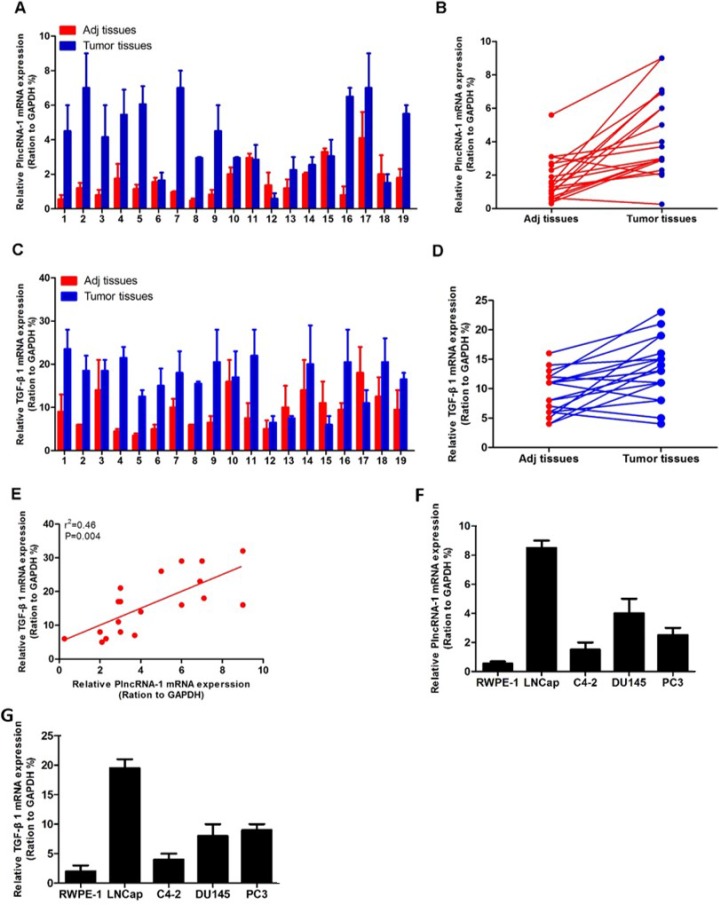
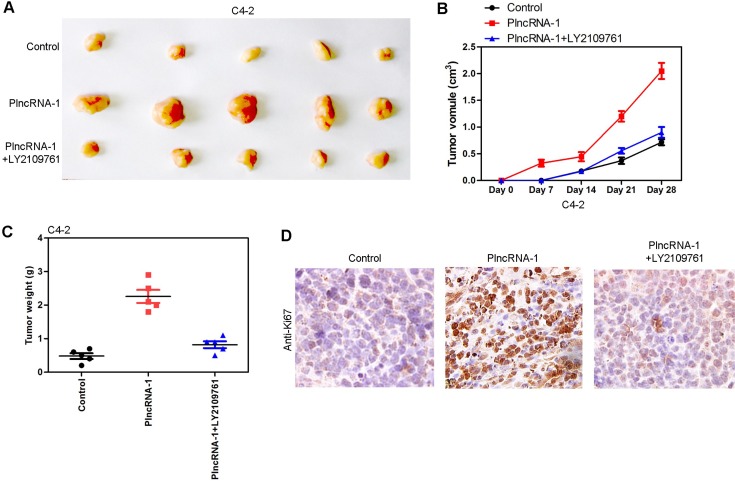
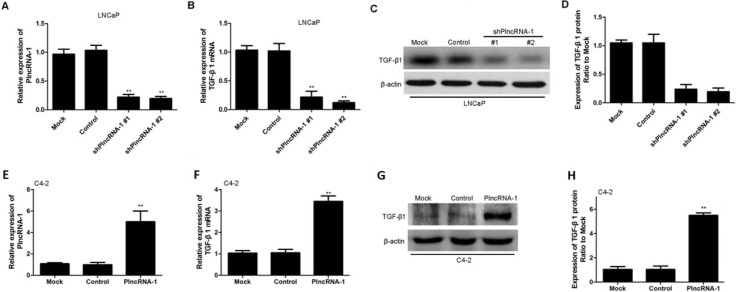
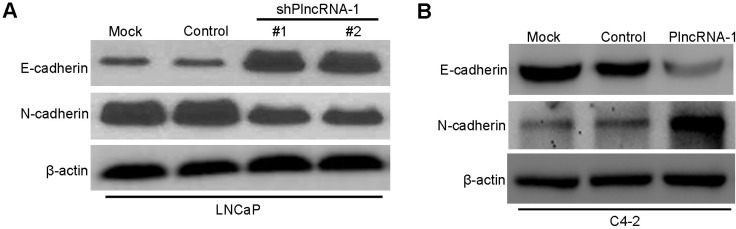
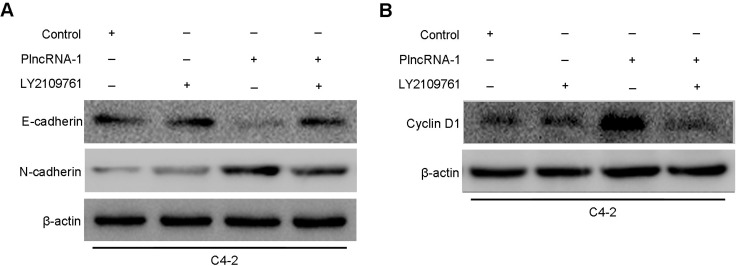
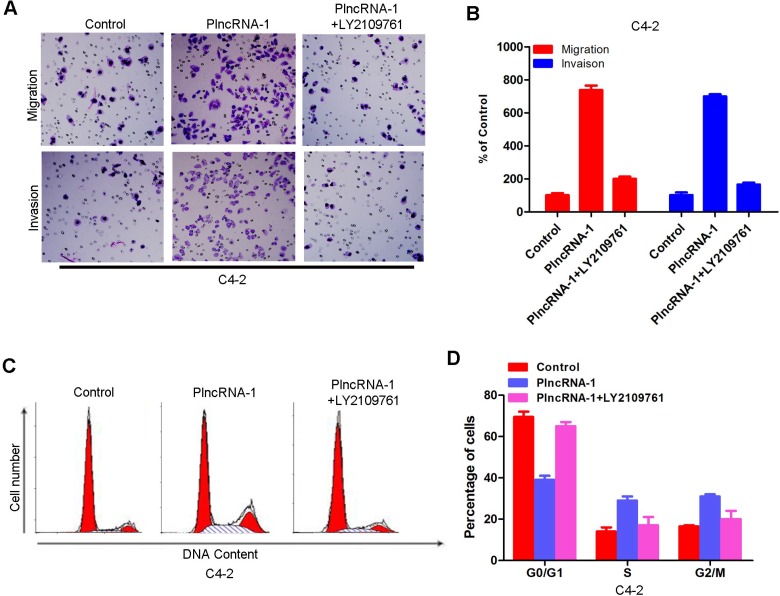
PlncRNA-1 and TGF-β1 expression levels were significantly higher in prostate cancer tissues than in normal prostate tissues (P < 0.05) and were significantly positively correlated. TGF-β1, N-cadherin and Cyclin-D1 were downregulated and E-Cadherin was upregulated in LNCAP cells after silencing of PlncRNA-1, as determined by real-time PCR and Western blot. TGF-β1, N-cadherin and Cyclin-D1 were upregulated and E-cadherin was downregulated in C4-2 cells, as determined by real-time PCR and Western blot. Overexpression of PlncRNA-1 in C4-2 cells was observed when TGF-β1 inhibitor LY2109761 was added. Western blot analysis showed that compared with their expression when TGF-β1 inhibitor LY2109761 was not added, N-Cadherin and CyclinD1 expression decreased and E-Cadherin expression increased. Transwell results showed that the invasive ability of C4-2 cells was enhanced after overexpression of PlncRNA-1, and the invasion ability was decreased after addition of TGF-β1 inhibitor LY2109761. The cell cycle was blocked by overexpression of PlncRNA-1 in C4-2 and by the addition of TGF-β1 inhibitor LY2109761, as determined by flow cytometry. In vitro experiments showed that PlncRNA-1 can regulate the growth of prostate cancer cells and EMT through the TGF-β1 pathway. In vivo experiments also confirmed the above results. Tumor growth was significantly blocked by overexpressing PlncRNA-1 in C4-2 cells and by the TGF-β1 inhibitor LY2109761 in animal experiments.
The expression levels of PlncRNA-1 and TGF-β1 were analyzed in 19 prostate cancer tissue samples and in adjacent normal tissue samples, 4 Pca cell lines, including LNCaP, C4-2,DU145, and PC3, and 1 normal prostate epithelial cell line RWPE-1. LNCAP cells were divided into the LNCAP control group and the LNCAP-PlncRNA-1-siRNA group. Cells from the prostate cancer cell line C4-2 were divided into the C4-2 control group and the C4-2-PlncRNA-1 experimental group. Changes in TGF-β1, E-cadherin and N-cadherin were detected by qPCR and Western Blot assay after silencing and overexpression of PlncRNA-1. The cell cycle, cell invasion, and levels of Cyclin-D1, E-Cadherin, and N-Cadherin were observed after adding TGF-β1 inhibitor LY2109761 in the C4-2-PlncRNA-1 group. The effects of TGF-β1 inhibitor LY2109761 on the tumorigenicity of C4-2 cells after overexpression of PlncRNA-1 was investigated in vivo.
PlncRNA-1 is an oncogene that regulates the cell cycle, cyclin-D1 and EMT in prostate cancer cells through the TGF-β1 pathway.
证实PlncRNA-1调节前列腺癌细胞的细胞周期,并通过转化生长因子-β1(TGF-β1)通路诱导前列腺癌上皮-间质转化(EMT)。
前列腺癌组织中PlncRNA-1和TGF-β1的表达水平显著高于正常前列腺组织(P < 0.05),且呈显著正相关。实时荧光定量PCR(qPCR)和蛋白质免疫印迹法(Western blot)检测结果显示,沉默LNCAP细胞中的PlncRNA-1后,TGF-β1、N-钙黏蛋白和细胞周期蛋白D1(Cyclin-D1)表达下调,E-钙黏蛋白表达上调;qPCR和Western blot检测显示,在C4-2细胞中,PlncRNA-1过表达后,TGF-β1、N-钙黏蛋白和Cyclin-D1表达上调,E-钙黏蛋白表达下调。当向C4-2细胞中添加TGF-β1抑制剂LY2109761时,观察到PlncRNA-1过表达。蛋白质免疫印迹分析表明,与未添加TGF-β1抑制剂LY2109761时相比,N-钙黏蛋白和CyclinD1表达降低,E-钙黏蛋白表达增加。Transwell实验结果显示,PlncRNA-1过表达后C4-2细胞的侵袭能力增强,添加TGF-β1抑制剂LY2109761后侵袭能力降低。流式细胞术检测结果显示,C4-2细胞中PlncRNA-1过表达以及添加TGF-β1抑制剂LY2109761均使细胞周期受阻。体外实验表明,PlncRNA-1可通过TGF-β1通路调节前列腺癌细胞的生长和EMT。体内实验也证实了上述结果。在动物实验中,C4-2细胞中PlncRNA-1过表达以及TGF-β1抑制剂LY2109761均显著抑制肿瘤生长。
分析19例前列腺癌组织样本及相邻正常组织样本、4种前列腺癌细胞系(包括LNCaP、C4-2、DU145和PC3)以及1种正常前列腺上皮细胞系RWPE-1中PlncRNA-1和TGF-β1的表达水平。将LNCAP细胞分为LNCAP对照组和LNCAP-PlncRNA-1-siRNA组。将前列腺癌细胞系C4-2的细胞分为C4-2对照组和C4-2-PlncRNA-1实验组。沉默和过表达PlncRNA-1后,通过qPCR和蛋白质免疫印迹法检测TGF-β1、E-钙黏蛋白和N-钙黏蛋白的变化。在C4-2-PlncRNA-1组中添加TGF-β1抑制剂LY2109761后,观察细胞周期、细胞侵袭以及Cyclin-D1、E-钙黏蛋白和N-钙黏蛋白的水平。在体内研究TGF-β1抑制剂LY2109761对PlncRNA-1过表达后C4-2细胞致瘤性的影响。
PlncRNA-1是一种癌基因,通过TGF-β1通路调节前列腺癌细胞的细胞周期、细胞周期蛋白D1和EMT。