Zhao Jiao, Feng Wei-Guang, Wei Zhe, Zhou Jian, Chen Xiao-Yun, Zhang Zhen-Lin
Shanghai Clinical Research Center of Bone Disease, Department of Osteoporosis and Bone Disease, Shanghai Jiaotong University Affiliated Sixth People's Hospital, Shanghai, China.
Department of Hepatology, The Fourth People's Hospital of Huai'an, Huai'an, China.
Front Pharmacol. 2021 Apr 28;12:636352. doi: 10.3389/fphar.2021.636352. eCollection 2021.
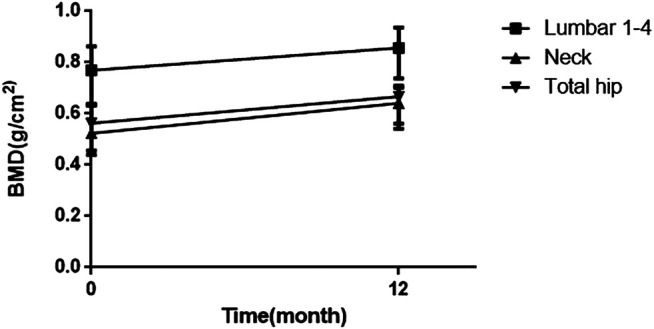
Adefovir dipivoxil (ADV) is widely used for chronic hepatitis B therapy in China. To explore the clinical features and prognosis of ADV-induced osteomalacia and to analyze the association between osteomalacia and genetic variants in 51 drug transporters genes. Clinical and follow-up data of the ADV-treated patients were collected. Target capture sequencing was used to identify genetic variations of 51 drug transporter genes. A total of 193 hepatitis B patients treated with ADV were enrolled, of whom 140 had osteomalacia. The other 53 without osteomalacia were included in the control group. The median duration of ADV treatment before the onset of osteomalacia was 6.5 years (range:1.5-7 years). We found that most patients with osteomalacia had hypophosphatemia, high serum alkaline phosphatase levels, hypouricemia, nondiabetic glycosuria, proteinuria. Stopping ADV administration, supplementing calcitriol and calcium were effective treatments. During 3-6 months of follow-up, the clinical symptoms and biochemical indicators of patients with osteomalacia have been significantly improved. There was no significant difference in duration of adefovir treatment in patients with or without osteomalacia ( = 0.791). Through regression analysis, we found that age was a risk factor for osteomalacia [per 1 year, odds ratio (OR), 1.053; 95% confidence interval (95% CI), 1.020-1.087; = 0.015]. 1992 single nucleotide variants were found using target capture sequencing. However, the associations of genetic variants of 51 drug transporter genes and the risk of osteomalacia were negligible. Osteomalacia is prone to occur in patients with chronic hepatitis B treated with long-term ADV at a therapeutic dose. After standard treatment, the prognosis is mostly good. We failed to find genetic variants that can predict the risk of ADV-induced osteomalacia.
阿德福韦酯(ADV)在中国被广泛用于慢性乙型肝炎的治疗。为探讨ADV诱导的骨软化症的临床特征和预后,并分析骨软化症与51个药物转运蛋白基因的基因变异之间的关联。收集了接受ADV治疗患者的临床和随访数据。采用目标捕获测序法鉴定51个药物转运蛋白基因的基因变异。共纳入193例接受ADV治疗的乙型肝炎患者,其中140例发生骨软化症。另外53例未发生骨软化症的患者作为对照组。骨软化症发病前ADV治疗的中位时间为6.5年(范围:1.5 - 7年)。我们发现,大多数骨软化症患者有低磷血症、高血清碱性磷酸酶水平、低尿酸血症、非糖尿病性糖尿、蛋白尿。停用ADV、补充骨化三醇和钙剂是有效的治疗方法。在3 - 6个月的随访期间,骨软化症患者的临床症状和生化指标有明显改善。发生或未发生骨软化症的患者在阿德福韦治疗时间上无显著差异(P = 0.791)。通过回归分析,我们发现年龄是骨软化症的一个危险因素[每增加1岁,比值比(OR)为1.053;95%置信区间(95%CI)为1.020 - 1.087;P = 0.015]。采用目标捕获测序法发现了1992个单核苷酸变异。然而,51个药物转运蛋白基因的基因变异与骨软化症风险之间的关联可忽略不计。长期接受治疗剂量ADV治疗的慢性乙型肝炎患者容易发生骨软化症。经过规范治疗后,预后大多良好。我们未能找到可预测ADV诱导骨软化症风险的基因变异。