Hromatko Ivana, Grus Andrea, Kolđeraj Gabrijela
Department of Psychology, Faculty of Humanities and Social Sciences, University of Zagreb, Zagreb, Croatia.
Front Psychol. 2021 Apr 30;12:647586. doi: 10.3389/fpsyg.2021.647586. eCollection 2021.
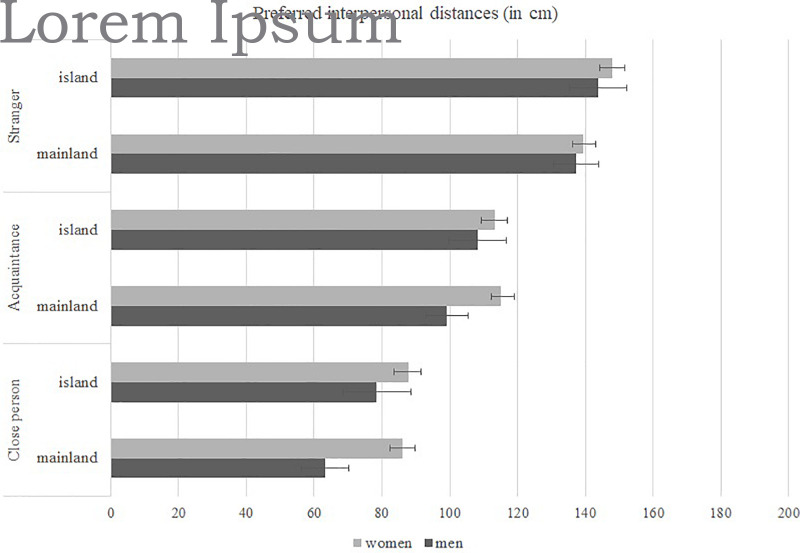
Insular populations have traditionally drawn a lot of attention from epidemiologists as they provide important insights regarding transmission of infectious diseases and propagation of epidemics. There are numerous historical instances where isolated populations showed high morbidity once a new virus entered the population. Building upon that and recent findings that the activation of the behavioral immune system (BIS) depends both upon one's vulnerability and environmental context, we predicted that, during the COVID-19 pandemic, place of residence (island vs. mainland) explains a significant proportion of variance in preferred interpersonal distances, animosity toward strangers, and willingness to punish those who do not adhere to COVID-19 preventive measures. With 48 populated islands, Croatia provides a fruitful testing ground for this prediction. We also opted to explore relations among BIS-related variables (pathogen disgust, germ aversion, and perceived infectability) and social cognitions in a more natural context than has previously been done. The study was conducted online, on Croatian residents, during April and May 2020. As expected, the BIS variables contributed significantly to preferred interpersonal distances, negative emotions toward strangers, and willingness to punish those who do not adhere to COVID-19 preventive measures. Furthermore, our results showed that geographical location explained a significant amount of variance in preferred social (but not personal and intimate) distances and negative emotions toward foreigners. As Croatian islands are extremely frequent travel destinations, these differences between mainlanders and islanders cannot be explained by the lack of exposure to foreigners. Additionally, we found that scores on preferred interpersonal distances, pathogen disgust, and germ aversion were significantly higher compared to those obtained in Croatian samples before the COVID-19 pandemic. Furthermore, men scored higher in perceived infectability than before the COVID-19 pandemic, and women did not, which reflects the objectively higher risk of SARS-CoV-2 for men than for women. Taken together, our results support the notion that BIS is a highly adaptive and context-dependent response system, likely more reactive in more susceptible individuals.
岛屿人群传统上一直备受流行病学家的关注,因为它们能为传染病传播和疫情蔓延提供重要见解。历史上有许多事例表明,一旦新病毒传入孤立人群,该人群就会出现高发病率。基于此以及近期行为免疫系统(BIS)的激活既取决于个体易感性又取决于环境背景这一发现,我们预测,在新冠疫情期间,居住地(岛屿与大陆)能解释在偏好的人际距离、对陌生人的敌意以及惩罚不遵守新冠预防措施者的意愿方面的很大一部分差异。克罗地亚有48个有人居住的岛屿,为这一预测提供了一个富有成效的试验场。我们还选择在比以往更自然的背景下探索与BIS相关的变量(对病原体的厌恶、对病菌的反感以及感知到的易感染性)与社会认知之间的关系。该研究于2020年4月至5月在线对克罗地亚居民进行。正如预期的那样,BIS变量对偏好的人际距离、对陌生人的负面情绪以及惩罚不遵守新冠预防措施者的意愿有显著影响。此外,我们的结果表明,地理位置能解释在偏好的社交(而非个人和亲密)距离以及对外国人的负面情绪方面的很大一部分差异。由于克罗地亚岛屿是极其热门的旅游目的地,大陆人和岛民之间的这些差异不能用与外国人接触少来解释。此外,我们发现,与新冠疫情之前克罗地亚样本中的得分相比,在偏好的人际距离、对病原体的厌恶和对病菌的反感方面的得分显著更高。此外,男性在感知到的易感染性方面的得分比新冠疫情之前更高,而女性则没有,这反映出SARS-CoV-2对男性的客观风险高于女性。综上所述,我们的结果支持这样一种观点,即BIS是一个高度适应性且依赖于情境的反应系统,在更易感染的个体中可能反应更强。